

Latest Updates on the U.S. Deadline and Iran’s Proposal Package
Rokna Political Desk: The latest diplomatic developments between Iran and the United States, including Washington’s setting of a deadline for receiving Tehran’s proposed package and the announcement of Abbas Araqchi’s meeting with the U.S. envoy in Geneva, indicate that the nuclear negotiations have entered a critical phase.
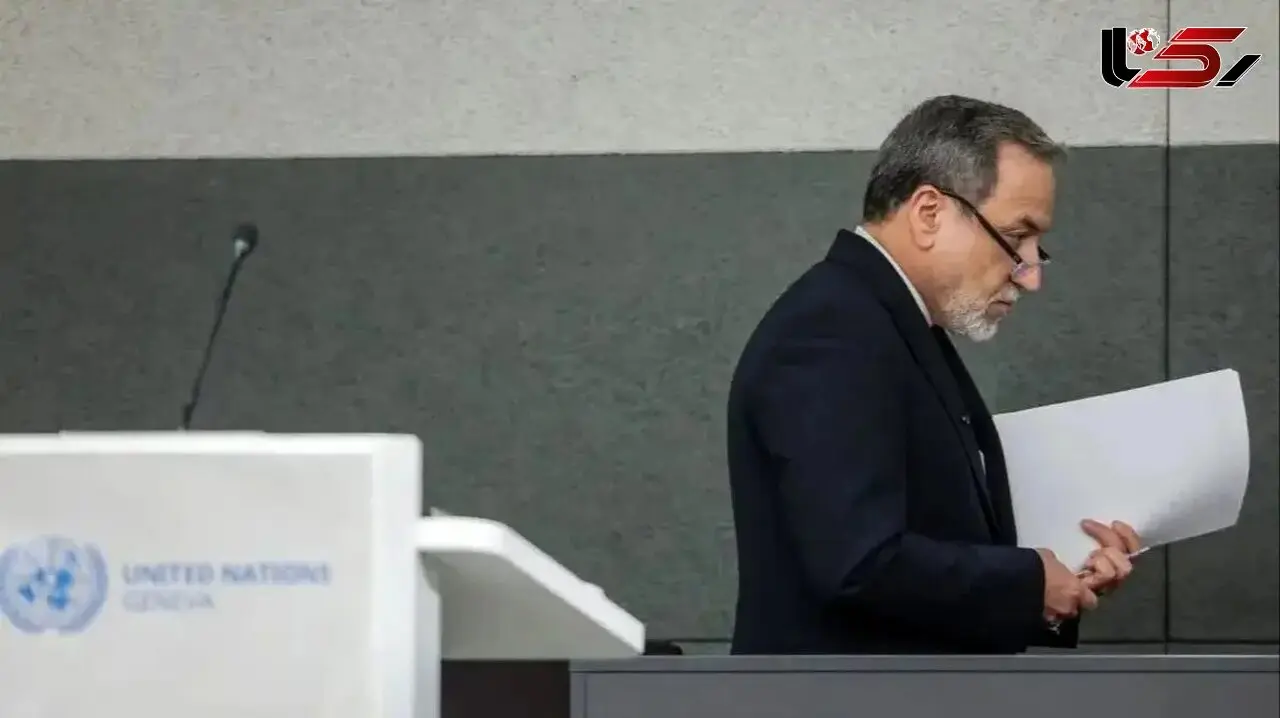
Since Sunday, two significant developments have brought Iran’s foreign policy into a new stage. First, the U.S. has set a deadline for receiving Tehran’s proposed package or plan, signaling an acceleration of decision-making in Washington. Second, the announcement of Thursday’s meeting between Abbas Araqchi and Steve Witkoff in Geneva may be seen as a diplomatic effort to assess the possibility of an agreement or manage tensions.
According to Rokna, the simultaneous occurrence of these two developments indicates that the Iran-U.S. file has entered a sensitive phase, in which both the option of an agreement and the possibility of increased pressure are on the table. Axios reported that a senior U.S. official said on Sunday that American negotiators are ready, if they receive a precise, written, and reviewable proposal from Iran within the next 48 hours, to hold a new round of nuclear negotiations on Friday in Geneva. The official noted that Washington is waiting for Tehran to take the next step and officially submit its proposed framework.
The importance of this news lies in the fact that U.S. officials emphasize that the current diplomatic effort is likely the last opportunity envisioned by Donald Trump to resolve the Iranian nuclear issue through negotiation. They noted that if this process fails, the option of a broad joint military action with Israel against Iran would be seriously considered.
At present, the Trump administration is awaiting Iran’s official proposal. According to the report, Trump’s special envoys, Steve Witkoff and Jared Kushner, who both support giving diplomacy a chance before any military action, intend to be present in Geneva on 27 February if Iran submits its proposal early this week. A senior U.S. official said, “If Iran submits a draft proposal, the United States is ready to meet in Geneva to start precise negotiations and determine whether a nuclear agreement is possible.” He also confirmed that “both parties may discuss the possibility of a temporary agreement before reaching a comprehensive nuclear deal.”
In the last round of negotiations, held last Tuesday in Geneva, Witkoff and Kushner requested that Abbas Araqchi provide a clear written proposal within a few days. They stressed that Trump’s official position is “zero enrichment” on Iranian soil, while also indicating that Washington would consider a proposal with a “symbolic level of enrichment,” provided Iran can demonstrate that all pathways to nuclear weapons are blocked.
Araqchi also stated on Friday in an interview with MS Now that the draft of this proposal would be prepared over the weekend and, after approval by senior officials in Tehran, delivered to the U.S. side.
Next Meeting in Geneva
Coinciding with Axios’ report, Abbas Araqchi emphasized that nuclear negotiations can only succeed through diplomacy and announced that Iran is working on various dimensions and a draft of a potential agreement. In an interview with CBS, the Iranian Deputy Foreign Minister stated, “If the United States seeks to address its nuclear concerns, there is no path other than diplomacy, and military deployment or posturing is neither necessary nor will it affect Tehran’s stance.”
According to Iran’s top diplomat, “A meeting with Steve Witkoff in Geneva is likely on Thursday,” and he considers an agreement with Washington attainable—an agreement that, in Araqchi’s view, “may in some aspects even be better than the 2015 deal.”
In line with these developments, Iran’s Foreign Minister spoke by phone on Sunday with his Omani counterpart, Badr Al-Busaidi, about the latest status of indirect Iran-U.S. talks and arrangements for the next round. According to CBS, IAEA Director General Rafael Grossi will also attend the upcoming Geneva negotiations.
Masoud Pezeshkian tweeted in English on X that “Iran is committed to peace and stability in the region. Recent talks included the exchange of practical proposals and encouraging signals. Nevertheless, we continue to closely monitor U.S. actions and have prepared all necessary measures for any possible scenario.”
Speculation on the Negotiations Not Confirmed
In a press briefing on Monday, Esmail Baqaei, spokesperson for the Ministry of Foreign Affairs, elaborated on the latest developments regarding Iran-U.S. talks, aiming to present a clear picture of Tehran’s official positions. Responding to questions about drafting texts and the possibility of holding a new round this week, he emphasized that media speculation about the process, content, and details of the negotiations is natural, but none of it is confirmed by the Ministry.
According to Baqaei, review and decision-making on the details of any negotiation process are conducted solely within the negotiation room.
He explicitly rejected claims about a potential “temporary agreement” between Iran and the U.S., stating that such a topic is not on the negotiation agenda. He highlighted that drafting texts is a joint process, and no agreement can be unilateral.
Baqaei stressed that the Islamic Republic of Iran has clearly formulated its positions regarding the necessity of lifting oppressive sanctions and nuclear matters, while also having full knowledge of the U.S. side’s views and demands.
Regarding the timing and method for presenting Iran’s proposal to the U.S. ahead of a possible Thursday meeting, he explained that the procedure, schedule, and mechanism for delivering proposals via the mediator, Oman, will be coordinated. He emphasized that the format of transmission is secondary; the priority is finalizing Iran’s positions on all aspects and components of a potential understanding.
He added that any negotiation process can yield results if both sides act with goodwill and seriousness. Iran is currently in the final stage of finalizing its positions and hopes that within the next two to three days, in accordance with Abbas Araqchi’s announcement, another round of talks will be held.
On the potential participation of the IAEA Director General and the topic of visiting damaged facilities, Baqaei explained that the issue of his presence has been raised, but no final decision has been made, although he played roles in the previous round. Regarding visits to damaged sites, Baqaei stressed that this requires agreement on a specific protocol in line with Iranian parliamentary law, which Iran has not yet reached, though exchanges with the IAEA continue.
He also rejected claims that detailed negotiations are being used by Iran to “buy time,” asserting that Tehran has repeatedly stated its readiness to continue negotiations without pause and even intensively. He stressed that Iran has no interest in prolonging the talks; the main goal is to reach results that lift sanctions and relieve pressure on the Iranian people as quickly as possible.
Baqaei concluded that Iran’s cooperation with the IAEA continues under safeguards obligations, parliament-approved law, and the Supreme National Security Council’s guidance. However, visits to damaged facilities, due to the lack of a clear protocol and the unprecedented nature of military attacks on peaceful nuclear sites, constitute a separate matter requiring defined procedures.
Grossi’s Nuclear Proposal and the Shadow of War; Trump’s Dilemma on Iran
The New York Times reported that Iran’s policy under Trump has entered a sensitive and multi-layered phase, combining diplomacy, military threats, and a last-minute technical proposal. According to informed sources within the White House, Trump has told his advisors that if diplomacy or a limited strike does not compel Iran to abandon its nuclear program, the possibility of a much broader attack targeting Iran’s sovereignty in the coming months cannot be ruled out. The report notes that Iran-U.S. negotiations are scheduled for Thursday in Geneva; Washington sees this as potentially the last opportunity to avoid military conflict.
Nevertheless, Trump is simultaneously reviewing military options if talks fail and has expressed interest in a preliminary strike to increase psychological and political pressure on Tehran. The New York Times notes that no final decision on military action has been made and that serious doubts remain within the U.S. administration about whether airstrikes alone can achieve Washington’s objectives.
In this tense environment, a new behind-the-scenes proposal is being considered, allowing Iran to conduct very limited enrichment solely for scientific research and medical isotope production. This proposal, reportedly put forward by IAEA Director General Rafael Grossi, would allow Iran to produce small amounts of nuclear fuel for medical purposes. If implemented, Tehran could claim it maintains the principle of enrichment, while Trump could present the deal as effectively ending Iran’s nuclear weapons capability.
The report notes it is unclear whether both sides will accept this compromise, as Iran has invested billions in its industrial nuclear program, and Trump has repeatedly emphasized “zero enrichment” as the only acceptable outcome. This divergence leaves Grossi’s proposal in uncertainty.
The New York Times also referenced a key White House “Situation Room” meeting, attended by officials including JD Vance, Marco Rubio, General Dan Quinn, and John Ratcliffe, discussing various options regarding Iran. Vance, while not openly opposing an attack, pressed military and intelligence leaders for detailed assessments of the risks and consequences of operations against Iran.
Options such as deploying special forces to destroy Iran’s nuclear and missile facilities were considered but set aside due to high risks and operational complexity. Meanwhile, the U.S. has deployed its largest military formation in the region in over two decades, including two aircraft carrier groups, dozens of fighter jets, bombers, refueling planes, and air defense systems within operational proximity to Iran. The report concludes that the U.S.’s final decision hinges on a possible “face-saving compromise” between Tehran and Washington, one that both sides can present as a victory.
However, the report warns that military pressure will not necessarily compel Iran to retreat and may provoke nationalist responses internally, including among government opponents, a view shared by many European officials.
Third Crucial Meeting
Dennis Sitronovich of the Atlantic Council wrote that the potential third round of talks between Abbas Araqchi and Steve Witkoff in Geneva “is so significant that it can almost be described as ‘decisive.’”
He believes that the concurrent deployment of U.S. forces in the region and Trump’s direct pressure for a quick agreement or confrontation makes Geneva a pivotal point between “agreement” and “escalation.”
Sitronovich notes that the Iranian delegation is expected to present a nuclear proposal reflecting Tehran’s red lines, focusing on clearly defined limitations strictly in the nuclear domain, accompanied by economic incentives to persuade Trump. The key question remains whether this package will satisfy the White House.
He warns that “if Trump is disappointed with this proposal, and given the U.S. military posture in the region, the path back from a new confrontation may be extremely limited. Even if a confrontation occurs, the fundamental question remains: is the goal to strengthen leverage and delay Iran’s nuclear and missile programs, or to fundamentally alter the strategic reality through confrontation with the governing structure?”
Sitronovich emphasizes that “the gap between U.S. minimum expectations and Iran’s maximum concessions severely limits compromise,” but still sees a small window for agreement, provided Washington confines negotiations to the nuclear issue and avoids expanding to missiles and regional influence.
He concludes that “attempting to resolve everything simultaneously increases the likelihood of failure, whereas a narrower focus may preserve the chance to navigate this critical moment.”
Mohsen Jalilvand: Iran’s Proposal and Thursday’s Geneva Meeting Unlikely to Succeed
Mohsen Jalilvand, an international relations expert, sees the current Tehran-Washington situation as complex and ambiguous. Referring to Iran’s package to be presented to the U.S., he states, “Given the wide gap between the positions of both sides, the likelihood of persuading Trump through this package is very low,” because, in his view, “Trump’s maximum demands effectively repeat Netanyahu’s positions, leaving Iran no option but resistance.”
The foreign policy analyst stresses that “these conditions make war highly likely.” Regarding Thursday’s Geneva meeting, he adds, “If the U.S. side pursues its maximum demands and Iran refuses, the session will have little diplomatic significance.”
Therefore, according to Jalilvand, “Tehran is simultaneously preparing for negotiation and readiness for any potential tension.” He emphasizes Iran’s strategy to enhance defensive and deterrent capabilities, stating: “With assistance from China, Russia, and North Korea, Iran strengthens its capacity to inflict maximum damage in case of confrontation. This process is short-term and limited to a few weeks, peaking over five to seven weeks.”
He highlights the importance of domestic management and national cohesion: “The power of nations is not only in missiles and bombs; every negotiation or concession must have public support and understanding. Recent protests have shown that without domestic control, effective diplomacy is limited.” He concludes, “The current moment places Tehran at a critical juncture where diplomatic and military decisions by Iran and the U.S. could shape the region for months or years.”
Asgar Ghahremanpour: Success of Iran’s Package and Geneva Meeting Depends on Both Sides’ Will
Asgar Ghahremanpour offers a more optimistic view, emphasizing that the key question is whether diplomacy can overcome the shadow of military threats at “zero hour.”
He explains that Tehran designed a three-layer package linking nuclear security and economic interests. The package includes continued managed enrichment with assurance mechanisms, readiness for broader inspections, and tying these concessions to sanctions relief and U.S. economic participation in areas such as aircraft sales and oil projects. According to him, “This approach recalls the logic of the JCPOA, but Iran seeks more tangible economic guarantees.”
However, Ghahremanpour acknowledges that fundamental differences remain, as Washington emphasizes missile restrictions, while for Iran, entering this domain crosses defensive red lines. Thus, the package may reduce the nuclear gap and some economic mistrust, but deeper strategic issues require a broader agreement.
He notes that Thursday’s Geneva session could be a turning point if a written framework for continued negotiations is established, increasing the likelihood of crisis management. Nevertheless, he warns that “if Thursday ends without a clear outcome, the scenario of maximum pressure with limited action will strengthen.”
According to Ghahremanpour, recent U.S. military maneuvers and the announced deadline highlight “zero hour,” signaling readiness for action if negotiations fail. He emphasizes that limited strikes, even cyber or controlled, are not ruled out, aiming to increase pressure without full-scale war.
He cautions that “if a limited action occurs and the parties cannot reach agreement on missile and regional security arrangements, the action-reaction cycle could rapidly escalate into a full-scale, prolonged conflict, a scenario neither regional countries nor the global economy can endure.”
Overall, Ghahremanpour concludes that “Iran’s package is a tool to manage gaps and reduce mistrust, but its success depends on both sides’ will to focus on nuclear diplomacy and avoid expanding negotiations beyond this scope. Thursday’s Geneva meeting will be a real test of diplomacy; if missed, the likelihood of a limited, yet complex and high-risk confrontation, rises significantly.”
Send Comments