

Serious Warning from Hakim to the U.S.: Stop Adventurism in the Region
Rokna Political Desk: Sayyid Ammar Hakim, leader of Iraq’s National Wisdom Movement, warned the United States about the consequences of adventurism in the region, calling for an end to provocative actions and emphasizing that escalating tensions serves the interest of no individual or country.
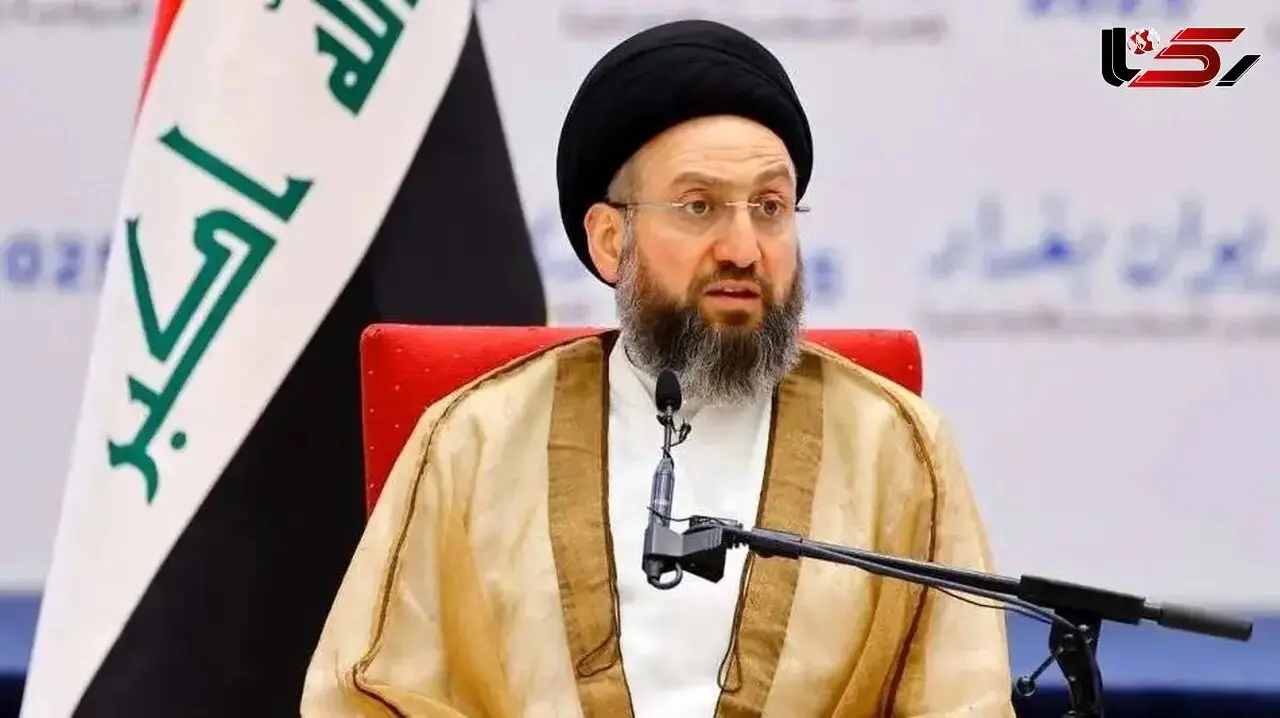
On the anniversary of the passing of Sayyid Abdulaziz Hakim, Sayyid Ammar Hakim highlighted his personal and political attributes, stressing that “Iraq’s Aziz” viewed politics not as a competition for positions, but as a responsibility and a trust, and considered religious authority as a guiding compass in critical historical moments.
Referring to the position of religious authority, the leader of the National Wisdom Movement stated that it is neither a temporary title nor a political tool, but rather a moral balance and compass to be referred to in all stages. He emphasized that Najaf al-Ashraf is a school of moderation and a center of balance, and that religious authority is not a party to disputes but a ceiling encompassing all.
Hakim also underscored the efforts of Sayyid Abdulaziz Hakim to remove Iraq from Chapter Seven of the United Nations Charter, describing the preservation of this achievement as a national duty and warning against any recurrence of paths that could weaken Iraq’s international position.
In another part of his speech, Hakim described Iraq’s current political deadlock as an exhausting situation for governmental institutions and a factor undermining public trust. He called for the swift implementation of constitutional commitments and the formation of a government based on a clear program and competent individuals.
Emphasizing the principle of an “Iraqi decision,” the leader of the National Wisdom Movement asserted that any attempt to impose external dictates on Iraq’s decisions or the choices of its components will be firmly rejected. Iraq is an independent and sovereign country that requires no guardianship, and its decisions must be fully Iraqi and determined through constitutional institutions.
Hakim warned against the return of weakness and division, noting that Iraq has paid a heavy price to exit international sanctions and restrictions, and stressed that this path should not be reversed.
Regionally, Hakim called on the international community to adhere to charters and international laws amid growing global and regional tensions. He cautioned that imposing wills by force endangers international peace and security.
Supporting the continuation of constructive dialogue between the Islamic Republic of Iran and the United States, he stated that dialogue remains the shortest path to keeping the region away from further crises.
Hakim urged the U.S. government not to heed adventurous and provocative calls, emphasizing that escalating tensions benefits no one. He stressed that intensifying tensions primarily serves war and crisis profiteers, while the peoples of the region bear the cost through their security and stability.
In conclusion, the leader of Iraq’s National Wisdom Movement highlighted that the stability of the Islamic Republic of Iran is a key pillar for regional stability, and that U.S.-Iran dialogue is essential to protect all parties from the costs of heightened tensions. He described this stance as a responsible position upheld by all regional countries and their peoples, who have repeatedly reminded the U.S. government of the necessity to avoid the option of war and military escalation. He expressed hope that the U.S. administration would recognize and take this reality seriously.
Send Comments