

Venezuela: Where Is the Country With Vast Oil and Gold Reserves Located?
Rokna Political Desk: Venezuela, a country in South America with the world’s largest proven oil reserves and the fourth-largest extractable gold resources, has recently come under international spotlight due to U.S. military threats and the strategic importance of its natural resources.
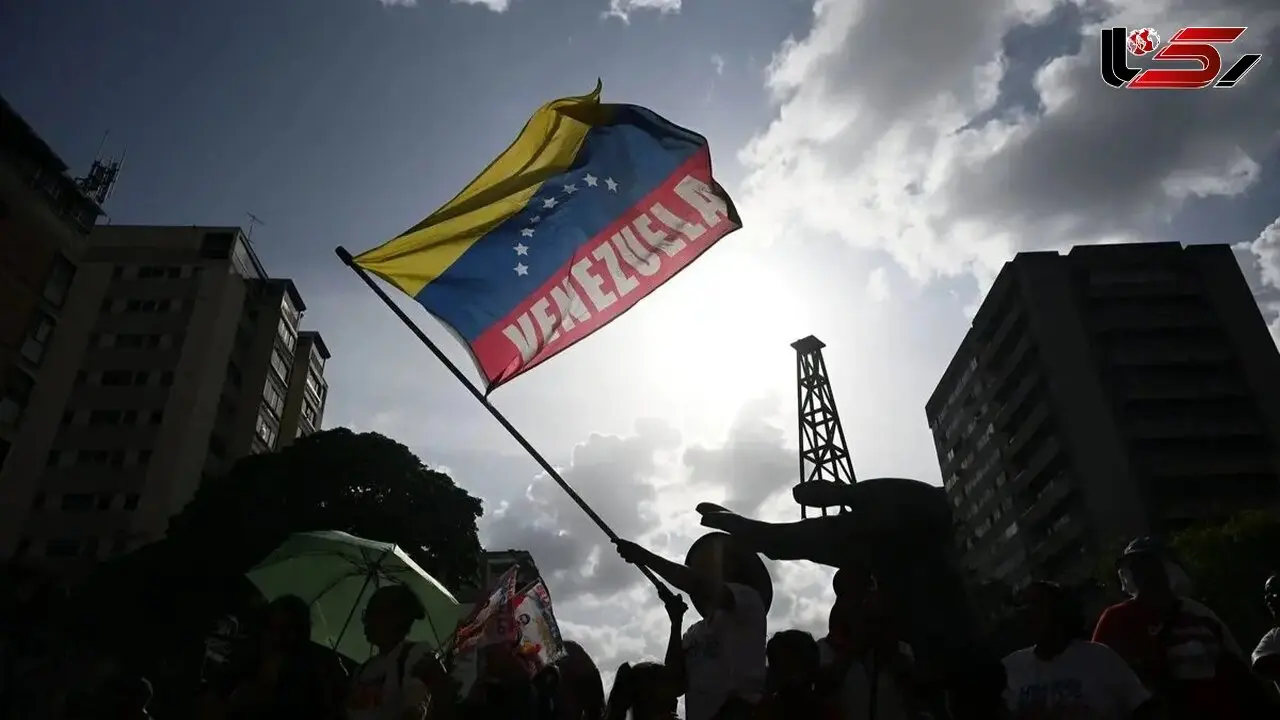
These days, the name of Venezuela has risen to prominence following U.S. military threats under the pretext of combating drug trafficking. Current news from the Americas centers on the possibility of a U.S. military attack on the country and the militarization of the Caribbean region.
According to Fararu, many experts believe that the commotion created in the Caribbean is not due to drug trafficking, but rather because of Venezuela’s massive oil and gold reserves. But where exactly is Venezuela, and how much oil and gold does it possess that could prompt a country like the United States to consider military mobilization?
Where is Venezuela?
Venezuela, officially known as the Bolivarian Republic of Venezuela, is located in the northern part of South America. Situated in the Northern and Western Hemispheres, the country spans an area of approximately 916,445 square kilometers, making it the 33rd largest country in the world. Venezuela is bordered to the north by the Caribbean Sea and the Atlantic Ocean, to the east by Guyana, to the south by Brazil, and to the west and southwest by Colombia.

Its capital, Caracas, is situated in a mountainous valley in the northern part of the country, and Venezuela’s population exceeds 30 million people. The country’s geography is diverse: from the Andes Mountains in the northwest — with peaks such as Pico Bolívar (4,978 meters) — to the Guiana Highlands in the southeast, the central Llanos plains, and the Orinoco River Delta. This diversity makes Venezuela one of the most resource-rich countries in the world.
How much oil and gold does Venezuela have?
With proven oil reserves of about 303.8 billion barrels, Venezuela possesses the largest oil reserves in the world, primarily located in the heavy-oil Orinoco Belt and the Maracaibo Basin. According to BP’s 2023 Statistical Review of World Energy, this figure slightly surpasses Saudi Arabia’s reserves (297.7 billion barrels). However, much of Venezuela’s oil is heavy and costly to extract, and due to sanctions and infrastructure issues, current production has been reduced to around 700,000 barrels per day. In addition to oil, Venezuela’s proven natural gas reserves are approximately 5.5 trillion cubic meters, accounting for 3 percent of global reserves.
Regarding gold, according to reports from the U.S. Geological Survey (USGS), Venezuela’s extractable gold resources are estimated at roughly 10,000 metric tons, mainly located in the southeastern regions (Bolívar State and the Orinoco Mining Arc). This places Venezuela in fourth position globally in terms of mineral gold reserves, after Russia (about 12,800 tons), Australia (about 12,000 tons), and the United States (about 3,000 tons). In South America, however, Venezuela ranks first, followed by Peru (about 2,500 tons), Brazil (about 2,300 tons), and Colombia (about 1,000 tons). Despite possessing such vast gold resources, Venezuela has been unable to fully extract and utilize them due to sanctions.
Beyond oil and gold, Venezuela also holds significant reserves of other minerals. These include approximately 5.2 million tons of bauxite (raw aluminum), 14.6 million tons of iron ore, and considerable diamond deposits. Coal, salt, sulfur (6 percent of global production), feldspar (2 percent), and silica sand (1 percent) also constitute important natural resources of the country.
Overall, in rankings assessing the total value of natural resources (including oil, gas, and minerals), Venezuela frequently appears among the world’s top ten countries, with an estimated resource value exceeding 14 trillion dollars.
Send Comments