

Why Did Larijani Travel to Oman? The U.S. Request and Iran’s Response
Rokna Political Desk: Ali Larijani’s visit to Oman on the eve of the Geneva talks reflects Iran’s efforts to reduce tensions, reach an agreement to ease sanctions, and respond to Washington’s request.
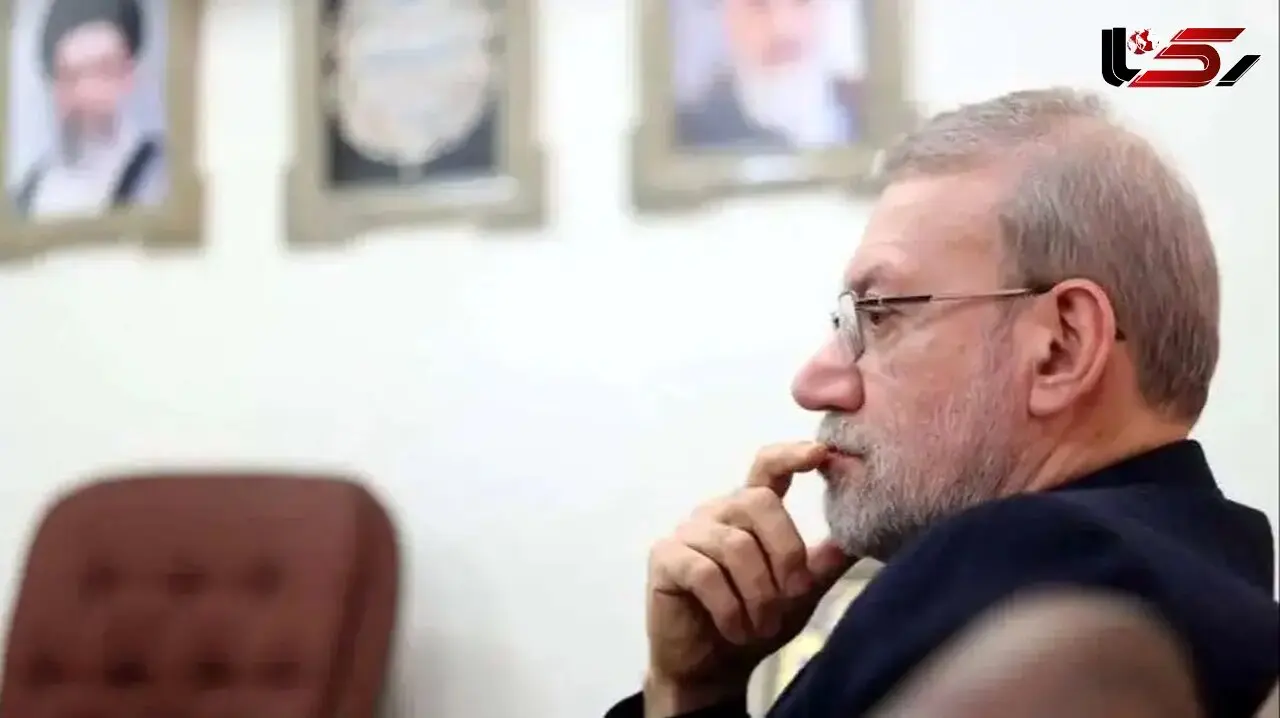
As the countdown approaches the alleged U.S. deadline, Tehran has brought diplomacy to the forefront. The announcement of Ali Larijani’s trip to Muscat, ahead of the third round of indirect Iran-U.S. talks in Geneva, signals intensive efforts to achieve an agreement that would both alleviate the shadow of sanctions and reduce the risk of escalating regional tensions. According to Axios, this is likely Donald Trump’s final opportunity for Iran to define the elements of an agreement and show flexibility on its details.
According to Donya-e-Eqtesad, Ali Larijani, Secretary of Iran’s Supreme National Security Council, is scheduled to travel to Oman on Tuesday. Omani media sources report that Mohammad Al-Oraimi, an Omani analyst and head of the Omani Journalists Association, wrote on X: “It is expected that Ali Larijani will carry Iran’s response regarding the nuclear file during his Tuesday visit.”
The Omani analyst and media figure emphasized: “This trip reflects the continuation of diplomatic efforts and also affirms Oman’s pivotal role in facilitating communication and dialogue channels between the Iranian and U.S. parties.”
On 10 February, Larijani led a delegation to Muscat, which, according to analysts, resulted in some openings in the path of negotiations with the United States. During that visit, the Omanis delivered a written U.S. request to Larijani. It now appears that Tuesday’s trip of the Secretary of the Supreme National Security Council will convey Iran’s final response to this request, potentially leading to the drafting of a preliminary agreement given emerging progress in negotiations.
Three Axes of Thursday’s Talks
Previously, Seyed Abbas Araqchi, Iran’s Deputy Foreign Minister, told CBS that a meeting with Steve Witkoff, Trump’s special envoy, is possible on Thursday. The third round of indirect Iran-U.S. nuclear negotiations will take place on Thursday at the Omani Embassy in Geneva, mediated by Omani Foreign Minister Badr Al-Busaidi. The discussions will cover Iran’s nuclear commitments, the counterpart’s commitments to sanctions relief, and economic cooperation.
Regarding Iran’s draft proposal, Araqchi told CBS: “We are still working on it and trying to structure it in a way that addresses the concerns and interests of both parties. We are working on these elements and I believe that when we meet again in Geneva this Thursday, we can refine these elements, prepare a solid text, and reach a swift agreement. This is my understanding. I consider it entirely possible.” Rafael Grossi, Director General of the International Atomic Energy Agency, is also expected to attend Thursday’s session.
An Iranian diplomat told ISNA about reports of Grossi’s presence at the 7 February Iran-U.S. talks in Geneva: “It is likely that the Director General of the IAEA, as in the previous round of talks on 28 January in Geneva, will also attend this session.” Grossi’s role is emphasized in verification-related discussions, especially ahead of the IAEA Board of Governors’ seasonal meeting in March.
Drafting Views
Meanwhile, Esmail Baqaei, spokesperson for the Iranian Foreign Ministry, told reporters that if both sides demonstrate goodwill, a positive outcome is achievable: “We are in the stage of formulating positions and hope that in the next few days, in the session announced by Mr. Araqchi, we will have another round of negotiations.”
Regarding the possibility of a temporary agreement, Baqaei said: “Speculation about the content and outcome of the talks is widespread, but we do not confirm any of it. Details of the negotiations, including a temporary agreement, have no basis. Drafting any negotiation text is a joint effort. Our position on ending U.S. sanctions and nuclear issues is clear, and we are also aware of the American side’s perspective.”
Condition for Implementing the Additional Protocol
On Iran’s conditions for accepting the Additional Protocol, as raised by the Foreign Minister, Baqaei explained: “We voluntarily implemented the Additional Protocol during the JCPOA. Therefore, there is an existing experience, and naturally, implementation of such a decision is linked to reciprocal measures, particularly in sanctions relief.”
On whether the U.S. will submit its own proposal, he added: “One indicator of seriousness in any negotiation is that all parties work with goodwill to achieve results. Drafting any text requires cooperation from all parties. We are engaged in this task; what the U.S. delegation will do should be asked of them directly. Naturally, the U.S. side has its own views and perspectives.”
Fate of Visits to Damaged Sites
Regarding the condition that Iran’s nuclear sites be open to inspectors, Baqaei stated: “We are aware of our commitments. All our obligations and permission for inspection of peaceful nuclear facilities were fulfilled in 2025. However, the issue of damaged sites is different, and without a protocol, we are unable to allow access.”
He added: “Visiting damaged sites is a matter between Iran and the IAEA, which requires agreement on a procedural framework, but we are not at that stage yet.”
Oman Welcomes Tehran and Washington’s Bold Step
Following the announcement of the third round of negotiations, Omani Foreign Minister Badr Al-Busaidi wrote on X on Sunday evening: “I am pleased to confirm that Iran-U.S. talks are now scheduled for Geneva this Thursday.”
Al-Busaidi, who has served as a mediator in previous indirect talks and will likely participate again, added: “I am also pleased that positive efforts are being made to take further steps toward finalizing the agreement.” Meanwhile, on Sunday, Seyed Abbas Araqchi spoke by phone with Oman’s Foreign Minister regarding the latest status of Iran-U.S. indirect talks, during which they discussed arrangements for the next round of nuclear negotiations.
Israel on Edge
Thursday’s talks will take place amid the persistent shadow of threat and war over Iran. On one hand, Steve Witkoff and Jared Kushner, advisors to the U.S. President, are seeking to create more space for diplomacy, while some figures around Trump are pushing for military action against Tehran if no agreement is reached. Meanwhile, the European Union has opposed any regional conflict. Kaya Kallas, the EU’s foreign policy official, said before the EU foreign ministers’ meeting: “We do not need another war in this region. We already have too much on our plate.”
Increased Diplomatic Consultations
Two days before the third round of Tehran-Washington talks, diplomatic consultations have intensified. In this context, the Iraqi Foreign Minister and his Omani counterpart spoke by phone on Monday about the imminent U.S.-Iran negotiations, emphasizing the necessity of successful talks to avert the shadow of war and strengthen regional security and stability. The Egyptian Foreign Ministry also announced on Monday that Minister Badr Abdel-Atti conducted intensive negotiations over the past two days to advance the process of easing tensions in the Middle East.
During these diplomatic discussions, officials focused on reducing regional tensions, containing the escalating crisis, creating a favorable environment for resuming U.S.-Iran talks, and seeking diplomatic and political solutions.
Separately, on Sunday evening, Seyed Abbas Araqchi spoke by phone with Iraqi Foreign Minister Fuad Hussein, reviewing recent regional and international developments, and updating his Iraqi counterpart on the latest developments regarding the Iran-U.S. nuclear negotiations.
Send Comments