

Witkoff and Jared Kushner Are Not Diplomatic Figures for Iran’s Nuclear Case / Witkoff Is Not a Man of the Field
Rokna Political Desk: Neither Jared Kushner, son-in-law of the U.S. president, nor Steve Witkoff, Trump’s special envoy to the Middle East, are yet capable of handling Iran’s nuclear dossier.
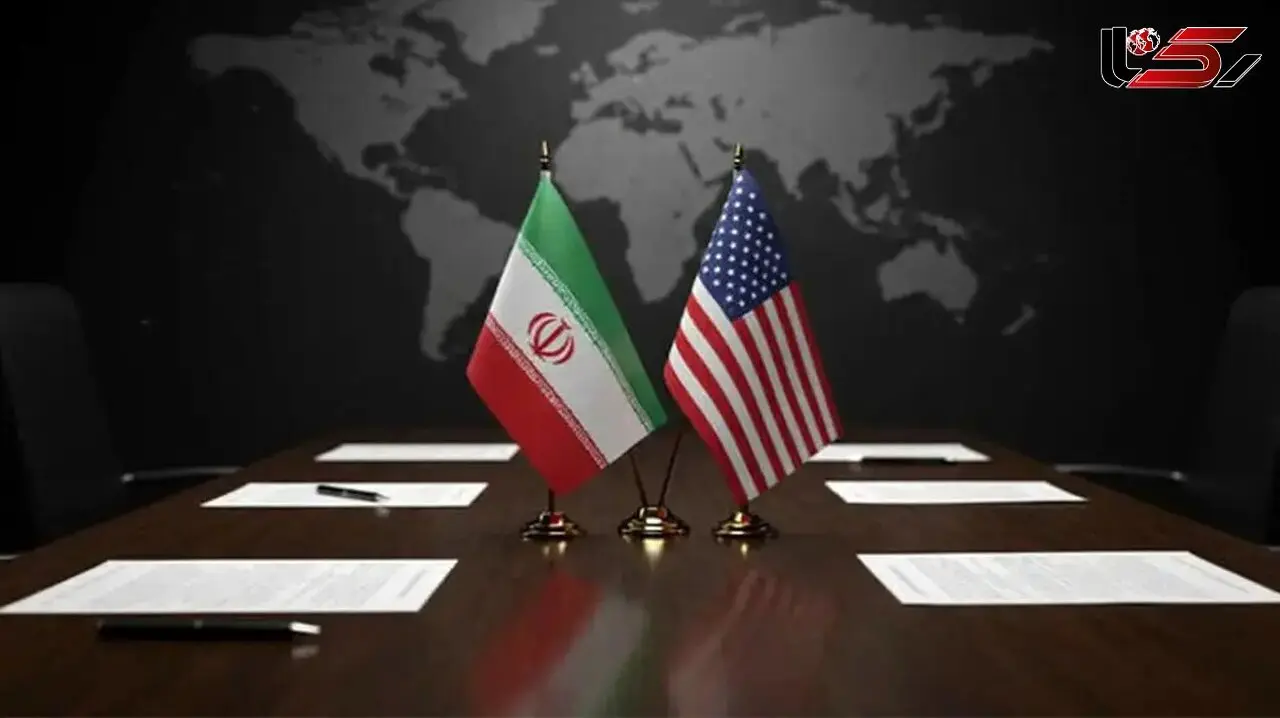
According to Rokna, Witkoff’s contradictory statements in yesterday’s interview (Sunday, 3 Esfand 1404) demonstrated that, similar to the negotiations in Ordibehesht and Khordad, he has not yet shown himself as a determined actor in the talks. Kushner and Witkoff, these two Jewish-American figures, have presented themselves as successful businessmen; however, cases of this nature require diplomats, not traders.
The presence of these two in the negotiations, along with managing another important dossier such as the Russia-Ukraine war, indicates that the other side does not take the negotiations as seriously as it should. What further diminishes the effectiveness of this combination are the internal divisions in the U.S. regarding a possible renewed attack on Iran.
Strategic Discrepancy Among U.S. Factions
One of the U.S.’s challenges in dealing with the Trump administration is the lack of a unified strategy in Washington. Iran is not facing a coherent ruling team in current negotiations but rather a collection of opposing factions, each leveraging the Iran crisis to advance their own objectives.
-
Donald Trump and his deputy, J.D. Vance, under pressure from the so-called “Peace Council,” seek rapid results. The 10–15 day deadline set by Trump reflects this type of political maneuvering. They aim to obtain strategic advantages without engaging in a costly war.
-
Mike Huckabee, U.S. ambassador to Israel, openly considers war the only language Iran understands. In contrast, Senator Lindsey Graham has warned Trump that any bombing of Iran could escalate into a regional disaster, undermining all his administration’s economic achievements.
-
Senior U.S. military and Deep State layers, recalling Iran’s missile response at Ain al-Asad and the results of the twelve-day war, warn against the consequences of an attack on Iran. They are well aware that U.S. bases in the region are vulnerable to Iran’s drone and missile capabilities.
-
Certain members of the House and Senate focus on domestic issues, viewing an attack on Iran as an attempt by Trump and his administration to cover internal inefficiencies, including Senators Elizabeth Warren, Alexandria Ocasio-Cortez, Thomas Massie, and Nydia Velázquez.
This division makes none of the signals coming from Washington appear credible. When Trump sets a deadline while the Pentagon warns about the consequences of war and the intelligence community opposes military action in Iran, any operational proposal becomes ambiguous.
Signs of Lack of Seriousness
Due to this fragmentation and strategic deadlock in the region, the United States has resorted to performative behaviors to reconstruct the image of a dominant power.
-
The current U.S. negotiation model with Iran involves short weekly meetings and multiple media portrayals until the next dialogue session. This gives the impression that for Trump, negotiation and diplomacy are mere gestures, a façade to present himself as a peace-seeking president.
-
Mobilizing segments of the Iranian diaspora simultaneously with the start of negotiations is another sign of the U.S. side’s lack of seriousness in the talks.
In yesterday’s conversation with Fox News, Witkoff, while mentioning his meeting with Reza Pahlavi under Trump’s direct orders, emphasized that the Iran dossier is unrelated to Pahlavi. However, it seems that the U.S.’s attention to Pahlavi is a “restorative show” to compensate for field failures.
Washington seeks to create a “psychological pressure lever” to instill doubt in Tehran’s calculations; however, as noted by American publications such as Foreign Policy, these figures lack any real executive power or serious social base inside Iran.
-
While Washington announced sanctions on 15 entities and 14 tankers of the “shadow fleet” in February 2026, U.S. institute statistics claim that Iranian oil exports remain at approximately 1.5 million barrels per day. This is analyzed under the erosion of oil sanctions tools. Nonetheless, the main goal of these pressures is to impact the livelihood of the Iranian people, the most crucial element of Iran’s national power. U.S. Treasury Secretary Scott Bessant recently admitted: “We created a dollar shortage in this country [Iran], and the process reached results very quickly. I can say its peak was in December when one of Iran’s largest banks collapsed following a depositor rush, forcing the Central Bank to print money. The value of Iran’s currency dropped sharply, inflation exploded, and consequently, we saw the Iranian people take to the streets.”
-
The deployment of the USS Abraham Lincoln in the Arabian Sea and the addition of USS Gerald Ford in the Atlantic Ocean are the most prominent signs of Washington’s unstable decision-making. Regional allies of Trump have repeatedly warned over the past month that any U.S. move could put all countries in the region in serious danger. Iran has also repeatedly warned that in the event of reckless U.S. action against Iran, all U.S. bases in the region will become legitimate targets for Tehran. Beyond the display of power, another goal of sending military assets to the Middle East is to reassure regional allies.
Lack of Diplomatic Expertise in Trump’s Negotiation Team
In international relations, the identity of negotiators is the most credible signal of intent to reach an agreement. The presence of figures lacking professional diplomatic backgrounds, who approach a complex issue like the Iran-U.S. agreement purely from a business perspective, indicates that Washington is not seeking an accord with appropriate legal and executive guarantees.
-
Steve Witkoff: The Blind Executor and the Puzzle of Iran’s Endurance. Steve Witkoff, Special Envoy for the Middle East, exemplifies an actor without independent political will. His recent statements to Fox News, claiming that “Trump is surprised by Iran’s refusal to surrender despite unprecedented pressure and U.S. naval power,” reveal the depth of intelligence deficiency on the other side of the negotiating table.
This shows that Witkoff and his superior reduce national power merely to the number of warships and volume of sanctions. They lack not only a historical understanding of power failures at their peak but also comprehension of “strategic deterrence” and “depth of strategy.” Witkoff admitted that Trump constantly asks why Iran, despite seeing the fleets, does not sign a surrender document.
Witkoff claimed that the U.S. red line is zero enrichment, whereas from the very start of negotiations, Iranian diplomats, particularly Foreign Minister Abbas Araghchi, emphasized that zero enrichment is not on the table. The same decision-making paradox occurred during pre-twelve-day-war negotiations: initially, both parties agreed to reduce enrichment levels, which later escalated to demands for zero enrichment.
-
The presence of Kushner, Trump’s son-in-law, alongside Witkoff sends a clear signal that Washington intends to replace international law with a “market logic.” This team is neither familiar with the technical intricacies of enrichment nor with the legal subtleties of arms control treaties. They seek a “photo opportunity” and a “symbolic statement” in which Iran relinquishes all its power components, and U.S. economic projects in the Middle East advance.
Just as the opposing side struggles with miscalculations regarding Iran’s power components, similar domestic errors are possible. “Kushner fear” or “Kushner idolization” is one such mistake. Some political factions, with a simplistic view, have turned Kushner into a mythical figure and the ultimate dealmaker. Kushner and Witkoff are merely the façade of an aggressive policy, lacking any discretion to deviate from maximum demands. Exaggerating their roles in domestic media only serves to weaken the national bargaining position.
A Zero-Sum Game
Ultimately, Trump’s America has shown that negotiation with it is a “zero-sum game.” Washington does not aim to resolve the issue but to manage the crisis by continuous pressure, bringing Iran to a point of internal rupture. Strategic vigilance requires resisting the elevation of non-diplomatic actors like Kushner and carefully discerning between “media rhetoric” and “on-the-table realities.” At present, the U.S. is neither certain of the consequences of a full-scale war nor genuinely committed to a serious and proportional agreement. History has shown that any concession under pressure strengthens the enemy to advance further into national sovereignty.
Send Comments