

Takht-Ravanchi: We Are Ready to Discuss 60 Percent Enrichment with Washington / It Is Too Early to Judge the Course of the Negotiations
Rokna Political Desk: Majid Takht-Ravanchi, Iran’s Deputy Foreign Minister, said that Tehran is prepared to discuss the issue of 60 percent enrichment and other aspects of its peaceful nuclear program with the American side, provided that the United States also engages in discussions regarding the lifting of sanctions.
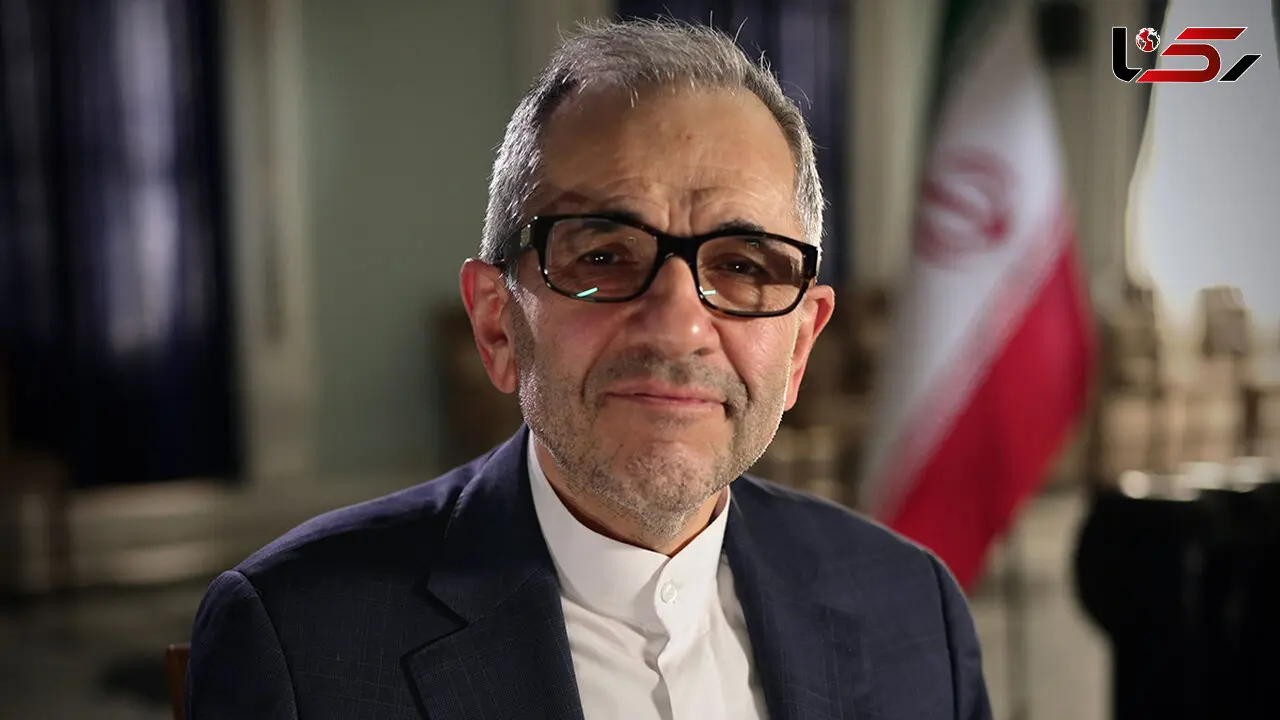
According to Rokna, the BBC wrote: U.S. officials in recent months have repeatedly claimed that it is Iran that has stalled the lengthy negotiation process. In this regard, U.S. Secretary of State Marco Rubio on Saturday claimed that Donald Trump is willing to reach an agreement with Iran, but that achieving a deal with Iran is “very difficult.”
However, Takht-Ravanchi emphasized: “The ball is in America’s court to prove that it wants an agreement.”
He added: “If they are sincere, I am confident that we will be on the path to reaching an agreement.”
It Is Too Early to Judge the Course of the Negotiations
Iran and the United States held indirect talks in Oman in early February.
Confirming that a second round of negotiations will be held in Geneva on Tuesday, Takht-Ravanchi said the talks have been “more or less in a positive direction, but it is too early to judge.”
Iran’s Deputy Foreign Minister described Tehran’s proposal to dilute uranium enriched to 60 percent as a sign of readiness to compromise.
Takht-Ravanchi said: “If they are also ready to talk about sanctions, we are prepared to discuss this issue and other matters related to our nuclear program.”
In response to a question about whether Iran, as in the 2015 nuclear agreement, would be willing to ship out its stockpile of more than 400 kilograms of enriched uranium, he said: “It is still too early to say what will happen during the negotiations.”
Zero Enrichment Is Not on the Negotiating Table
According to the report, one of Iran’s main demands has been that the talks focus solely on the nuclear issue.
Takht-Ravanchi said in this regard: “Our understanding is that they have come to the conclusion that if you want to have a deal, you must focus on the nuclear issue.” Iran considers a complete halt to enrichment a “red line” and a violation of its rights under the Nuclear Non-Proliferation Treaty. Contrary to Trump’s recent remarks that “we don’t want any enrichment,” Takht-Ravanchi stressed: “The issue of zero enrichment is no longer being raised and, from Iran’s perspective, it is not on the negotiating table.”
We Will Not Accept Deprivation of Our Defensive Capabilities
He also reiterated Tehran’s opposition to discussions about its ballistic missile program. Takht-Ravanchi said: “When we were attacked by the Israelis and the Americans, it was our missiles that came to our aid; how can we accept being deprived of our defensive capabilities?”
Concern Over Washington’s Conflicting Messages
This senior Iranian diplomat expressed concern over the conflicting messages of the U.S. President.
He said: “We hear that they are interested in negotiations; they have said so publicly and in private messages through Oman that they want these issues to be resolved peacefully.”
However, Trump in his recent remarks once again emphasized regime change in Iran and stated: “It seems that this would be the best thing that could happen.”
Referring to messages conveyed through Oman’s Foreign Minister, Sayyid Badr bin Hamad Al-Busaidi, Takht-Ravanchi said such positions have not been raised in private messages. Oman is now considered the main Arab mediator in these negotiations, and countries such as Qatar are also playing an active role.
Warning About War and Increased U.S. Military Presence
Takht-Ravanchi also questioned the increased U.S. military presence in the region and warned that another war would be “a severe blow and bad for everyone… everyone will be harmed, especially those who initiated this aggression.”
He added: “If we feel that an existential threat is directed at us, we will respond accordingly.”
Regarding whether Iran would consider a potential U.S. attack a battle for survival, he said: “Even thinking about such a dangerous scenario is not wise, because the entire region will be thrown into turmoil.”
Iran has previously stated that it considers U.S. military bases in the region to be legitimate targets. In response to a question about the deployment of more than 40,000 American troops in the region, Takht-Ravanchi said: “In that case, it would be a different game.”
According to this Iranian official, senior officials in Tehran have been in intensive contact with their regional counterparts, who have also discussed with Trump the necessity of avoiding war.
He said: “There is almost a consensus in the region against war.”
Takht-Ravanchi stated: “We hope to achieve results through diplomacy, although one cannot be 100 percent certain. We must remain vigilant so that we are not taken by surprise.”
Takht-Ravanchi said Iran will participate in the next round of negotiations in Geneva with hope of reaching an agreement.
He concluded: “We will do our utmost, but the other side must also prove that it is sincere.”
Send Comments