

Araghchi: Results of Friday’s Talks Are Under Review / Military Presence in Diplomatic Process Has No Significance
Rokna Political Desk: Today, the Minister of Foreign Affairs stated in a press conference that the results of Friday’s negotiations are under review and a decision regarding their continuation will be made. He emphasized: zero enrichment can by no means be acceptable to Iran.
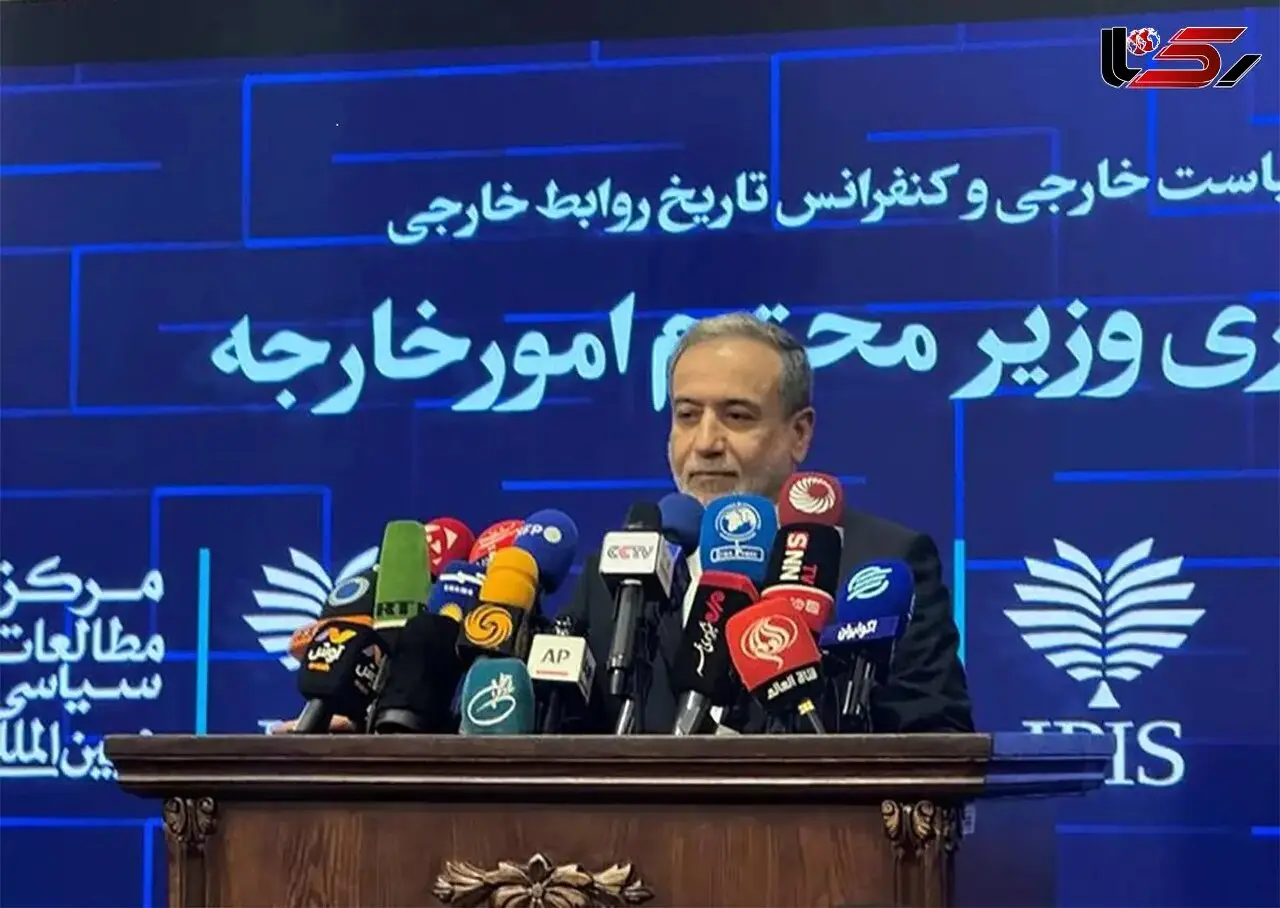
According to Rokna, Seyed Abbas Araghchi, Minister of Foreign Affairs, spoke at a press conference this afternoon (Sunday, 19 Bahman 1404) on the sidelines of the First National Congress on Foreign Policy and the History of Foreign Relations at the Center for Political and International Studies of the Ministry of Foreign Affairs. He provided an update on the latest developments in foreign policy and answered journalists’ questions.
Regarding talks with the United States and Iran’s outlook, he said: “Friday’s negotiations in Muscat were solely focused on the nuclear issue, and we repeatedly stated that we would discuss only this matter—and that is exactly what happened. The negotiations were only about the nuclear issue.”
The Foreign Minister added: “If there is to be a continuation, it will also proceed in the same manner in the future. The results of Friday’s negotiations are currently under review, and a decision regarding their continuation will be made. However, the overall approach of both countries at the end of Friday’s negotiations was in favor of continuing the talks.”
He further noted: “In any case, it depends on the conclusions reached in the two capitals.”
When asked about this round of negotiations and how it differs from previous rounds, Araghchi said: “The only similarity between this round and the previous one is its format: it is still indirect in Muscat, facilitated by the Omani Foreign Minister. Another similarity is that we only discuss the nuclear issue—nothing else.”
He added: “However, in other respects, there are fundamental differences. Over the past year, Iran has learned many lessons from previous negotiations and from the war—in military, political, and diplomatic spheres. We are entering these negotiations with open eyes, taking all that has occurred into account.”
The head of the diplomatic corps continued: “The first session, in my view, was a test of how much we could trust the other side and how serious they were in seeking a negotiated solution.”
Araghchi said: “Our counterpart claimed they were assessing our seriousness as well. If our conclusions indicate that seriousness exists on the other side, the negotiations will continue. There are signs of seriousness and signs of weakness. The continuation of some sanctions and certain military actions raise doubts about the other side’s seriousness and readiness for genuine negotiations.”
He added: “We are monitoring all of this, evaluating all indicators together, and will make a decision regarding the continuation of the talks.”
Regarding the issue of enrichment, the Foreign Minister stated: “Enrichment is one of the serious topics of our negotiations. As we stated in previous rounds, we repeat again: zero enrichment can by no means be acceptable to us. Discussions must focus on ensuring that enrichment in Iran continues while simultaneously providing assurances that this enrichment is for peaceful purposes and will remain so.”
He continued: “We have no problem building confidence in this regard and taking measures regarding enrichment details to ensure trust, but the principle of enrichment must absolutely be accepted. Friday’s negotiations were focused on this aspect, and more details will, God willing, be discussed in subsequent rounds.”
Responding to a question about reports of his meeting with Whitcraft and Kushner on the sidelines of the Muscat session, he said: “No direct meeting took place, but we had a diplomatic courtesy interaction, limited to a handshake and initial pleasantries. This has happened repeatedly in the past. In all previous rounds, negotiations were indirect, and delegations would meet briefly upon arrival or departure. This is normal and a part of diplomatic etiquette.”
When asked why direct negotiations are not conducted, he replied: “I have repeatedly stated that the format is not as important as the content. Indirect negotiations are not unusual in international relations and are quite common.”
He explained: “For various reasons, two countries may not wish to speak directly or face each other—due to political, historical, or post-war contexts. This is why the concept of mediation exists in international relations. For example, Russia-Ukraine negotiations, currently involving the United States, began indirectly, with the U.S. serving as an intermediary.”
Araghchi emphasized: “Indirect negotiations are not an obstacle to reaching an agreement. The real obstacles are content-related issues, overreach, and unreasonable or unrealistic demands. What matters is the U.S. approach; if it is serious about a fair, respectful agreement based on mutual interests, I believe an agreement is possible, whether direct or indirect.”
Regarding Iran’s proposal on the table, he said: “I cannot discuss details. The general framework is clear. Certain confidence-building measures in the nuclear program are possible from our side, and in return, sanctions must be lifted. The scope of measures we can take and those they can take naturally require negotiation, and details will be clarified during the talks.”
On the timing and location of the next round, the Foreign Minister stated: “The venue and date will be determined in consultations facilitated by the Omani Foreign Minister. It may be elsewhere, just as in previous rounds we met at different locations. The negotiation format remains indirect from our perspective, and the timing and place will be determined through diplomatic consultations.”
Addressing regional countries’ efforts to resume negotiations and his recent trip to Qatar, he said: “One of the significant differences this time compared to the 2013–2015 negotiations leading to the JCPOA is the active presence of the region. This does not mean interference or participation in the negotiations, but continuous consultations with regional countries. If Europeans were present last time, now it is the regional countries with whom we consult and seek their assistance.”
Araghchi added: “We respect their good intentions and sincere efforts. They have played a positive role in reducing tensions, preventing escalatory actions, and encouraging parties to negotiate.”
He continued: “As you observed, before the recent negotiations, seven regional heads of state contacted Mr. Pezeshkian regarding the talks, making proposals and urging Iran to respond positively to the U.S.—these countries include Turkey, Pakistan, Saudi Arabia, UAE, Qatar, Egypt, and Azerbaijan. I have had multiple phone calls with regional foreign ministers and will continue to do so. I believe this regional initiative and building trust in the outcomes of our negotiations with the U.S. can increase the likelihood of sustaining any agreement.”
Regarding his trip to Doha, he said: “This trip was previously scheduled for the Al Jazeera Forum, where I was invited as the keynote speaker. I had promised to attend from the beginning. I also had a productive meeting with my Qatari counterpart.”
On the presence of a military official in the talks and the missile and regional issues, he said: “Missile and regional issues are not on the agenda of the negotiations. The focus is solely on the nuclear issue and will continue as such. The presence of a CENTCOM commander makes no difference; they claimed they came to inspect their vessel and requested diplomatic courtesy, which we did not accept. A military presence in the diplomatic process has no significance.”
He added: “The active engagement of regional countries in support of these negotiations has been very positive, and we will continue these regional consultations, just as we continue consultations with Russia and China. These two countries are our strategic friends and partners. Yesterday, my deputy met with the Chinese and Russian ambassadors to brief them on the negotiation process and details, and we continue to consult with them.”
A reporter referenced Trump’s statement that if Iranians had accepted current conditions in the previous round, war would not have occurred and asked Araghchi what these conditions were. He replied: zero enrichment.
Send Comments