

Barak: Trump Does Not Support Regime Change in Iran / The Israel–Tehran Story Is Not Over
Rokna Political Desk: Tom Barak, Donald Trump’s special envoy on Syrian affairs and the U.S. Ambassador to Turkey, referring to past U.S. experiences in attempts to change regimes in various countries, stated that Trump does not support American involvement in regime change in Iran. He added: “We have had two regime changes in Iran so far, and neither of them has worked.”
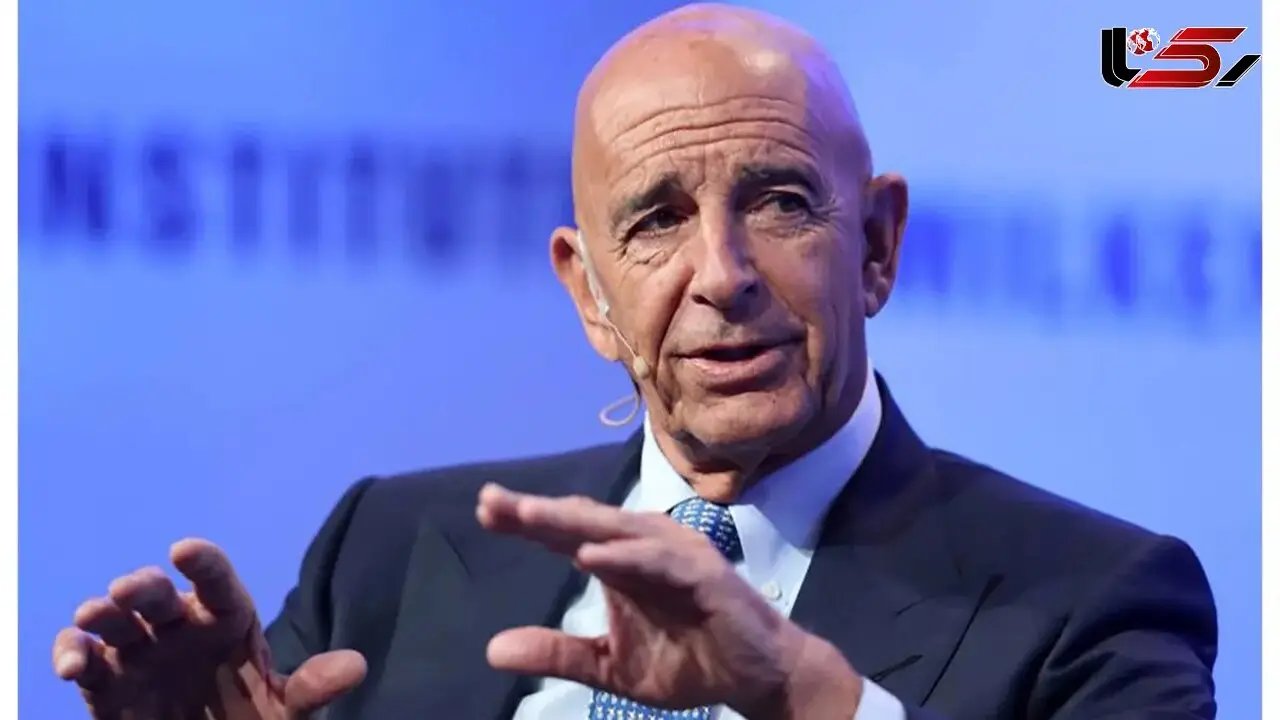
According to Rokna, Tom Barak claimed in an interview with the Emirati newspaper The National: “Regime change has never worked in practice. If you look from 1946 onwards, the United States has been involved in 93 coups and regime changes, all of which have failed. Therefore, my superiors—Marco Rubio, the Secretary of State, and Donald Trump, the President of the United States—are not seeking regime change. They are looking for a regional solution, one that the region itself will lead. Therefore, this matter concerns Israel, not the United States.”
According to Euronews, Barak claimed: “What Trump did to end that 12-day war was historic and extraordinary. But to hold him responsible for regime change is not correct.”
Tom Barak, without providing further details, claimed: “We have had two regime changes in Iran so far, and neither of them has worked.”
Barak claimed: “In my view, the wise approach is to leave the solution to the region itself. Why did Israel not want to finish the job? I do not think this story is over. We are now in the fifth chapter, and five chapters still remain.”
Iran’s Role in Preventing the Disarmament of Hezbollah
Tom Barak, referring to the talks between Israel and Lebanon and the “cessation of hostilities” agreement between the two achieved in November 2024 through U.S. mediation, said: “The dialogue must be between Lebanon and Israel. At present we have a cessation of hostilities agreement achieved in November 2024. But this agreement is not between the two sides. In fact, at that time the United States and France said: since you [Lebanon] are not speaking with Israel, Israel is not speaking with Hezbollah, and Hezbollah does not want to speak with the Lebanese government, we will create an artificial cover – which did not work the next day.”
Barak claimed: “The good news is that now everyone says let us talk. But the dialogue must include a solution for the Shia and Hezbollah. The issue is not their disarmament. The issue is how to persuade them not to use weapons. That is the difference. This will be a real agreement between Israel and Lebanon. Something that convinces the Shia to say that Iran must be removed from this matter, which we have discussed before.”
The special envoy of Donald Trump, pointing to the willingness of the Gulf Arab states to resolve the Lebanon issue, claimed: “The Gulf Arab countries have invested billions and billions of dollars in the past to resolve this issue. But as long as Iran wants to keep them [Hezbollah and allied groups] as proxy forces, such a task is extremely difficult.”
Continuing his rhetoric, Barak claimed: “If we can bring Lebanon and Syria simultaneously to a border agreement and a conflict-prevention agreement with Israel, it will be a very significant step. Then we have Turkey and the eight countries around it, including Israel and Lebanon, and we must see what we can do with Iran. I hope Iran comes to its senses.”
Iran’s Influence in Iraq
Tom Barak, in another part of his baseless allegations, described Iran as the source of “chaos” in Iraq and claimed: “Iran-backed militias practically dominate the Iraqi parliament. Therefore, a good prime minister like Mr. Sudani is elected, but he has no power and cannot form a coalition, because others, including the Popular Mobilization Forces and their representatives in parliament, paralyze the scene.”
Continuing his rhetoric against Iran, Barak claimed: “Consider Iraq, Syria, Lebanon, and Turkey. Their shared borders with Iran are the fundamental issue. Iran knows this, and therefore will not easily give up Iraq. They have recently been pushed back regarding Hezbollah, Hamas, and the Houthis, and then were targeted on their own soil in the 12-day war. Now they are fighting to keep Iraq, because it is the only thing they have left.”
Iran–U.S. Agreement
Barak, emphasizing that an agreement between Iran and the United States is the fastest path to a regional solution, claimed: “Our president has been completely clear. He is ready for real dialogue, not for merely kicking the ball into the opponent’s court and wasting time, and he knows this game well. If the Iranians want to listen to what this administration says about enrichment and stopping the financing of proxy forces, that is the answer. No one else wants meaningless killing. America does not want to eliminate Hezbollah, does not want to eliminate Hamas, does not want to kill anyone—if it can reach an agreement with Iran.”
He claimed: “Consider that our president is in the second year of his term, but the Iranian regime has a 50-year outlook. Our president is smart enough to understand that dragging him into superficial talks so that meaningless killing through proxy forces continues should not happen. Therefore, in my view, he is 100 percent ready for an agreement. We must hope Iran is ready as well.”