

400 Iranian IRGC Fast Boats Surround US Aircraft Carrier Abraham Lincoln / Iran’s First Red Alert Put Into Action
Rokna Political Desk: Although US President Donald Trump has, over the past month, attempted to advance his unfinished agendas regarding Iran through actions such as supporting Iranian protesters and threatening military strikes,
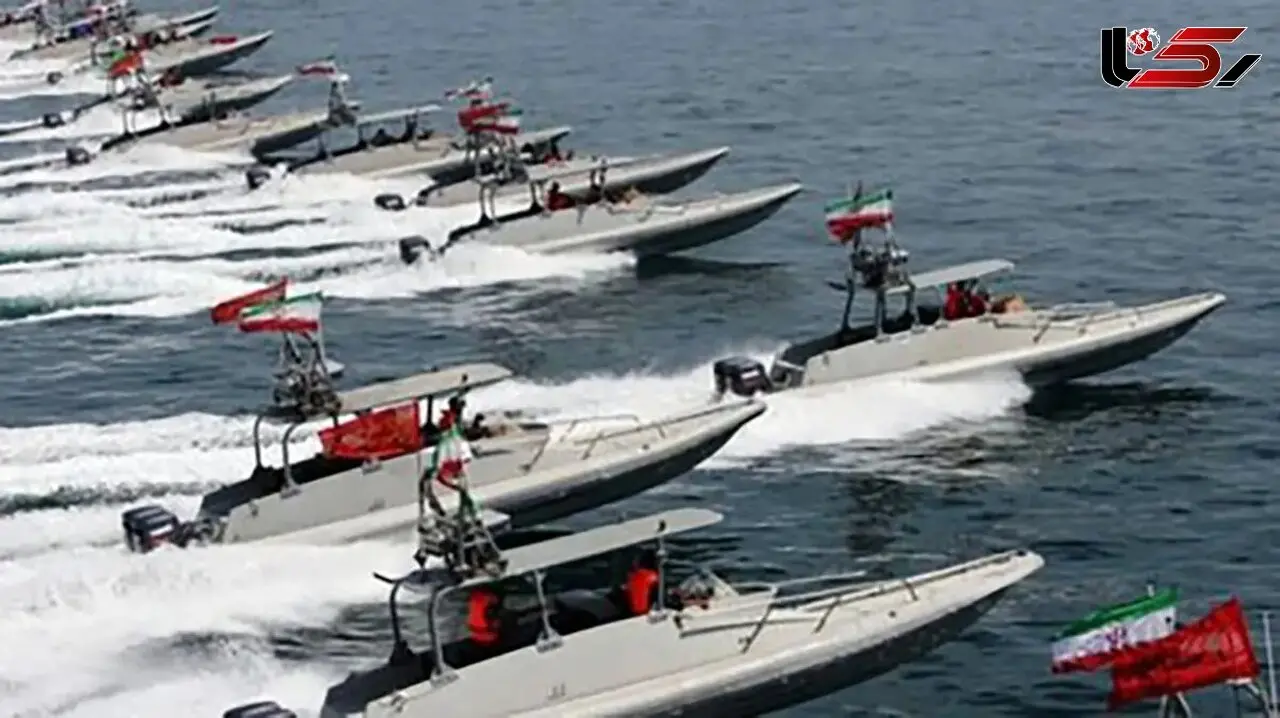
According to Rokna, citing the newspaper Javan, while Trump has recently threatened that if Iran does not reach an agreement with the United States “the military option remains on the table” and has dispatched warships to the Middle East to increase pressure on Tehran, this approach has generated a wave of concern among Iran’s neighbors. As a result, countries such as Turkey and Iraq, in an effort to prevent escalation, have called on Washington to abandon its “all or nothing” policy and pursue the resolution of disputes in a gradual, step-by-step manner rather than insisting on an immediate agreement based on four stated demands, a strategy they believe could pave the way for more comprehensive agreements. A large-scale naval drill involving hundreds of fast boats has further intensified the situation. In this context, Trump’s tweet yesterday, which focused solely on Iran’s nuclear program and the pursuit of a “fair agreement” in that domain, revealed the first signs of a moderation in Washington’s stance. Yesterday, Araghchi also responded to a journalist’s question regarding the likelihood of war by stating that such a possibility is very low, thereby indicating that the probability of a US military attack has diminished. Although Trump’s unpredictability makes it impossible to judge Washington’s overall policies based solely on a single tweet, it appears he has come to realize that Tehran will not agree to America’s maximalist and unrealistic demands and that only negotiations within a more limited framework can yield tangible results.
Although US President Donald Trump has, over the past month, sought to advance his unfinished plans regarding Iran through measures such as backing Iranian protesters and threatening military action, these steps, which have driven regional tensions to their peak, have prompted countries in the region to propose solutions aimed at preventing a direct confrontation between Tehran and Washington.
Mikhail Ulyanov, Russia’s representative to international organizations in Vienna, told Izvestia newspaper on Wednesday: “We are always ready to provide mediation services if both sides request it, but this has not happened yet. Of course, Washington and Tehran must first negotiate between themselves, but the lack of progress on the bilateral track appears largely due to the United States’ extremely rigid negotiating approaches, which resemble ultimatums.”
Fouad Hussein, Iraq’s foreign minister, also said yesterday in an interview with Rudaw Network: “The Iranians emphasize that they will never initiate a war, but at the same time they are preparing to defend themselves against any attack.” He added: “The situation in the region is becoming more complicated as a result of the threats being raised.” In response to a question about Iraq’s mediation efforts, Hussein stated: “This is difficult. I traveled to Tehran and spoke with Iranian officials, and likewise with American officials. The current problem is the lack of direct communication. Once a decision is made regarding holding a meeting between the two sides, we can step in. However, no decision has been made on the American side regarding such a meeting. I cannot speak on Iran’s behalf, but it is not unlikely that Iran is willing to hold such a meeting; nevertheless, Iranian officials stress that no conditions should be imposed and that the meeting must be held without preconditions.” Hussein continued: “The United States’ conditions have varied at each stage. Initially, they raised their demands regarding nuclear weapons, then shifted toward uranium enrichment and enrichment levels. The Iranians are ready to resolve the issue and have demonstrated clear signs of this, but the American side has yet to respond.”
Start With One File
Hakan Fidan, Turkey’s foreign minister, amid escalating tensions created by the United States and the Israeli regime in the region, said in an interview with Al Jazeera: “Attacking Iran is a mistake. Restarting a war is a mistake. Iran is ready to negotiate again over the nuclear file, and I always advise the Americans to resolve their issues with Iran step by step. Start with one file, close it, then move on to the next, and continue in that manner.” Fidan added: “If all issues are addressed at once, it may be difficult for our Iranian friends and could be perceived by them as humiliating, making it hard to justify domestically and within governance structures; managing and tolerating these issues more effectively would help.”
At the same time, Qatar’s foreign minister, Mohammed bin Abdulrahman Al Thani, also held a telephone conversation on Wednesday with Iran’s foreign minister, Seyed Abbas Araghchi, to discuss the latest regional developments and ways to strengthen bilateral cooperation. The Qatari official emphasized his country’s support for efforts aimed at reducing tensions and achieving peaceful solutions to enhance regional security and stability. Earlier, Egypt’s Foreign Ministry announced that its foreign minister, Badr Abdelatty, held separate telephone consultations with Araghchi and US special envoy Steve Witkoff. According to the report, Abdelatty stressed the importance of adhering to diplomacy and creating the conditions necessary for dialogue between the United States and Iran. Seyed Hossein Mousavian, Iran’s former nuclear negotiator, also wrote yesterday in a note on the tensions between Tehran and Washington: “If a catastrophe is to be avoided, Trump must reconsider his ‘submission-based strategy’ and move toward a ‘broad and dignified agreement’ with Iran, ending 47 years of confrontation before the region is dragged into irreversible war.”
Trump’s Tweet Signals a Retreat?
Statements by neighboring countries emphasizing the need to step back from a policy of “total submission” come as the Trump administration has recently placed conditions on the table that the Islamic Republic has declared as its red lines and refuses to negotiate. According to Axios, the four US conditions for reaching a potential agreement with Iran include “removing all enriched uranium from Iran, setting a cap on Iran’s long-range missile stockpiles, changing Tehran’s policy of supporting proxy forces in the region, and allowing International Atomic Energy Agency inspectors to return to Iran.”
To demonstrate its seriousness toward Iran, the Trump administration has deployed US warships to the Middle East, increasing concerns over the possibility of a direct confrontation between Tehran and Washington. However, it appears that a wave of regional reactions has had some influence on White House policy.
Trump wrote yesterday on the Truth Social platform: “A new fleet is moving toward Iran at high speed, with great power, motivation, and clear purpose. This fleet is larger than the one sent to Venezuela and is led by the large aircraft carrier Abraham Lincoln. As with Venezuela, this force is ready, willing, and able to carry out its mission with speed and violence if necessary.”
Trump claimed: “Hopefully Iran will quickly ‘come to the table’ and negotiate a fair and equitable deal — with no nuclear weapons — a deal that benefits all parties. Time is running out, and this matter is truly urgent and critical. As I once told Iran before: make a deal.”
A key point in Trump’s latest remarks is that he appears to have taken into account assessments of Iran’s conditions and preparedness, as well as advice from regional actors, and has not reiterated his previous four conditions. He is now focusing on the nuclear issue, particularly on Iran not possessing nuclear weapons. This shift suggests Trump has realized that if he insists on all his conditions simultaneously, Iran will not agree to them.
This moderation, which reduces the likelihood of direct confrontation, was also evident in the remarks of Iran’s foreign minister, Seyed Abbas Araghchi. Yesterday, in response to a journalist’s question about the likelihood of war, Araghchi stated that such a possibility is very low.
Accordingly, the adjustment in Trump’s stance indicates he is attempting to follow the approach recommended by other countries, namely “reaching agreements on all files, but in a gradual and step-by-step manner,” to make an agreement with Tehran possible while avoiding the imposition of military costs on himself and his allies. Nonetheless, the US president’s volatile behavior continues to sustain concerns. Iranian security and political officials also issue daily warnings that any provocative action will exact a heavy price from Washington, as Iran’s armed forces are at the highest level of readiness and will respond decisively to any aggression. Although one cannot judge Washington’s overall policies based solely on a single social media post or interpret it as a complete retreat, the shift in Trump’s tone from absolute threats toward seeking a “fair agreement” may represent the first step toward moderation. However, Trump has previously demonstrated that he is not particularly trustworthy and may abandon diplomacy in favor of military options during negotiations under dubious pretexts.
Despite the United States’ record of failing to honor its commitments, Iran has consistently stated that it is ready to engage in dialogue within the framework of international law and mutual respect to resolve disputed issues, and the international community has welcomed Tehran’s diplomatic approach toward Washington. Therefore, the ball is now in Washington’s court as to whether it truly seeks a return to the negotiating table and the resolution of disputes over various files, or whether it will continue its path of militarization—an approach that analysts and Western media have warned could impose enormous costs on the United States.
Possibility of a Maritime Blockade of Iran
Given the extremely high cost of a direct confrontation with Iran, it appears that alternative options are being considered. Accordingly, with the deployment of US warships in the Indian Ocean and the Persian Gulf, some unofficial sources have stated that Washington is pursuing a maritime blockade of Iran to exert economic pressure and force the Islamic Republic to make concessions.
Although this strategy has not been officially announced by the White House, similar scenarios were proposed years ago by some American commanders. Michael Rubin, a senior fellow at the American Enterprise Institute, recently suggested that Trump, instead of launching a full-scale invasion of Iran, should consider the plan proposed in 1979 by Admiral James A. Lyons, which was based on “seizing the Kharg oil terminal.” This strategy was proposed at the beginning of the Islamic Revolution to pressure the Islamic Republic and secure the release of US embassy hostages. Rubin argues that today, the United States should similarly occupy the Kharg oil terminal instead of bombing Iran, as Iran would then be unable to export oil and would be forced to accept Washington’s demands due to the halt in oil revenues.
Although Washington officials rely on the power of their naval forces in the Persian Gulf and believe they can compel Iran to retreat, Iran’s armed forces are not defenseless and have issued initial warnings ahead of any provocative actions by US vessels to demonstrate their level of readiness. Some field sources revealed yesterday that between 300 and 400 Iranian fast boats moved close to the aircraft carrier Abraham Lincoln. Analysts say that there is no concept of a “limited or low-intensity war” for Iran, and that any assault on Iranian territory or even its interests in the region will receive a “full-scale” response.
Send Comments