

Iranian Drone Responds to U.S. Threat Over the Oman Sea / End of Immunity for Giant Aircraft Carriers
Rokna Political Desk: While the United States seeks to demonstrate its power through the deployment of aircraft carriers, the significant flight of an Iranian reconnaissance drone and the firm warning of the Chief of Staff of the Iranian Army indicate that the balance of power has shifted.
According to Rokna, in recent days, the U.S. military posture in the waters of the Persian Gulf, the Oman Sea, and the northern Indian Ocean has reached one of its highest levels in recent years; a development that can be evaluated in the context of escalating political and security tensions between Washington and Tehran, as well as the rapid developments in the West Asia region.
Based on reports from international sources and maritime data, the USS Abraham Lincoln (CVN-72) aircraft carrier, along with its supporting vessels, cruisers, and destroyers equipped with the Aegis system, has been stationed in the Oman Sea and surrounding waters. Simultaneously, the U.S. Air Force has announced multi-day exercises and operational flights aimed at “demonstrating defensive readiness and deterrence.”
These movements occur while U.S. officials attempt to send clear security messages to Iran and other regional actors through a display of hard power; a message that has been met by the Islamic Republic of Iran with a multi-layered and intelligent response.
Full Surveillance of Enemy Movements; Explicit Warning from the Chief of Staff
In this context, Major General Amir Hatami, Chief of Staff of the Islamic Republic of Iran Army, emphasized during the 18th “Hazrat Ali Akbar (AS)” Festival for young soldiers that enemy movements in the region are continuously and precisely monitored, and that Iran’s Armed Forces remain at full readiness. Any miscalculation by the enemy will undoubtedly endanger their own security, regional security, and even the security of the Zionist regime.
The Chief of Staff also highlighted the exemplary coordination among the four branches of the Army and other components of the Armed Forces, stating that the country’s defensive and operational readiness is at its highest level—a position repeatedly emphasized in recent months by senior commanders of the IRGC and Army.
Meaningful Flight of SEP2501; Iran’s Drone Message in the Oman Sea
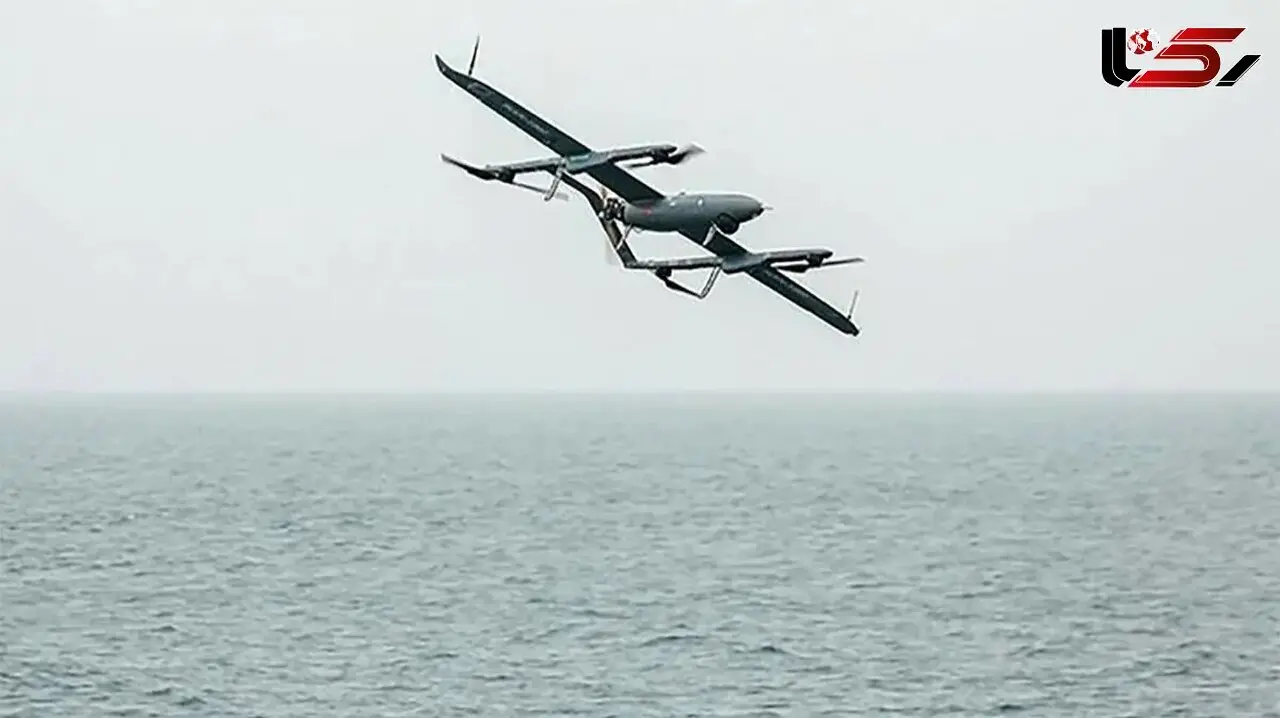
Simultaneously, global aviation monitoring platforms have recorded an unidentified aircraft with the designation SEP2501 near the Oman Sea coasts. Unlike conventional civilian missions, this flight carried significant intelligence and security dimensions.
Strategic analysts interpret this occurrence not as a routine flight but as an operational demonstration of Iran’s intelligence capabilities—particularly as it took place in an area where the U.S. naval group is present.
Why the Oman Sea Matters
The Oman Sea and the Arabian Sea serve as a vital artery connecting the Persian Gulf to the Indian Ocean and constitute a main route for global energy transport. The deployment of a U.S. aircraft carrier in this area under the pretext of creating a protective shield and deterrence has been challenged by the SEP2501 drone flight, demonstrating that mere naval and aerial superiority does not equate to absolute situational awareness.
In modern military doctrines, battlefield awareness does not necessarily require physical proximity to the target. Iran’s long-range drones, equipped with advanced sensors, can collect and analyze electronic and signal data from maritime targets at a distance—an integral part of Iran’s Access Denial (A2/AD) strategy.
Electronic Warfare: The Vulnerability of Modern Carriers
Military analysts note that the primary concern for commanders of U.S. carriers is not direct attack, but the ability of Iranian drones to gather signal intelligence (ELINT). Collecting and analyzing radar frequencies, communications, and Aegis system signals allows Iran to design jamming, deception, or radar-blinding scenarios with high precision if necessary.
Additionally, the optical–thermal imaging capabilities, secure data links, and resistance to electronic warfare make Iranian drones highly effective tools in maritime information warfare.
Shahed 139 or “Homa”; Every Vessel as a Potential Base
Based on flight patterns and available data, some experts believe this aircraft may belong to Iran’s long-range reconnaissance drone family, such as Shahed 139 or the vertical takeoff and landing (VTOL) drone “Homa.”
VTOL drones like “Homa,” due to their lack of runway requirements, can take off from civilian vessels or unknown platforms—fundamentally altering maritime security calculations and advancing the concept of “asymmetric threat.”
Tehran’s Strategic Message to Washington
The SEP2501 flight at this time conveys several clear messages: unilateral deterrence has failed, and the presence of aircraft carriers does not guarantee intelligence immunity.
The Oman Sea is under Iran’s informational surveillance, and all extraregional movements are closely monitored. Displaying flight data on public platforms is part of psychological and cognitive warfare, reminding that the U.S. fleet is “being watched.”
End of Immunity for Giant Aircraft Carriers
Recent developments indicate that military competition in West Asia has entered a new phase, in which intelligent, drone, and information-driven technologies have shifted the balance against massive and costly platforms.
While the USS Abraham Lincoln moves through the Arabian Sea with its full combat capabilities, a small but advanced drone provides vital data to Iranian military analysts. This reality is a clear indicator of the shifting balance of power and the decline of the traditional supremacy of U.S. supercarriers in regional waters.