

Despite Opposition from Russia and China:
Important UN Security Council Meeting on Iran
Rokna Political Desk: The United Nations Security Council meeting regarding Resolution 2231 and Iran will be held on Tuesday morning, New York time, despite opposition from Russia, China, and Iran, and it is anticipated that disagreements between Western and Eastern members of the Council will once again emerge.
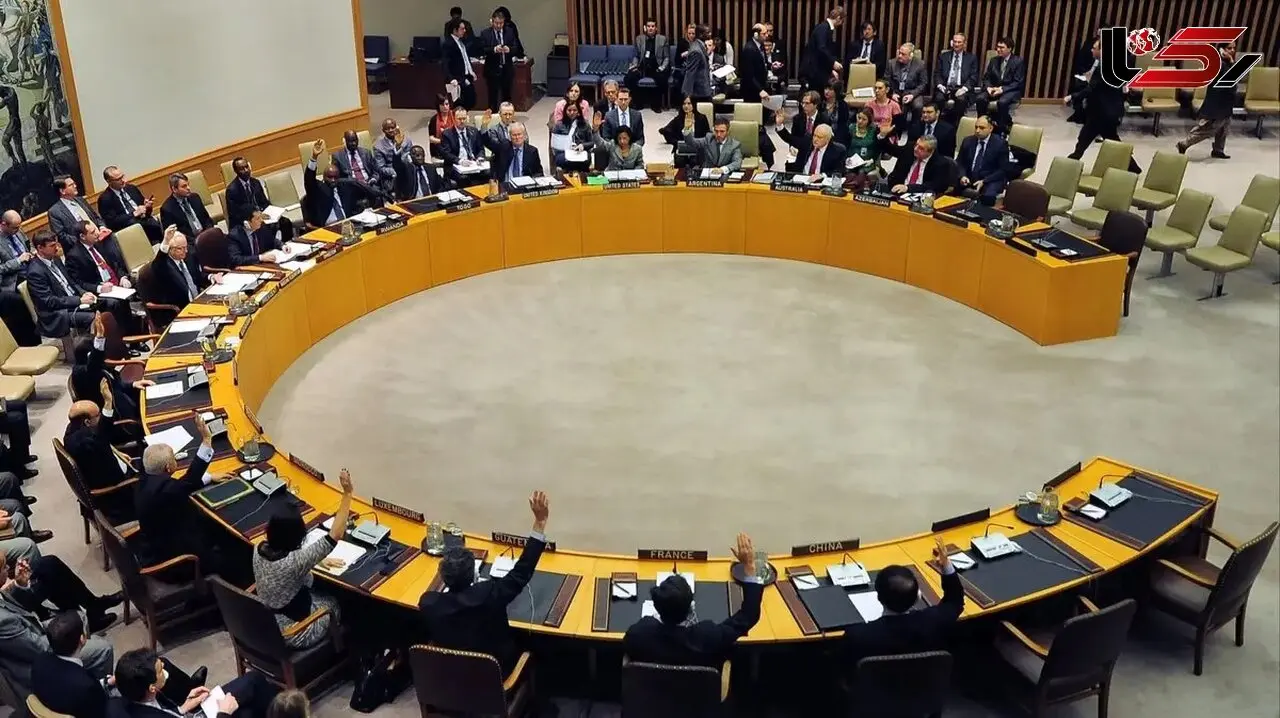
The UN Security Council, despite opposition from Russia and China, will convene a meeting today at the request of several Western members regarding Resolution 2231; this comes even though Moscow, Beijing, and Tehran had previously opposed the holding of this meeting as well as the Secretary-General’s report.
According to Rokna, from the UN headquarters, the Security Council meeting is scheduled for Tuesday morning local time (New York), and it is expected that the Council will once again witness a clash of viewpoints between Russia and China and their supporters on one side, and certain Western members of the Security Council on the other.
The meeting is also expected to produce no concrete outcome.
UN Security Council Resolution 2231 concerning the JCPOA officially ended on 18 October 2025 (25 Mehr 1404), and while Iran, Russia, and China consider the formal conclusion of this resolution to mean the Iranian nuclear file is removed from the Security Council’s agenda, the three European countries and the United States, relying on their interpretation of the JCPOA provisions, claim the revival of UN sanctions following a Security Council vote to activate the snapback mechanism.
Previously, Samuel Žbogar, Ambassador and Permanent Representative of Slovenia to the United Nations, coinciding with the commencement of his country’s presidency of the 15-member Security Council in the final month of 2025, told reporters at UN headquarters in New York that on 13 December (22 Azar), the Council would receive the Secretary-General’s report on Resolution 2231 regarding Iran.
The UN Secretariat, following the request of Western countries, asked UN Secretary-General António Guterres to provide a report covering June to October 2025 (Khordad to Mehr) on the implementation of the JCPOA before its conclusion; the Secretary-General has thus submitted his twentieth report.
In his latest report, Guterres stated: “This report presents the latest developments regarding the implementation of Resolution 2231 (2015) since the publication of my nineteenth report (S/2025/397) dated 19 June 2025. The current report provides a review of letters received from member states concerning the implementation of the resolution. It also summarizes the latest report of the International Atomic Energy Agency (IAEA) on its verification and monitoring activities in Iran.”
In this report, the Secretary-General addressed the claims of the United Kingdom, Germany, and France regarding the snapback process, noting that China, Iran, and Russia, in a letter dated 18 October, emphasized that according to paragraph 8 of Resolution 2231, all provisions of this resolution had ended after 18 October 2025, and the consideration of Iran’s nuclear issue in the Security Council had concluded.
The rotating President of the Security Council had previously told reporters that in this regard, discussions were held with ambassadors; some believe that Resolution 2231 no longer exists, while others argue that a report is being prepared, and therefore a meeting concerning that report must be held.
The Permanent Representative of Slovenia to the UN stated that a request to review this resolution would likely be submitted in December (Azar–Dey), after which a decision on holding the meeting would be made.
According to the JCPOA and operational paragraph 8 of UN Security Council Resolution 2231, all provisions expired after the “transitional day” of 18 October 2025 (26 Mehr 1404). Iran, China, and Russia declared that upon reaching this expiration date, all nuclear-related restrictions had ended, and previous resolutions were nullified.
Following the 12-day war by Israel and the United States against Iran, the European troika (UK, Germany, and France), accompanied by the United States, activated the snapback mechanism on 28 September (6 Mehr) and attempted to revive six previously repealed Security Council resolutions, claiming these resolutions remained in effect. This duality has created a new legal gap and confusion in the interpretations presented to the Security Council.
On 23 Khordad, Israel, in blatant violation of international law and the national sovereignty of the Islamic Republic of Iran, targeted areas in Tehran and other cities, including Iran’s nuclear facilities, with military attacks, and the United States also joined the war against Iran with a direct strike on the nuclear sites of Fordow, Natanz, and Isfahan in the early hours of Sunday (1 Tir).
Following the response of the Islamic Republic of Iran’s Armed Forces to these attacks, the President of the United States eventually announced a ceasefire between Iran and Israel on 3 Tir, and Iran stated that it had not initiated the war and emphasized that if the Israeli regime stops its illegal aggression, Iran has no intention to continue retaliatory measures.
Former U.S. President Donald Trump admitted on 6 November 2025 (15 Aban 1404) in an interview with reporters: “The first attack was carried out by Israel. It was a very, very powerful attack. I personally commanded it. When Israel carried out the first attack against Iran, it was a big day for Israel, as that attack caused more damage than all the other attacks combined.”
According to the Islamic Republic of Iran’s Mission to the UN, these statements provide clear and undeniable evidence of the United States’ direct involvement, leadership, and responsibility in planning, directing, and facilitating Israel’s illegal military aggression.
In a letter to the Security Council and the UN Secretary-General, Iran emphasized that these criminal aggressions constitute a gross and serious violation of Article 2, paragraph 4, of the UN Charter, the peremptory norms prohibiting threats or use of force against independent states, and international humanitarian law, resulting in numerous civilian casualties, destruction of civilian infrastructure, and serious damage to Iran’s peaceful and safeguarded nuclear facilities.
The IAEA Board of Governors also approved on 29 Aban 1404 (20 November 2025) a draft resolution proposed by the three European countries (France, UK, and Germany), with the support of the United States, against Iran’s nuclear program, with 19 votes in favor, 12 abstentions, and 3 votes against. This resolution calls on Iran to act in accordance with the Additional Protocol and provide full information on enriched uranium stocks and safeguarded facilities to the Agency.
Send Comments