

Lavrov: We Supported Iran at All Stages of the Negotiations / Remaining in the NPT Has Value
Rokna Political Desk: The Russian Foreign Minister, emphasizing firm support for the rights of the Islamic Republic of Iran to benefit from peaceful nuclear energy, referred to Iran’s commitment to the NPT and highlighted the value of continuing to remain within it.
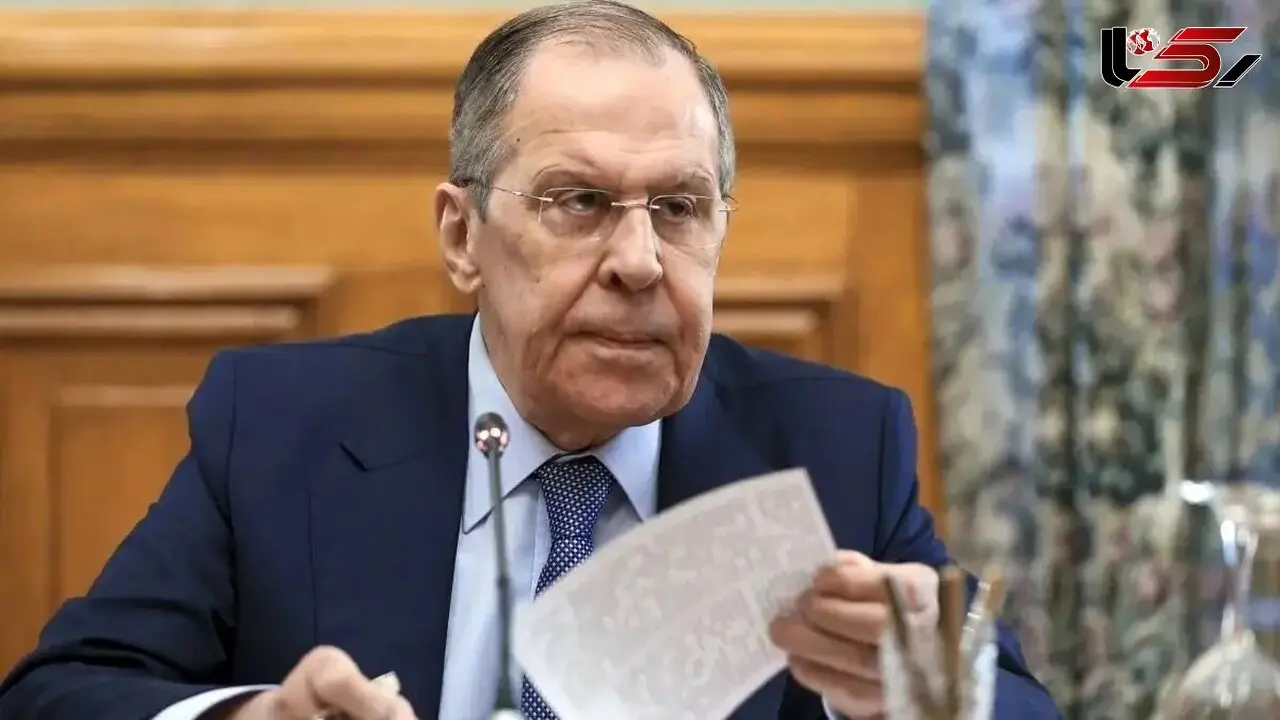
Sergey Lavrov, the Foreign Minister of the Russian Federation, stated: We firmly defend the unconditional rights of the Islamic Republic of Iran, like any other country, to access peaceful nuclear energy. Iran, as a good-faith member of the Treaty on the Non-Proliferation of Nuclear Weapons (NPT), possesses all the rights enshrined therein.
According to Rokna, citing IRIB, the full Persian text of the interview conducted by the Islamic Republic of Iran Broadcasting with the Russian Foreign Minister is as follows:
Mr Minister, the international community is going through difficult days: US threats against Venezuela, the war in Ukraine, threats by the Zionist regime and the crimes it has committed in Gaza, and actions taken by Europe toward an arms race. All of these have made life harder for humanity. Given your experience in international affairs, do you believe the world is moving toward increasing chaos or toward the establishment of a new order, and most importantly, what role has Russia, as a permanent member of the UN Security Council, defined for itself in these developments?
If we wish to analyze what is happening in the world and examine the developments you mentioned in various regions, I must say that I consider the actions of the European Union and the elites who have seized power in Brussels as one of the main threats, perhaps the most significant threat.
They seek to subjugate national governments and force them to ignore the interests of their own peoples; they compel them to disregard the results of elections and referendums held in some European countries and to submit to the usurping behavior of Brussels and its bureaucracy—a bureaucracy that no one elected and whose composition is determined through compromises among legitimate governments.
This is not the first time that Europe has been the source of all calamities and unfortunate events. Phenomena such as slavery and the Crusades, during which they sought to eliminate any resistance by the sword; colonialism; and, of course, the two world wars that began in Europe—wars stemming from the delusional ambitions of European leaders. Now, once again, Europe is trying to dictate its wishes and desires to everyone, a situation apparently linked to the Ukraine crisis. They use the Ukraine crisis to entrench themselves, but in reality their goal is to put obstacles in the way of the United States and those who seek fair resolutions, and to conspire and create chaos for them.
The most dangerous and tragic point is that among these elites in Brussels, and in capitals such as Berlin, London, Paris, and even the Baltic region, Nazi ideology and practices are being revived. Nazi approaches and the blatant disregard for what the Nazi regime is doing in Ukraine are clearly evident—just as Hitler and before him Napoleon did. Hitler, like Napoleon, effectively placed Europe under the domination of arms and mobilized all of Europe under Nazi flags and symbols against the Soviet Union.
Now, Europe—or rather, until recently, the Biden administration—has tried to pursue the same path: uniting European countries to provide financial and military support to Ukraine and handing them the Nazi banner, which the Kyiv regime itself had taken up after the 2014 coup, thereby initiating the conflict. Now Europe, under the banner of Nazism, with the dispatch of Western financial and intelligence assistance as well as modern weapons to Ukraine, is this time fighting our country with Ukrainian forces.
The revival of militarism is evident when Merz, the German chancellor, declares: “We have set the goal of once again becoming the leading military power in Europe.” He seems to have forgotten that the last time Germany became Europe’s principal military power, it did so through Nazi slogans and the conquest of neighboring countries, enslaving Slavs and Jews and burning them in the furnaces of concentration camps. The fact that many activists in Germany and other European countries, such as Finland—which was Hitler’s closest ally—are reviving the memory of their grandfathers and relatives who served in the SS and were core elements of the Nazi Party cannot but cause concern.
Of course, I do not wish to create the impression that all of the world’s misfortunes stem solely from the European continent. This is a very dangerous combination of European ambitions that have failed in Ukraine, because Russia is defending its legitimate interests, its security interests, and the interests of people whom the 2014 coup government dehumanized, banned from speaking their mother tongue, and prohibited the activities of the legitimate Ukrainian Orthodox Church—something that is hard to imagine.
Now, in the events between Israel and Muslim countries, none of them has banned religion. But Ukrainians and Nazis do so.
This set of problems you mentioned has attracted the attention of political analysts, and recently much has been said about a new US national security strategy. One of the main goals of this strategy is that Europe should know its place and attend to its own affairs—those who have directly interfered in the internal affairs of countries and annulled election results in Romania and then Moldova and several other countries, where manipulation and falsification are evident.
The US national security strategy states that Europe should mind its own business and not expect the United States to constantly defend its adventures, meaning that the US has more important matters, including a focus on Latin America and the Asia-Pacific region. It is clear that the United States wants to center its policy primarily on confronting China, which has now become powerful and is experiencing increasing economic development and financial strength each year—while the US does not wish to see its political and economic influence fall to second place. We are not opposed to competition.
As you know, competition must be fair. When competitors attempt to exert pressure through 100% or 500% tariffs, this is not the globalization that the United States invited us to after World War II.
When Americans impose sanctions, they openly say that the reason is the political positions of a given country or individual. This is inequality and disrespect for human rights; it is dictation and coercion. When these sanctions involve banning the activities of the world’s largest companies, such as Russia’s private company Lukoil and the state company Rosneft, I see nothing but a desire to suppress competitors through unscrupulous methods. This means that the West, including the United States, no longer has sufficient capacity to compete fairly and is forced to resort to dirty, anti-democratic, and anti-market methods to maintain its dominance.
I would like to conclude my response by saying that unfortunately all of these issues overshadow other conflicts, such as the crisis in the Middle East and the issue of establishing a Palestinian state; and this external dimension also includes matters related to Iran’s nuclear program. Therefore, whatever happens at the global level is a competition.
The confrontation of major powers, as they see it, is an attempt to marginalize these issues—old, unresolved problems and conflicts, namely the Palestinian issue and matters related to Iran’s nuclear program—which is regrettable. Recent developments surrounding the nuclear program over the past year and a half, even the past year, include entirely hostile and illegal actions by Europeans who attempted to blame the collapse of the Joint Comprehensive Plan of Action on Iran, although Iran never violated this document until the United States announced in 2018 that it would no longer abide by this UN Security Council decision.
Now the entire global order regarding Iran is under severe test. Concerning Iran, it was the United States that threw this agreement into the trash, and then Westerners, especially Europeans, followed suit and began accusing Iran of not implementing the JCPOA—despite the fact, as I emphasized, that this was so obvious that the West was forced to invent deceitful tricks. I believe this was a disgrace for European diplomacy, that through deception they decided to restore sanctions against the Islamic Republic of Iran.
Honest and upright diplomats do not behave this way. Swindlers and thieves behave this way. Indeed, theft is in the blood of Europeans, as is evident in the issue of freezing Russian assets. Incidentally, Iranian assets have also been partially frozen, as have those of Venezuela and many other countries by Westerners.
It seems that this inclination toward theft has genetically taken root among many of our Western colleagues. They have now truly begun arguing among themselves: is it possible to steal Russian money? Some healthy voices are heard there, but they simply try to drown and silence these voices amid the shouting from Brussels. It is no coincidence that many Russian and foreign media outlets refer to Ursula von der Leyen as Führer Ursula.
Another clear example is Palestine. This is not just a single UN Security Council resolution; there are numerous resolutions in the Security Council and the UN General Assembly that make the establishment of a Palestinian state the cornerstone of resolving the Middle East situation and a prerequisite for normalizing relations between Arab and Muslim countries and Israel.
There was the well-known Arab Peace Initiative, promoted by Saudi Arabia since 2002, which incidentally became a joint Muslim initiative, as it was approved by the Organization of Islamic Cooperation—and this occurred not just anywhere but at the Tehran summit. Thus, this represents the general Muslim position: give them what they are entitled to under the law, what they have been promised time and again, and then the process of normalizing relations with Israel will begin. But Netanyahu and his military cabinet declared that there would be no Palestinian state.
Now we have Trump’s peace plan, and incidentally both sides say that Hamas violates the conditions, casting doubt on the further implementation of this peace plan. Hamas says the same and points to violations of commitments.
Therefore, we stood alongside those who welcomed Trump’s initiative, because it made it possible to conclude a very important humanitarian phase of this crisis: the return of the bodies of the dead, the release of remaining hostages, remaining prisoners of war, and detained Hamas members. But it is very difficult for me to predict what will happen in the future, and I apologize for delving so deeply into these events.
But you yourself prompted me to raise these broad global issues. What is concerning is that in the West they say there must be principles upon which the global order is built—meaning that whatever benefits them is called the principles of the global order. They do not even adhere to those very principles they have always exploited. When it comes to recognizing Kosovo, they say it is the right of nations to self-determination.
When, after the coup in Ukraine, people in Crimea and other parts of Ukraine voted, they said this was no longer self-determination but territorial integrity. Thus, they treat historically very significant global events however they wish. International law has been destroyed. I gave examples: Iran’s nuclear program was destroyed despite a decision taken by the Security Council.
The UN Charter states that everyone is obliged to implement Security Council decisions. The same logic applies to Palestine. Many decisions have been taken. But Israel says it does not want to implement these decisions and that no state will be established, and the United States, although it has not openly supported this, in practice backs Israel’s position.
When Israel and then the United States attacked Iran, we condemned these attacks, which had no international basis or legitimacy. The main point is that to this day, no substantiated evidence has been presented that Iran committed any violation—neither by the International Atomic Energy Agency, nor by the Israelis, nor by the Americans.
We are ready to support the efforts of the Islamic Republic of Iran to overcome this crisis, including in relations with the Agency and overall relations with the West. We understand your position. President Putin has repeatedly told Mr Pezeshkian and his representatives that we will adopt the position chosen by the leadership of the Islamic Republic of Iran in the interests of the Iranian people.
[The interview continues extensively on Iran–Russia relations, Eurasian security, Syria, Ukraine, the NPT, JCPOA, and Russia’s continued support for Iran’s lawful rights, concluding with Lavrov’s reiteration that Russia has supported Iran at all stages of negotiations and believes remaining in the NPT has value, while final decisions rest with Tehran.]
Send Comments