

Everything About the Defensive Methods of Modern Aircraft Carriers
Rokna Political Desk: Aircraft carriers, as the world’s largest mobile air bases, have become virtually impregnable fortresses at sea by relying on advanced defensive technologies. But how exactly do these massive structures protect themselves against threats?
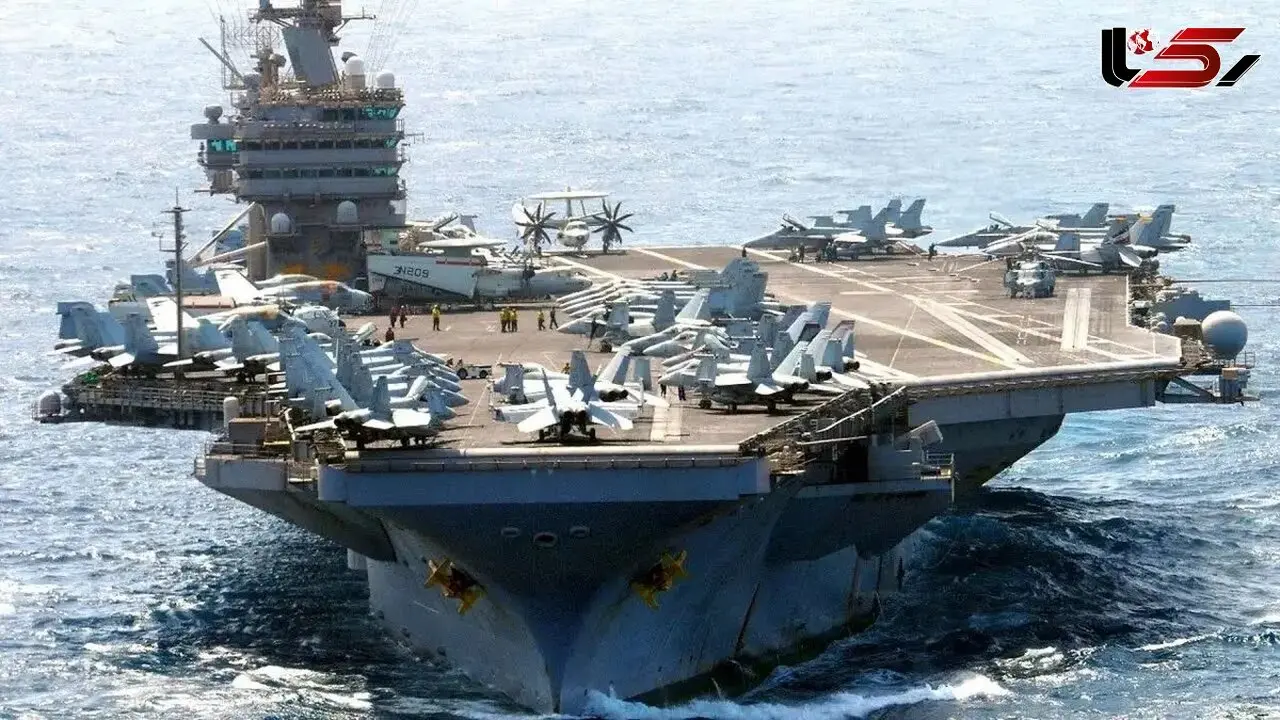
Aircraft carriers can be considered the largest and most complex military vessels ever built by humankind: structures exceeding 300 meters in length that simultaneously function as the world’s largest mobile air bases, carrying hundreds of personnel, hundreds of aircraft, and complete logistical support systems.
According to Rokna, these very characteristics have turned aircraft carriers into highly valuable and sensitive targets—floating fortresses, where any adversary knows that influencing or disabling an aircraft carrier could fundamentally alter the equations of a large-scale conflict. Yet since World War II, no modern aircraft carrier has been completely defeated in combat. Why is this so, and what defensive capabilities do aircraft carriers possess that make them appear so resilient?
Multi-Layered Defense: The Carrier’s Defensive Structure Against Aerial and Missile Threats
Aircraft carriers cannot confront modern threats on their own, as these threats include cruise missiles, long-range anti-ship missiles, combat drones, attack aircraft, and even electronic warfare systems. Therefore, their defensive mechanism consists of multiple coordinated and complementary layers:
1. Close-In Weapon Systems (CIWS)
On U.S. aircraft carriers, several close-in defense systems such as the Phalanx CIWS are typically installed. Using radar guidance and extremely rapid-fire guns, these systems can engage missiles or drones that have penetrated the outer defensive layers at very close range.
2. Short- and Medium-Range Missiles
In addition to automated systems, carriers are equipped with missiles such as the RIM-7 Sea Sparrow and its upgraded variants. These missiles are tasked with detecting and intercepting aerial threats and incoming missiles at medium ranges to prevent any danger from approaching the carrier.
3. Integrated Defensive System (SSDS)
Alongside weaponry, U.S. aircraft carriers are equipped with the Ship Self-Defense System (SSDS), an automated defensive system that integrates data from various radars and sensors and manages rapid automatic or operator-controlled responses against aerial threats.
Together, these defensive layers form a multi-tiered protective ring—from long distances to close range—covering everything from threat detection to destruction before the threat reaches the carrier.
Escort Units: A Shield Against Long-Range Threats
A key aspect of aircraft carrier defense is that the carrier does not operate alone. Aircraft carriers deploy as part of a Carrier Strike Group, which includes several escort warships—such as destroyers, missile-defense ships, cruisers, and supporting submarines. This formation operates in full coordination as a multi-layered and multidimensional defensive wall against threats.
Long-Range Air and Missile Defense
Escort destroyers and cruisers are typically equipped with advanced air defense systems such as the Aegis Combat System, capable of detecting and intercepting ballistic and cruise missiles, drones, and aircraft at long distances. This long-range defense ensures that many threats are identified and neutralized before entering the aircraft carrier’s vicinity.
Countering Underwater Threats
Escort submarines and anti-submarine aircraft can detect and neutralize threats posed by hostile submarines. Given that submarines represent serious potential dangers to carriers beneath the surface, this aspect of defense is also critical.
Aircraft: The Most Important Defensive Shield
Perhaps the most vital defensive component of any aircraft carrier is the aircraft and helicopters launched from its deck. These aircraft serve multiple roles:
-
Detecting aerial and surface threats before they approach the carrier
-
Deterring attacks before they reach the carrier’s operational zone, particularly against aerial threats
-
Providing close air support (CAS) for escort units
These aircraft are capable of covering very long distances and, by rapidly relaying information to a command center, can not only report threats but also directly engage in defensive operations.
Non-Kinetic Tools: Countering Electronic and Deception Threats
In addition to weapons, carriers employ concealment and electronic countermeasures to complicate enemy detection and targeting:
-
Deployment of chaff to create deceptive radar reflections
-
Electronic jammers to disrupt radars and missile guidance systems
-
Use of radar stealth measures and hull design to reduce radar cross-section
These measures prevent enemy missiles and sensors from achieving precise targeting locks on the carrier, significantly reducing the likelihood of impact.
Protecting a modern aircraft carrier is, above all, a combination of technology, coordination, and highly trained personnel. This defense relies not only on powerful weapons but also on advanced early-warning and command networks, escort aircraft and vessels, and non-kinetic measures.
Ultimately, an aircraft carrier is not a solitary ship but the core of a complex strategic defensive network, in which threats are detected and neutralized at long range—and only after passing through all defensive layers could even a minor danger come close.