

Israel Defense: The United States Lacks Sufficient Capability for Military Action Against Iran
Rokna Political Desk: An Israeli media outlet, in an analytical report, emphasized that Washington currently lacks sufficient capability to carry out a large-scale and effective military operation against Iran.
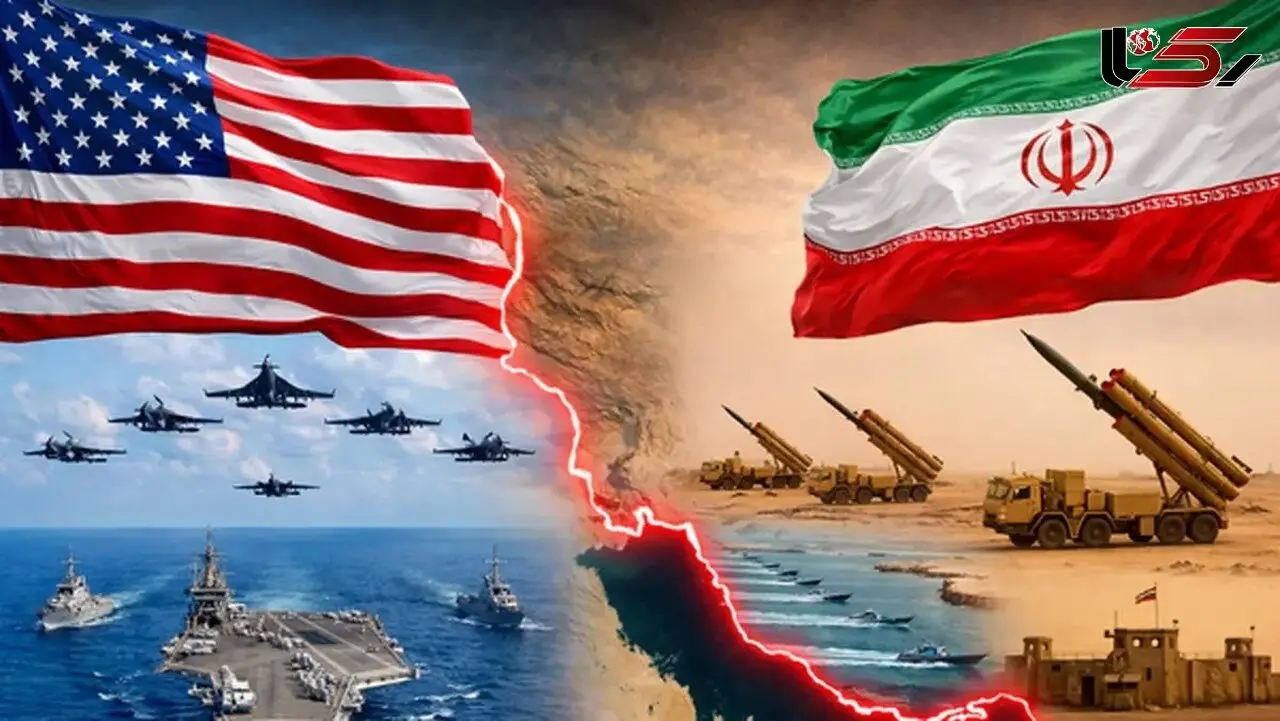
According to Rokna, the website Israel Defense wrote in its analysis that despite political pressure in Washington to achieve a rapid victory against Iran, battlefield and military realities indicate that the operational capacity of the United States in the Middle East is significantly more limited than in previous periods—an issue that makes any attempt at regime change in Iran a costly and difficult option.
According to the report, should the US government decide to pursue military action against Iran, it would face constraints stemming from the smaller scale of its force posture in the region—limitations related to force deployment, composition, and operational usability. The Israeli outlet stressed that regime change in Iran, particularly within a short timeframe, would in practice encounter serious obstacles.
Comparing the current situation with previous US wars, the analysis notes that in 2001, the United States deployed two aircraft carriers in the region to overthrow the Taliban, and in 2003, during the invasion of Iraq and the fall of Saddam Hussein, five US aircraft carriers were present in the Middle East. By contrast, in June 2025 only two US aircraft carriers were active in the region, and at present this number has been reduced to one.
Israel Defense also referred to the condition of the US Navy, writing that out of approximately 80 US Navy destroyers, currently only about 10 percent are deployed in West Asia. In the air force domain as well, although several fighter squadrons, including F-15E aircraft, are present in the region, this number is considered limited compared with the overall air power of the United States.
The analysis further states that the offensive capability of the aircraft carrier Lincoln relies mainly on several dozen F/A-18 fighter-bombers—aircraft that must take off from a single sea-based airfield. This factor limits the ability to generate successive sortie waves required for heavy bombing operations.
According to the report, the United States currently has only one F-16 squadron in West Asia, which, even if fully dedicated to offensive operations, would not play a decisive role in a regime-change scenario in Iran.
In another section, Israel Defense writes that Iran’s neighboring countries, including Saudi Arabia, would not permit the hosting of US bombers in West Asia for use against the Islamic Republic of Iran.
The Israeli outlet also pointed to coordination challenges between the US Navy and Air Force, noting that differences in operational culture, technologies, communication systems, and intelligence-sharing mechanisms add further complexity to the execution of large-scale joint operations.
In its conclusion, the report states that from the perspective of US military circles, factors such as the limited number and type of aircraft deployed in West Asia, the need to conserve munitions for potential conflict on another front, the requirement to defend numerous US bases and interests in the region, weather conditions, and other operational considerations all indicate that the United States’ capacity to carry out a comprehensive assault against Iran is currently constrained.
Israel Defense concludes by emphasizing that even if the US administration seeks a rapid victory, a combination of field and operational limitations would reduce the scope and effectiveness of any military action against Iran, and such an اقدام would, at best, yield limited and high-risk outcomes.