

Araghchi: Iran Firm on Peaceful Nuclear Program, Doubts U.S. Readiness for Real Talks
Rokna Political Desk: The Minister of Foreign Affairs of the Islamic Republic of Iran emphasized that Iran has concluded that the Americans are not prepared for mutually beneficial negotiations based on equality and mutual respect. “Negotiation is different from dictation. They want to dictate, and I am not someone who listens to others’ dictation,” he said.
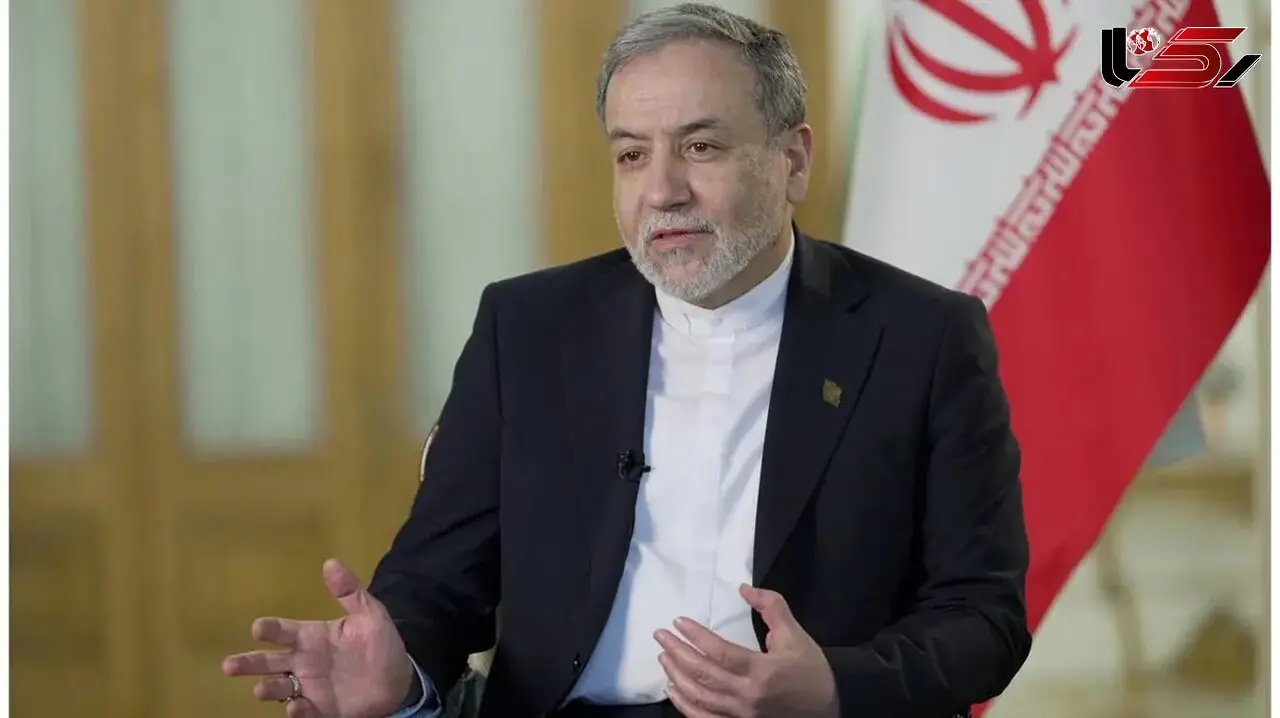
According to Rokna, Seyed Abbas Araghchi, stating that “unfortunately, there is no precedent for the bombing of a peaceful nuclear facility,” added: “Therefore, no protocol or instruction exists for the inspection of such a facility.”
In an interview with Japan’s Kyodo News Agency, Araghchi noted: “Unfortunately, after the Cairo agreement, the three European countries and the United States pursued the snapback mechanism in the Security Council, which was illegal, and we do not believe they have the right to activate this mechanism.”
We Are Not Convinced the Americans Are Ready for Serious and Genuine Negotiations
In another part of this interview, Araghchi stressed: “We have concluded that the Americans are not prepared for mutually beneficial negotiations based on equality and mutual respect. As soon as we reach the conclusion that they are ready for such negotiations, we can resume talks. The point is that negotiation is different from dictation. We are not yet convinced that they are ready for serious and genuine negotiation; they want to dictate, and I am not someone who listens to others’ dictation.”
If the Americans Change Their Approach, We Are Ready to Negotiate
The Iranian foreign minister also stated: “If the Americans change their approach and are ready for fair and balanced negotiations – that is, mutually beneficial negotiations – we are also ready. The reality is that we do not have a good experience negotiating with the United States.”
We Are Fully Determined to Continue Our Peaceful Nuclear Program
He also said: “Looking to the future, Iran is fully determined to continue its peaceful nuclear program. We are still determined and possess the technology. Our nuclear technology and enrichment capabilities were achieved by our own scientists and are not imported. We have paid a very heavy price for it: sanctions, war, more than a thousand martyrs, and scientists who were assassinated. The blood of our people has been shed for this technology, and therefore we cannot abandon it. This now relates to Iran’s dignity and national pride; it is not something that can be sold.”
Before Concerns Are Resolved, IAEA Inspections Cannot Resume
Araghchi, saying that “inspections are the Agency’s responsibility and we are in close contact with them,” added: “There are many security and safety concerns, and before these concerns are resolved, inspections cannot resume.”
The Full Text of Araghchi’s Interview with the Japanese News Agency Is as Follows:
Host: Can we talk about Iran–Japan relations, since you have experience in Japan? Japan now has a new government. How do you assess the prospects for strengthening Iran–Japan relations in the field of nuclear policy and engagement with the United States?
Araghchi: Iran–Japan relations have always been very good and friendly. These relations go back many years and have always been based on mutual interests and mutual respect. I must say that from a bilateral standpoint, we have no issues. The problems originate from outside our bilateral relations. It is a fact that Japan is an ally of the United States, but at the same time it is also a friend of Iran. Our relations have always been friendly, and this gives us the opportunity to cooperate with Japan more than with many Western countries. This is something we have witnessed over the past decades.
Japan enjoys a very good reputation in Iran; it is a respected country. Our automotive industry has always benefited from Japanese technology, and other Japanese technologies and innovations are also well recognized and accepted in Iran. We were a supplier of crude oil to Japan, which is now impossible due to sanctions. After the 2015 nuclear agreement, Japan was the first country to engage and resume economic relations with Iran. The reason for this was the strong foundations of our bilateral ties. And I am confident that once sanctions are lifted again, Iran–Japan economic relations can rapidly return to normal.
Host: In the post–12-day war environment, is there any prospect for renewing cooperation between Iran and Japan in the field of nuclear safety? Because Japan has extensive knowledge in this area.
Araghchi: The fact is that, as you mentioned, during the 12-day war, our nuclear facilities were bombed, destroyed, and seriously damaged. This is clearly a major violation of international law and perhaps the greatest violation, because a peaceful nuclear facility under IAEA supervision was bombed. This has created serious dangers and challenges: risks of radiation, unexploded ordnance in the facility, and as you know, the threats continue. Now we face both security threats and safety concerns.
Unfortunately, there is no precedent for the bombing of a peaceful nuclear facility. Therefore, there is no protocol or instruction for inspecting such a facility. This was my question to the IAEA Director General: Is there any method or protocol for inspecting such a facility? They said no, because there is no precedent. This is the first time a peaceful nuclear facility under supervision has been bombed. Therefore, we cannot resume inspections unless an agreement is reached on an inspection method for the bombed facility. We entered negotiations with the Agency to reach this agreement, and the cooperation framework in Cairo was achieved to resolve this issue.
It is important that the Agency accepted the need for a new cooperation framework. But unfortunately, after the Cairo agreement, the three European countries and the United States pursued the snapback mechanism in the Security Council, which was illegal, and we do not believe they have the right to activate it.
From our point of view, as well as that of two permanent members of the Security Council, Russia and China, and more than 120 members of the Non-Aligned Movement, the snapback mechanism has not been activated, and the previous Security Council resolutions and sanctions have not been reinstated. Nevertheless, I told the three European countries and the United States that if they pursue snapback, the cooperation framework between Iran and the Agency – that is, the Cairo agreement – will no longer be valid and must be reconsidered. And unfortunately this is what happened. We are now in contact with Mr. Grossi, Director General of the IAEA, to resume this cooperation.
Your question about safety concerns is valid. This brings us to the issue of possible cooperation with Japan. Japan has experience with nuclear bombs and their consequences on environmental safety and public health, as well as the experience of the Fukushima power plant that was destroyed by a tsunami. At that time I was ambassador in Tokyo and visited the area. Therefore, I have no doubt that Japan has valuable knowledge about improving the safety of nuclear facilities, and this knowledge can be shared with Iran.
Looking to the future, Iran is fully determined to continue its peaceful nuclear program. As I have said in several interviews, the facilities and machinery have been destroyed, but the technology has not been destroyed, and our determination has not faded. We are still determined and possess the technology. We have many scientists and technicians, and under international law we have the right to the peaceful use of nuclear technology. Therefore, I believe cooperation with Japan in this area is achievable and will certainly be useful.
Host: What role do you think the IAEA will have in Iran’s nuclear inspections in the future?
Araghchi: Inspections are one issue and safety concerns are another. Inspections are the Agency’s responsibility, and we are in close contact with them. As I said, there are many security and safety concerns, and before these concerns are resolved, inspections cannot resume. But once our relations with the Agency return to normal, cooperation with Japan in the technical aspects of these safety challenges can be beneficial.
What potential roles does Japan have in future nuclear inspections?
Araghchi: Inspections are a matter decided by the Agency and we cannot interfere in that. But we have had very good experience cooperating with Japanese inspectors. When the late Mr. Amano, the Japanese Director General, headed the Agency, we had very good cooperation with him. The 2015 nuclear agreement was reached when he was Director General, and he played a key and helpful role in achieving it. Cooperation with Japanese inspectors and officials in the Agency and elsewhere has been very beneficial and can continue in the future.
Host: Is it possible to resume negotiations with the United States?
Araghchi: This depends on the United States. If they change their approach and are ready for fair and balanced negotiations – that is, mutually beneficial negotiations – we are also ready. The reality is that we do not have a good experience negotiating with the United States. It is enough to look at what happened with the 2015 nuclear agreement, when the United States withdrew without any reason.
Also look at the negotiations earlier this year, in 2025, when we were negotiating and the Israelis attacked us with U.S. support, and the United States joined the attack. And look at the negotiations a few months ago in New York regarding the snapback issue.
We have concluded that the Americans are not ready for mutually beneficial negotiations based on equality and mutual respect. As soon as we conclude that they are ready for such negotiations, we can resume talks. The point is that negotiation is different from dictation. We are not yet convinced they are ready for serious and genuine negotiation; they want to dictate, and I am not someone who listens to others’ dictation.
Host: What is the main point of dispute?
Araghchi: The main point is that the United States must recognize Iran’s right to the peaceful use of nuclear technology, including enrichment. This has been our right and remains so under international law. We are a committed member of the NPT, and like Japan, we have the right to use nuclear technology peacefully. Japan is also a committed member of the NPT and enjoys its rights. We only want our rights and want to use them, and this is done under the full supervision of the Agency.
In the 2015 nuclear agreement, we even accepted measures beyond the NPT and the Additional Protocol to create more confidence in the peaceful nature of our program and granted the Agency more monitoring capabilities, yet the United States withdrew. Therefore, we are confident in the peaceful nature of our nuclear program and have no issue sharing this confidence with others. This is what we did in the nuclear agreement and are ready to do again: to build confidence in our peaceful nuclear program in exchange for sanctions relief.
As soon as they accept this logic – that is, confidence-building regarding Iran’s peaceful nuclear program in exchange for sanctions relief – we can resume negotiations, and I believe we will reach a result quickly.
Host: From Iran’s perspective, what is the reasonable and acceptable framework for new negotiations?
Araghchi: The acceptable framework is one that recognizes Iran’s right to the peaceful use of nuclear technology, including enrichment, and we are ready to build confidence for that. We can even accept monitoring mechanisms beyond the NPT and accept time-limited restrictions for confidence-building.
Similar to what we accepted in the nuclear agreement; for example, in the JCPOA we accepted uranium enrichment only up to 3.67 percent and for 15 years, not forever. So nothing can be accepted forever. The only permanent commitment we are ready to accept is Iran’s commitment never to build nuclear weapons.
But regarding the peaceful use of nuclear technology, we can accept time-limited restrictions for confidence-building, such as limitations on enrichment levels and types of machinery. But these restrictions are only for a defined period of time, not forever, because we cannot decide for future generations. The only thing we can decide and are certain about is that Iran will never pursue nuclear weapons; this is a permanent commitment.
As I said, our fundamental policy is a permanent commitment that Iran will never pursue nuclear weapons. But if they want some aspects of our nuclear program to be limited for confidence-building, we can do so, but not forever – only for a defined period and for as long as is required for confidence-building.
Host: The suspension of IAEA inspections has created doubts in the international community regarding Iran’s nuclear intentions. How does Iran intend to resolve these concerns and restore confidence in its nuclear program?
Araghchi: I am surprised by your question. It is the United States, the Europeans, and others who must assure us that we can use our right to peaceful nuclear technology without being bombed and attacked. We are the ones who were attacked and did nothing wrong. Our facilities were under the Agency’s supervision and there was no diversion toward nuclear weapons. Therefore, this time the burden of confidence-building lies on them, not on us.
We were exercising our rights, our facilities were under the Agency’s supervision, and we were bombed without any justification. There has been no report of Iran’s nuclear program diverting toward non-peaceful objectives, and the Director General confirmed a few weeks ago that there is no report of such intent. Therefore, if they want us to return to diplomacy and cooperation with the Agency, it is they who must regain our trust. The United States must guarantee that during negotiations and cooperation with the Agency, we will not be attacked again.
Host: This is the last question. Economic sanctions continue to impose heavy pressure on the Iranian people, yet Iran remains committed to advancing its nuclear program. What is the strategic rationale behind continuing this approach?
Araghchi: Our nuclear technology and enrichment capability were achieved by our own scientists and are not imported. We have paid a very heavy price for it: sanctions, war, more than a thousand martyrs, and scientists who were assassinated. The blood of our people has been shed for this technology, and therefore we cannot abandon it. This now relates to Iran’s dignity and national pride; it is not something that can be sold. Sanctions are indeed costly and burdensome and create economic problems, but the dignity of a nation is something else, and we do not sell our dignity and pride for something of lesser value.
Send Comments