

Al Jazeera: Iran Is Reinforcing and Fortifying Its Military and Nuclear Sites + Satellite Images
Rokna Political Desk: By strengthening and fortifying its nuclear and military facilities, Iran is increasing its preparedness to confront potential threats from the United States and Israel.
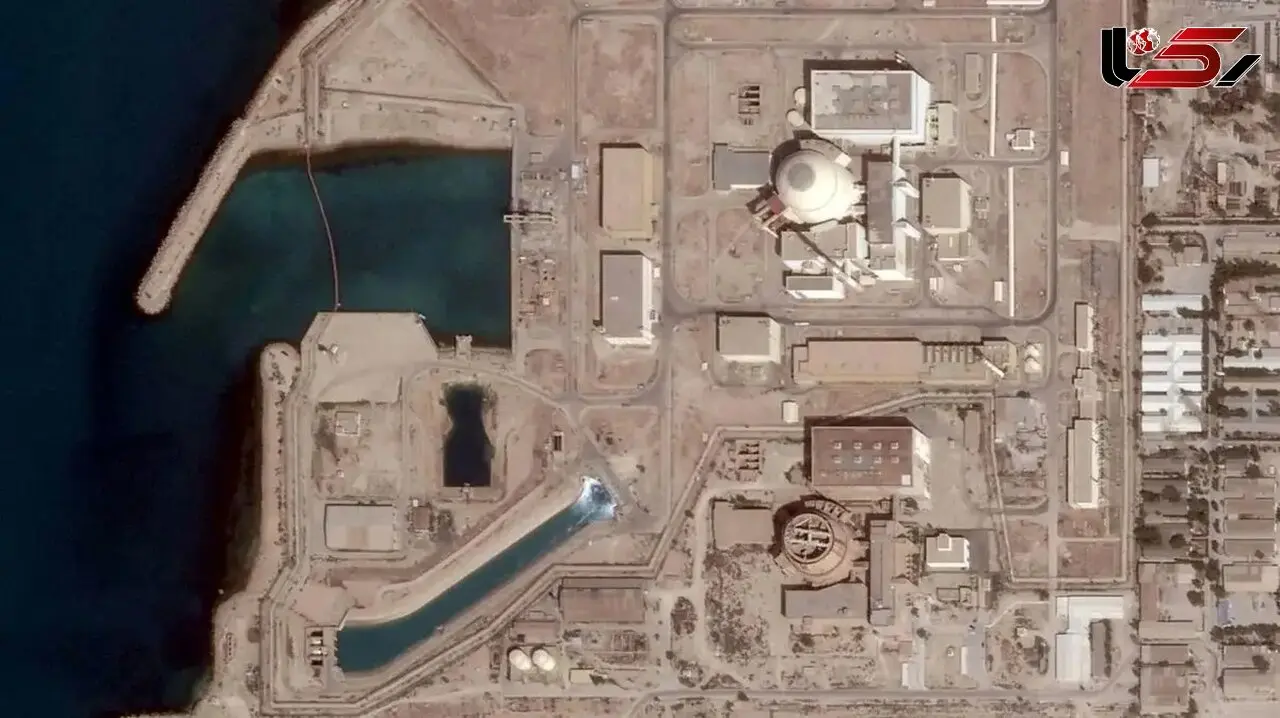
Amid heightened tensions with the United States, and while nuclear negotiations have opened a limited window to delay a potential military confrontation, Iran is seeking to reinforce its missile and nuclear sites against possible U.S. and Israeli attacks.
According to Rokna, citing Al Jazeera, the news outlet, after publishing recently captured satellite images of Iran’s military and nuclear facilities, wrote: New satellite images show that as the increased military presence of the United States in the region accelerates, Iran is reinforcing and fortifying its military and nuclear sites.
According to the outlet’s claim, the indirect nuclear negotiations between Iran and the United States provide Tehran with the opportunity to rapidly fortify its missile and nuclear bases, using principles of passive defense, against potential U.S. and Israeli attacks.
Satellite Images of Iran’s Facilities
According to the report, newly released satellite images show that Iran has recently constructed a concrete shield over a new facility at the Parchin site (30 kilometers southeast of Tehran), covered it with soil, and is rapidly advancing its work at this location — which is said to have been bombed by Israel in 2024 — amid heightened tensions with the United States and threats of regional war.
The images also show that Iran has buried tunnel entrances at a nuclear site that was bombed by Washington during the 12-day war between Israel and Iran last summer, reinforced tunnel entrances near another site, and repaired missile bases that were struck during the conflict.
This comes as countries in the region and around the world are closely monitoring the possibility of escalating tensions. On Thursday, Donald Tusk, Prime Minister of Poland, urged Polish citizens to “leave Iran immediately … and under no circumstances travel to this country.”
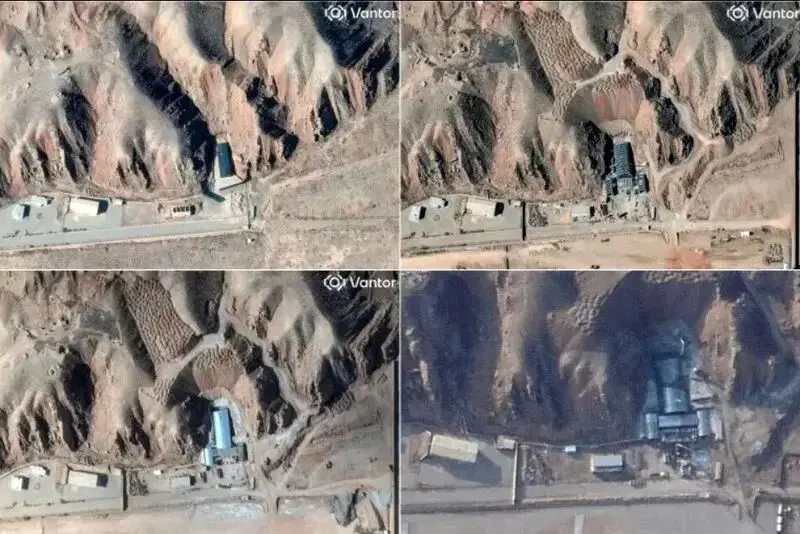
The satellite images offer a rare glimpse into Iran’s activities at some of the sites that lie at the center of tensions with Israel and the United States.
The Parchin complex, located approximately 30 kilometers (20 miles) southeast of Tehran, is one of Iran’s most sensitive military sites. Western sources claim that more than 20 years ago Tehran conducted nuclear explosion-related tests there. Iran has consistently denied seeking to obtain atomic weapons and states that its nuclear program is solely for civilian purposes.
Neither U.S. intelligence agencies nor the United Nations nuclear watchdog (the International Atomic Energy Agency) have found evidence that Iran is seeking to acquire nuclear weapons.
According to reports, Israel attacked Parchin in October 2024 (Mehr 1403). Satellite images taken before and after that attack show extensive damage to a rectangular building at Parchin, and apparent reconstruction is visible in images dated November 6, 2024. Images from October 12, 2025 show development at the site, with the framework of a new structure and two smaller adjacent structures visible.
Progress is evident in images dated November 14, as a metal roof appears to have covered the large structure. By February 16, the structure is no longer visible and has been concealed by what experts say is a concrete structure.
The Institute for Science and International Security (ISIS), in an analysis published on January 22 based on satellite images, referred to progress in constructing a “concrete coffin” around a newly built facility at the site, which it identified as Taleghan 2.
David Albright, founder of ISIS, wrote: “Delaying negotiations has its advantages: over the past two to three weeks, Iran has been busy burying the new Taleghan 2 facility… More soil is available, and this facility may soon become a fully unrecognizable shelter, providing significant protection against air attacks.”
The institute also reported in late January that satellite images showed new efforts to bury two tunnel entrances at the Isfahan complex — one of Iran’s three uranium enrichment plants that was bombed by the United States in June during the war. By early February, ISIS stated that all tunnel entrances at the complex were “fully buried.”
Other images point to ongoing efforts since February 10 (nine days ago) to “harden and defensively reinforce” two entrances to a tunnel complex beneath a mountain approximately 2 kilometers from Natanz — where Iran’s two other uranium enrichment plants are located.
Diplomacy in a Suspended and Tense Atmosphere
On Tuesday, representatives of the United States and Iran reached an understanding on the “guiding principles” of nuclear negotiations during a meeting in Geneva, but achieved no tangible progress. The meeting in Geneva, Switzerland, followed a first round of talks in Oman.
Reports indicate that Tehran will present proposals within the next two weeks containing details aimed at bridging the gaps. Among the numerous obstacles in the negotiations is the U.S. effort to broaden the scope of the agreement to include restrictions on Iran’s ballistic missile arsenal and its support for regional allies.
An Underground Iranian Missile City
This is compounded by Israeli demands and the regional narrative, as Benjamin Netanyahu, Prime Minister of Israel, has repeatedly pressured U.S. President Donald Trump to move beyond purely nuclear parameters.
Tehran has insisted that these provisions are non-negotiable but is prepared to discuss limitations on its nuclear program in exchange for sanctions relief.
As diplomacy seeks its course, both sides are increasing military pressure.
Iran’s Islamic Revolutionary Guard Corps conducted a series of exercises on Monday and Tuesday in the Strait of Hormuz to prepare for “potential security and military threats.”
On Wednesday, Tehran announced new joint naval drills with Russia in the Sea of Oman. Admiral Hassan Maqsoudlou stated that the drills were conducted with the aim of preventing any unilateral action in the region and enhancing coordination against maritime security threats, including risks to commercial vessels and oil tankers.
The United States has also intensified its military presence in the region. Trump has ordered the deployment of a second aircraft carrier to the area, and according to satellite images, the first aircraft carrier — the USS Abraham Lincoln — has been positioned approximately 700 kilometers (435 miles) from Iran’s coast.
The Trump administration has also issued new threats against Tehran, with White House spokesperson Karoline Leavitt stating on Wednesday that “Iran would be very wise to reach an agreement with the United States.” Trump also escalated his rhetoric on social media.
He wrote on his social platform: “If Iran decides not to reach an agreement, the United States may be compelled to use an air base in the Indian Ocean on the Chagos Islands to eliminate a potential attack by a very unstable and dangerous regime.”
Iran has threatened to respond forcefully to any attack on its territorial integrity and interests, and recently Ayatollah Khamenei, the Leader of Iran, warned: Weapons capable of sending U.S. vessels to the bottom of the sea are more dangerous than those vessels themselves.
Send Comments