

New U.S. Advisory and Warning to Ships in the Strait of Hormuz: Stay Away from Iranian Waters / Do Not Resist if Iranian Forces Board
Rokna Political Desk: Rising tensions in the Strait of Hormuz have prompted a new advisory from the United States urging ships to avoid Iranian waters and to refuse requests by Iranian forces to board, a development that has contributed to a one percent increase in oil prices.
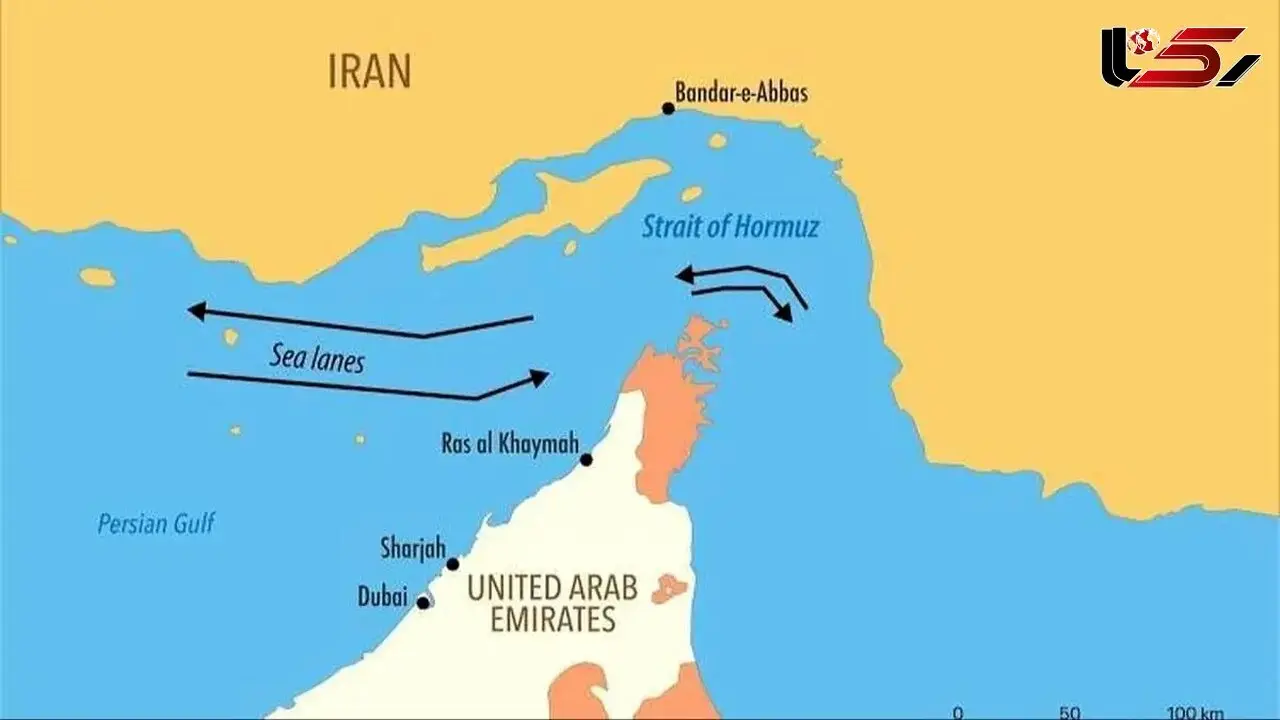
According to Rokna, the United States has issued new guidance to its vessels, reflecting Washington’s growing concern over the potential seizure or confrontation of ships flying the U.S. flag in the Persian Gulf and the Sea of Oman.
The issuance of this advisory has triggered a one percent increase in global oil prices.
Strategic Importance of the Strait of Hormuz
The Strait of Hormuz is a strategically critical corridor connecting the Persian Gulf to the Sea of Oman, the Indian Ocean, and other open waters. It lies between Iran to the north and Oman to the south, with certain parts falling under international waters.
Iran maintains security control over this vital waterway. The strait is approximately 40 kilometers wide, and about 20 percent of the world’s oil passes through it. In recent years, commercial vessels in this region have been seized multiple times by Iranian military forces, citing violations or smuggling of oil as reasons.
New U.S. Recommendations for Vessels
Reuters reports that amid heightened tensions over Iran’s nuclear program, the United States on Monday issued new guidance for American ships transiting the Strait of Hormuz. According to the advisory, U.S. vessels should avoid approaching Iranian territorial waters whenever possible.
The U.S. Maritime Administration (MMA) emphasized that commercial ships should verbally refuse any requests by Iranian forces to board their vessels. It also stressed that if Iranian personnel do board a ship, the crew should not resist. The advisory stated: “Ships should avoid Iranian waters as much as possible, without compromising navigational safety.”
These warnings come as indirect talks between Iran and the United States began last week in Muscat, Oman. Iran’s Foreign Minister stated that the negotiations, mediated by Oman, had a good start, with the possibility of continuation.
Nuclear Talks and New U.S. Pressures
Reuters further reported that Washington insists the negotiations on the nuclear program are not limited to that issue alone, but also encompass Iran’s missile program, support for regional armed groups, and human rights concerns.
Meanwhile, former U.S. President Donald Trump has imposed a 25 percent tariff on imports from countries purchasing Iranian goods, applying additional pressure on Tehran.