

Latest U.S. Sanctions Against Iran
Rokna Political Desk: The U.S. Department of the Treasury has announced sanctions on 10 individuals and entities linked to Iran and Venezuela, claiming that the move is part of efforts to counter Iranian drone trade and enforce international sanctions.
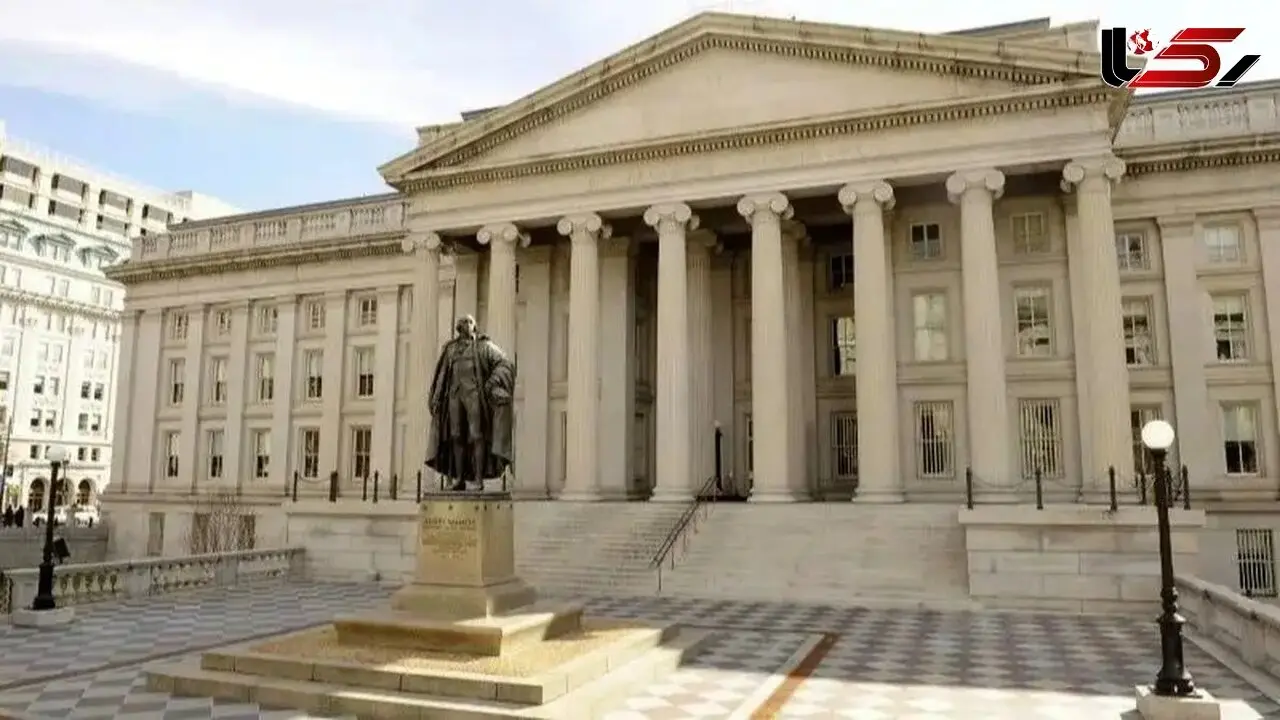
In line with the maximum pressure campaign of the Donald Trump administration against the Islamic Republic of Iran and Venezuela, the U.S. Treasury Department announced sanctions on 10 individuals and entities based in the two countries, claiming that the list includes a Venezuelan company involved in the trade of Iranian UAVs with Venezuela.
According to Rokna, the U.S. Treasury Department said on Tuesday local time that “the Department of the Treasury targeted Iran-Venezuela arms trade,” adding: “Today, the Office of Foreign Assets Control (OFAC) sanctions 10 individuals and entities based in Venezuela and Iran, including a Venezuelan company involved in the trade of Iranian UAVs with Venezuela.”
John C. Herlihy, Deputy Treasury Secretary for Terrorism and Financial Intelligence, claimed: “The Treasury Department holds Iran and Venezuela accountable for the reckless global proliferation of deadly weapons. We will continue taking swift action to deny access to the U.S. financial system for those enabling Iran’s military-industrial capabilities.”
The Treasury Department further claimed that this measure continues OFAC’s non-proliferation efforts in October and November, supporting the re-imposition of United Nations sanctions and other restrictions against Iran as of September 27, 2025 (Mehr 5, 1404).
The U.S. Treasury asserted that Iran’s drone and missile programs threaten U.S. forces and allies in the Middle East and destabilize commercial shipping in the Red Sea. Moreover, Iran’s continued provision of conventional weapons to Caracas poses a threat to U.S. interests in the Western Hemisphere, including U.S. territory, and the United States will employ all available tools to prevent such trade.
The U.S. agency claimed that this action is in line with Presidential Memorandum No. 2 on national security, which mandates the U.S. government to limit Iran’s ballistic missile program, counter other asymmetric and conventional military capabilities, prevent Iran from acquiring nuclear weapons, and disrupt the Islamic Revolutionary Guard Corps (IRGC) access to assets and resources that sustain destabilizing activities.
Regarding the Iran-Venezuela drone trade, the Treasury Department stated: “Today, OFAC sanctions a Venezuelan company and its head, who have received Iranian-designed UAVs since 2006. Iran and Venezuela have cooperated to supply the ‘Mohajer’ series drones from Qods Aviation Industries (QAI) to Venezuela, which have been renamed as the ‘ANSU’ series in Venezuela.”
The U.S. Treasury noted that OFAC had sanctioned Qods Aviation Industries in October 2023 under Executive Order 13949, alleging that the entity was owned, controlled, or acted on behalf of the Iranian Ministry of Defense and Armed Forces Logistics (MODAFL).
It continued that in September 2020, the U.S. State Department sanctioned Iran’s Ministry of Defense and Armed Forces Logistics under Executive Order 13949 for participating in activities materially assisting in the supply, sale, or transfer of weapons or related equipment, including spare parts, directly or indirectly to Iran.
The U.S. Treasury claimed that the Venezuelan company “Empresa Aeronáutica Nacional S.A.” (EANSA) is responsible for the maintenance and supervision of Mohajer drone assembly in Venezuela and has directly negotiated with Qods Aviation Industries, facilitating the multi-million-dollar sale of Mohajer-6 drones to Venezuela.
The U.S. further asserted that the Mohajer-6, an armed drone with intelligence, surveillance, and reconnaissance capabilities, is produced by Qods Aviation Industries. The Venezuelan company also participates in assembling aircraft sold by QAI to Venezuela.
Additionally, the Treasury stated that EANSA maintains drones operated by the Venezuelan Armed Forces, including the Iranian Mohajer-2, known in Venezuela as “Arpia” or “ANSU-100.” These drones are an upgraded, armed version of Arpia-001, originally derived from Iran’s Mohajer-2, and represent the first domestically produced drone in Venezuela. The ANSU-100 is capable of deploying Iranian-designed “Qaem” air-to-ground precision bombs.
The U.S. sanctions against Iran and Venezuela come amid heightened tensions between Caracas and Washington, as well as new threats against the Islamic Republic of Iran under the pretext of its missile program, aligned with Israeli claims.
On February 4, 2025 (Bahman 16, 1403), the U.S. president signed a memorandum to continue the maximum pressure policy against Iran, claiming readiness for dialogue with the Iranian president. Despite five rounds of indirect negotiations and an asserted diplomatic approach toward Tehran, Israel, on June 12, targeted several locations in Tehran and other cities, including nuclear facilities, during what was scheduled to be the sixth round of talks, killing several scientists, military personnel, and civilians.
Following this aggression, the United States also directly attacked the Fordow, Natanz, and Isfahan nuclear sites on July 1 (Tir 1), effectively joining the war against Iran, with Trump acknowledging that these attacks were carried out under Washington’s guidance.
The Iranian Armed Forces, in addition to responding to Israel’s aggression, targeted the Al Udeid base in Qatar with a powerful missile strike, which serves as the command center of the U.S. Air Force and the largest strategic asset of the American military in the West Asia region. Finally, on July 3, the U.S. president announced a ceasefire agreement with Israel, and Iran stated that it was not the initiator of the conflict and would not continue retaliatory actions if Israel ceases its unlawful attacks.
Send Comments