

China’s Intensifying Pressure and a New Global Lineup; Taiwan at the Center of Great-Power Rivalry
Is China Moving Toward a World War?
Rokna Political Desk: China has sharply raised military and diplomatic pressure on Taiwan and strengthened its regional influence, pushing tensions in East Asia to a new peak; meanwhile, Taipei—by developing asymmetric defense capabilities—and the United States—with increased security activity in the Taiwan Strait—are attempting to manage the growing crisis.

Charishma Vaswani, international affairs correspondent and Bloomberg columnist
According to Rokna, quoting Bloomberg, Taiwan’s fate had already been tied to the war in Ukraine. Fumio Kishida, the former Japanese prime minister, warned in 2022: “Ukraine today; perhaps East Asia tomorrow.” Now, with China’s accelerating movements, such concerns have once again become sharply pronounced. In this same context, Mick Ryan, military strategist and retired Australian brigadier, warns that China may use this particular moment to present its proposal regarding Taiwan. He emphasizes that Xi Jinping has always preferred to secure control of Taiwan without direct military force. According to him, “we may therefore expect the Chinese Communist Party to offer, in the near future or in a medium-term timeframe, a 28-point proposal on Taiwan to the Trump administration.”
This logic and approach had previously been outlined in Beijing’s “2022 White Paper” titled The Taiwan Question and China’s Reunification in the New Era—a strategic document asserting that Taiwan has “always been a part of China,” rejecting any foreign intervention, and describing reunification as a prerequisite and an unavoidable necessity for China’s “national rejuvenation.” The same document warns that although Beijing prefers a peaceful route toward reunification, it remains willing to resort to force if necessary to achieve its objectives.
China on the Threshold of Resolve; Heightened Pressure on the Taiwan Strait Amid Great-Power Competition
Recent tensions have highlighted China’s increasingly rigid posture. Last week, after the largest vessel of the New Zealand Navy transited the Taiwan Strait, Beijing issued a warning against “any provocations” in these waters—a warning directed not only at Wellington, but also a clear message to all countries that may contemplate increased military or symbolic presence in support of Taiwan.
This policy forms part of a broader campaign of diplomatic pressure that China has intensified in recent months. On 24 November, Donald Trump and Xi Jinping held a one-hour phone conversation, focused on trade and growing China-Japan friction over Taiwan. In public remarks, Trump made no reference to Taiwan whatsoever; however, China’s Ministry of Foreign Affairs dedicated a significant portion of its official communiqué to Xi’s statements on Taiwan—an asymmetry that itself conveyed a deliberate political message.
In this call, Xi stressed that Taiwan’s return to China is an inseparable part of the post-World War II international order. The phrasing is entirely calculated: Beijing seeks to portray itself as “the defender of global order” and the heir to the post-WWII framework, while casting Taiwan—and any state supporting it—as the source of instability and disruption of the status quo.
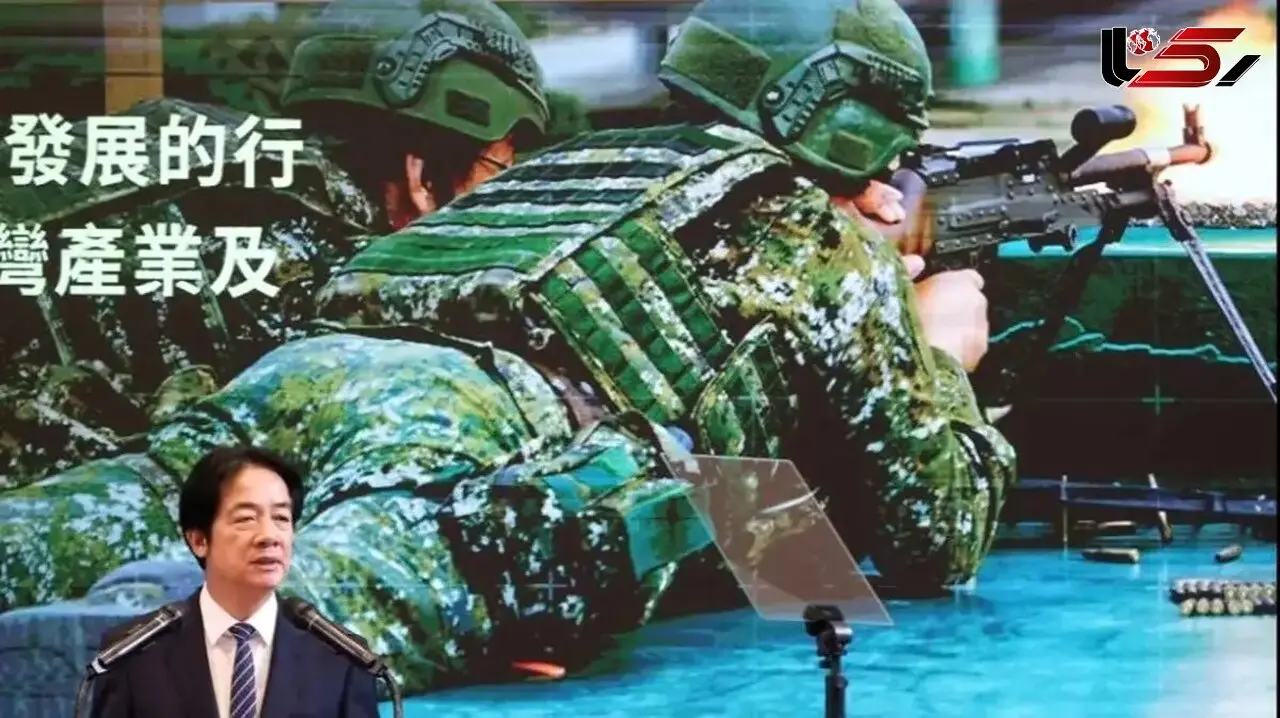
In response to this political and psychological pressure, Taipei reacted decisively, announcing the approval of a new defense package worth $40 billion. President Lai Ching-te stated that the funds would be used to purchase new U.S. weaponry and strengthen the island’s asymmetric defense capabilities—systems that include smaller, mobile, and relatively inexpensive equipment capable of sharply raising the cost of any potential Chinese invasion and complicating Beijing’s military calculations. This message was directed not only at Beijing but also as a subtle and indirect warning toward Washington.
Lai Ching-te has substantial reasons for concern. As American analyst Hal Brands has noted, the coming months could prove decisive for Taiwan’s security. Donald Trump’s current emphasis, at least in appearance, is on improving relations with China; Xi Jinping, for his part, has grown increasingly bold, explicit, and unrestrained in articulating the goal of reunification with Taiwan.
Taiwan: The World’s Tech Bottleneck Under the Shadow of a Possible Chinese Blockade
Today, Taiwan is one of the most critical pillars of the global economy, producing nearly 90 percent of the world’s most advanced semiconductors. Any serious conflict around Taiwan could severely disrupt global supply chains—from smartphones and automobiles to AI data centers—triggering deep and widespread economic shock worldwide.
Washington fully grasps this danger. The latest report from the U.S.–China Economic and Security Review Commission outlines how China in recent years has enhanced its ability to conduct an invasion and is now capable of launching a blockade or attack against Taiwan with almost no prior warning. The report also shows that Beijing adjusts its tone depending on the audience: in English-language materials, China downplays tensions and uses mild diplomatic language, whereas in internal messaging, Beijing increasingly emphasizes Taiwan’s “provocations” to create psychological and political conditioning for possible action. Meanwhile, the People’s Liberation Army continues rapid modernization, and its technological and operational gap with U.S. forces is narrowing noticeably.
Under these circumstances, Lai Ching-te’s defense strategy appears logical and necessary from a deterrence perspective—but it may face resistance in a parliament troubled by polarization and political gridlock. Taipei will be forced to apply more pressure to secure the necessary budget, which is intended for purchasing drones, various missile systems, mobile launch platforms, and resilient, flexible command-and-control networks. These assets form the core of Taiwan’s “asymmetric defense” strategy. Moreover, strengthening civil-defense exercises and preparing society for crisis response, along with systematic countermeasures against China’s influence operations and information warfare, must become permanent components of Taiwan’s national strategy—because deterrence relies not only on weaponry but also on societal readiness and resilience.
At the regional level, Washington’s Asian allies—Japan, Australia, South Korea, and the Philippines—must deepen coordination and treat Taiwan’s defense not as a peripheral concern, but as a central pillar of East Asia’s security architecture. Continued naval and military transits through the Taiwan Strait can play a vital role in reinforcing international law and freedom of navigation, making clear that this waterway does not belong exclusively to any single power. Trump’s plan for Ukraine may initially appear unrelated to developments around Taiwan; however, from Beijing’s perspective, these events form a single chain. What China sees is not merely a diplomatic initiative but a strategic “opportunity.”
Send Comments