

Iran’s Navy Face to Face With the Enemy / Photos and Specifications of Iran’s Submarines
Rokna Political Desk: Amid rising external threats, the naval forces of Iran’s Islamic Revolutionary Guard Corps (IRGC) and the Iranian Army play a key role in safeguarding the country’s maritime borders and countering concepts such as a naval blockade.
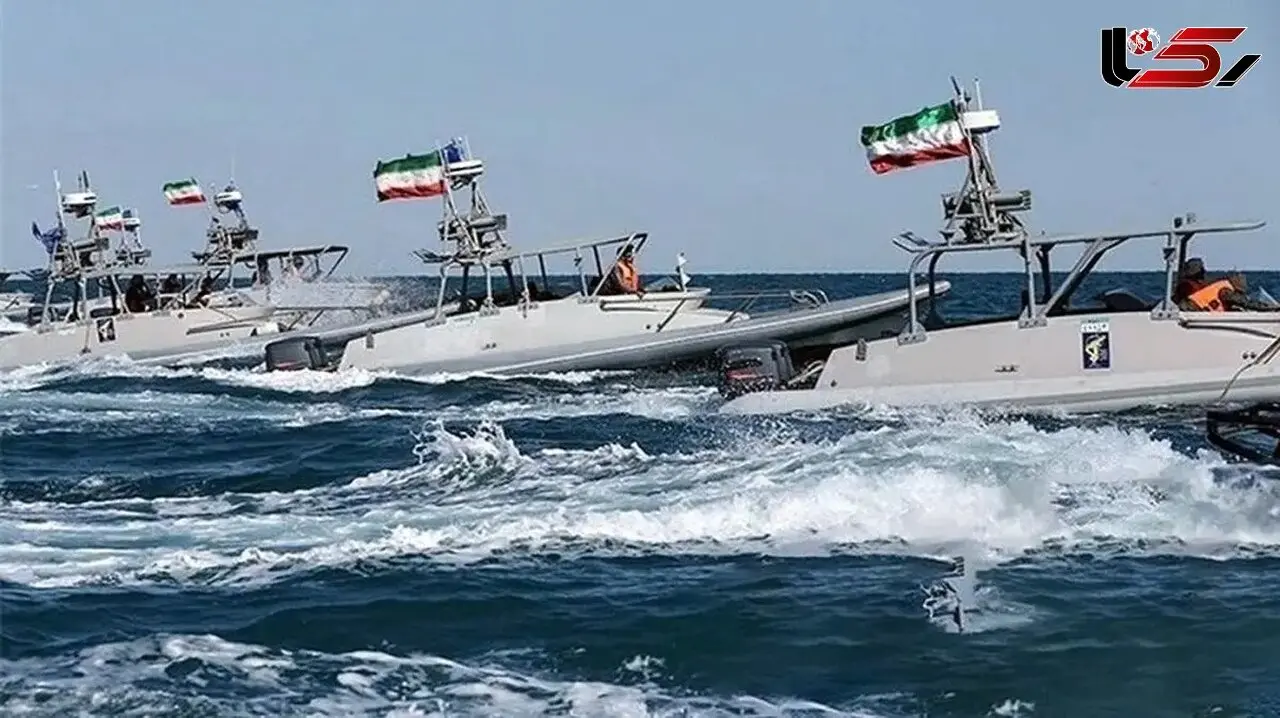
According to Rokna, as external pressures and threats intensify, the Armed Forces of the Islamic Republic of Iran have once again demonstrated their role in protecting the country’s borders.
The Key Role of the IRGC and Army Naval Forces
In this context, the performance of the naval forces of the Islamic Revolutionary Guard Corps and the Iranian Army has assumed greater importance. Among the issues raised is the plan for a naval blockade of Iran, which was proposed by some media outlets such as The Jerusalem Post. This Zionist media outlet claimed that “experts believe the United States may exert pressure on Iran through a naval blockade plan instead of direct airstrikes.”
Naval Readiness to Confront Threats
Recently, it was announced that the IRGC Navy, by equipping 300 vessels with missile launchers and deploying them in a combat formation in the Strait of Hormuz, is ready to confront any threat. At the same time, the IRGC spokesperson warned that if the US aircraft carrier Abraham Lincoln enters Iran’s territorial waters, it will be targeted.
Protecting the Security of Iran’s Trade Routes in International Waters
In addition, ensuring the security of Iran’s commercial routes in international waters is considered one of the main priorities of the country’s military forces. To this end, Admiral Irani, Commander of the Iranian Army Navy, announced that approximately 100 Iranian vessels are under the protection and escort of this force so that the country’s trade and economic exchanges can continue with full security.
Photos and Specifications of Iran’s Submarines
One of the most important features that submarines possess, which has made their use a top priority in maritime defense, is their stealth and difficulty of detection. Submarines can also be armed with advanced weaponry.
Rear Admiral Abbas Fazel-Nia, Commander of the Industrial Facilities of the Iranian Army Navy, stated in an interview that submarine construction represents one of the most advanced fields of knowledge in the world. This means that if a country can build submarines, it has achieved access to all complex technologies.
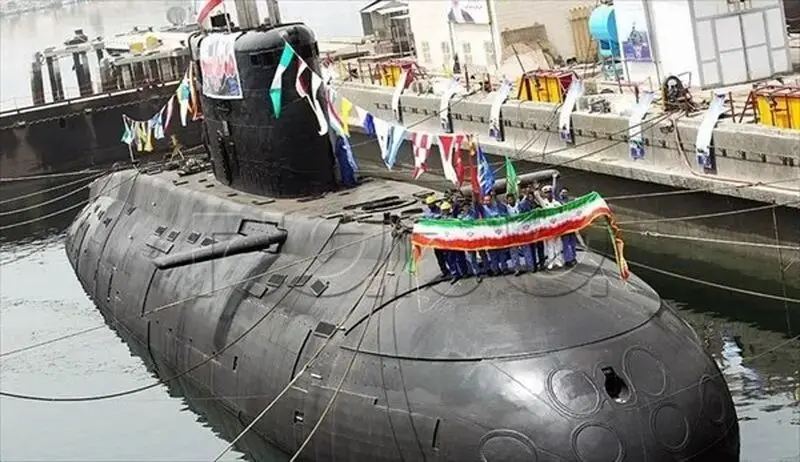
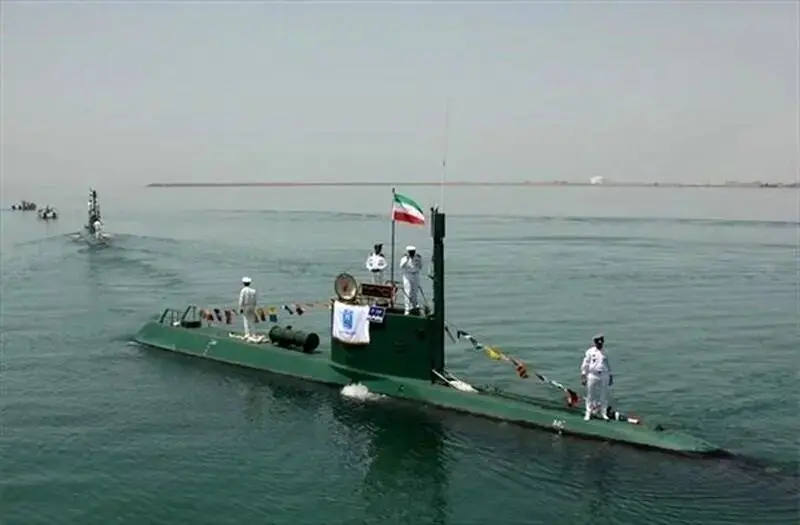
Following extensive efforts by experts of the Iranian Army Navy in the repair and maintenance of submarines, Iran gradually achieved submarine construction technology. Today, specialists in the maritime industries of the Islamic Republic of Iran are building various types of submarines, including light-class submarines known as “Ghadir,” semi-heavy submarines known as “Fateh,” and heavy submarines known as “Tareq.”
Ghadir-Class Light Submarine
Ghadir-class submarines are designed in terms of size and volume to operate in shallow coastal waters and can effectively carry out their mission to protect and safeguard territorial waters up to exclusive economic zones.
For this reason, these submarines maintain a continuous presence along the entire coastline of the Persian Gulf, as well as the Sea of Oman and the Makran coasts, monitoring subsurface and surface areas around the clock. Due to their ability to carry various offensive weapons, Ghadir-class submarines can surprise the enemy in an asymmetric confrontation. They are also capable of carrying a large number of mines and can operate in waterways and straits frequented by enemy vessels to conduct mine-laying operations.
Today, the subsurface flotilla of the Iranian Army’s Strategic Navy possesses dozens of Ghadir-class submarines, which are deployed in operational areas of the Persian Gulf, the Sea of Oman, and the northern Indian Ocean. On November 29, 2018, in Bandar Abbas, two Ghadir-class submarines, numbered 955 and 942, were commissioned into the Southern Fleet of the Iranian Army Navy.
Ghadir submarine No. 955, with its capability to carry subsurface cruise missiles, has very high strategic impact. According to Rear Admiral Amir Rastegari, Head of the Marine Industries Organization of the Ministry of Defense and Armed Forces Logistics, “This submarine is equipped with a subsurface-to-surface missile, and the destructive power of the Valfajr torpedo used on the Ghadir submarine is equivalent to six surface-to-surface cruise missiles and can send a 1,000-ton vessel to the depths of the sea in less than 10 seconds.” The design and production of Ghadir 955 were completed within 18 months, and according to Rear Admiral Rastegari, more than 90 percent of its components are domestically produced.
Due to its small size, low noise emissions, and very low probability of detection by the enemy, Ghadir 955 can operate near enemy coasts and ports and in shallow and narrow waterways, with the capability to carry commandos and various weapons such as torpedoes and naval mines. The Ghadir submarine can rest on the seabed and use sonar to detect its surroundings. A combat management system developed by the Marine Industries Organization has been installed on this submarine, simulating target speed, direction, and route to determine the optimal firing position for torpedoes or missiles. The hull of the Ghadir submarine is manufactured by Iran’s alloy steel industries and is equipped with a very advanced electronic warfare system. The telescope used on the Ghadir submarine is among the newest and most advanced telescopes used worldwide.
This submarine is equipped with 533-mm Valfajr torpedoes with a 220-kilogram warhead and a range of 18 to 20 kilometers. Thanks to advanced batteries, the underwater speed of the Ghadir submarine reaches approximately 30 kilometers per hour, and due to its very low noise, it can conduct patrol and reconnaissance missions underwater with minimal risk.
Fateh-Class Semi-Heavy Submarine
The 527-ton Fateh submarine is considered a semi-heavy submarine and is operationally far superior to the Ghadir-class submarine. It can normally operate at depths of 200 meters, with a maximum depth of 250 meters. Fateh has an endurance of 35 days at sea, representing a significant improvement over the Ghadir-class submarine. Its surface speed is approximately 20 kilometers per hour, while its submerged speed is about 25 kilometers per hour. This submarine is capable of carrying subsurface missiles, man-portable surface-to-air missiles, and can also transport special forces to designated locations.
Fateh is equipped with four 533-mm torpedo launch tubes, has the capacity to carry eight naval mines, and includes two reserve torpedoes. Its engine is a turbo-generator type that converts mechanical energy into electrical energy.
The Fateh submarine was built at the Shahid Darvishi Marine Industries Complex in Bandar Abbas, affiliated with the Ministry of Defense and Armed Forces Logistics. Rear Admiral Hossein Khanzadi, speaking about the first Fateh-class submarine, said: “The Fateh submarine possesses very high defensive capabilities, but we try not to mention many of them, because a submarine must preserve its element of surprise. We confidently say that the Fateh submarine is a surprise for enemies—both in terms of torpedo systems and other weapons installed on it, which we do not disclose. Enemies should know that Fateh is armed to the teeth and can carry out operations from great depths that they are neither prepared for nor expecting.”
Regarding comparisons with modern submarines of other countries, he added: “During missions to various parts of the world, I have visited many submarines, but when I first entered the Fateh submarine, I was truly surprised. I could not believe that our country had reached such a level of capability in submarine construction, surpassing what is commonly seen globally in terms of quality.”
The Commander of the Iranian Army Navy also noted regarding sea trials: “Today, in submarine construction facilities, there is no need to test submarines at depths of 200 or 300 meters at sea. We have equipment in which the submarine is placed and dynamically taken to the desired depth. This process was carried out for Fateh, and its tests were completed.”
According to this report, the fully Iranian-built Fateh submarine made its first appearance during the Velayat 97 exercise, where it demonstrated impressive performance.
Tareq-Class Heavy Submarine
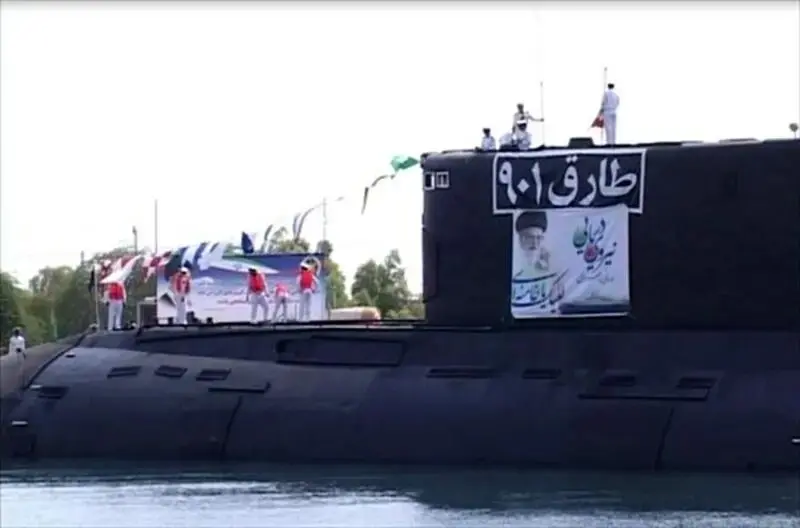
The Tareq submarine is the third Kilo-class and heavy-class submarine of the Islamic Republic of Iran and joined the Iranian Army Navy in 1992. Its primary mission is reconnaissance.
This submarine is equipped with a new gas release system, and its outer hull is covered with rubber tiles that reduce sonar wave reflection, lowering the risk of detection. Tareq 901, known as part of the Kilo-class group, has a displacement of 2,300 tons when surfaced and 3,950 tons when submerged.
Estimates indicate that under proper operating conditions, its surface speed reaches approximately 19 kilometers per hour, and its submerged speed reaches about 32 kilometers per hour. Based on this, due to their hull design and heavy class, these submarines can operate at maximum depths of 300 meters. Their operational range, whether surfaced or submerged, extends to several thousand kilometers, and at a speed of seven knots, they can travel up to 12,000 kilometers with an endurance of 45 days.
The Tareq submarine, which belongs to the Kilo class, has unique torpedo launch capabilities. It is equipped with six 533-mm torpedo launch tubes and 18 heavy torpedoes, always ready to fire both light and heavy torpedoes, with 18 torpedoes typically stored in designated compartments. The launch tubes are designed to fire homing torpedoes equipped with active sonar and television guidance systems against two targets simultaneously.
This system allows the submarine crew to directly and in real time determine the torpedo’s trajectory toward a target. The sonar systems used on heavy submarines, including the launchers and torpedo tubes of the Tareq and Kilo classes, can also deploy 24 naval mines. In addition, this class of submarine is capable of launching eight small surface-to-air missiles. Based in Bandar Abbas, this submarine, with a length of approximately 73 meters and a width of about 10 meters, is among the heavy-class submarines of the Islamic Republic of Iran. These submarines are equipped with MGK-400 sonar systems and a low-error dual-channel system that receives reflected waves from enemy vessels, enabling detection of submarine communication waves and tracking active enemy sonar signals.
Stealth from radar and tracking systems is one of the defining features of this submarine. One reason for its low noise and low detectability is the linear arrangement of its internal components and its anti-sonar coating, which prevents the reflection and انتشار of waves. Domestic repairs of the Tareq submarine saved the country 50 million dollars, while semi-major repairs of such submarines require approximately 1.62 million man-hours.
Mechanical, electrical, electronic, hard hull, and soft hull sections were repaired on the Tareq submarine, and more than 200 sensitive systems were repaired, replaced, and installed at the First Naval Zone factories of the Iranian Army Navy. The submarine initially faced issues related to its large size and weight as a diesel submarine, which were ultimately resolved through increased engine power.
An interesting feature of the Tareq submarine is that, in terms of combat class, it falls under anti-submarine and anti-surface categories and is considered one of the quietest diesel submarines in the world. Its detectability by enemy submarines is only one-quarter that of similar submarines in the same class. For example, if an enemy submarine and Tareq are 1,000 meters apart, Tareq can detect the enemy submarine, while the opposing submarine must approach within 250 meters to detect Tareq. Another feature of Tareq is its excellent balance during submersion, meaning the relationship between buoyancy forces, flotation, and weight, considering its water tanks, is highly optimal.