

Iran–US War: What Is the Condition of Iran’s Drone Arsenal?
Israeli Website: At Least 80,000 Drones of Various Types Exist in Iran’s Arsenal
Rokna Political Desk: Iran deploys a wide range of combat, reconnaissance, and loitering (suicide) drones across different branches of its armed forces. Given the relatively low cost of drones and the lower complexity of their production compared to more advanced weaponry and ballistic missiles, the limited estimates available indicate the mass production and stockpiling of drones in Iran.
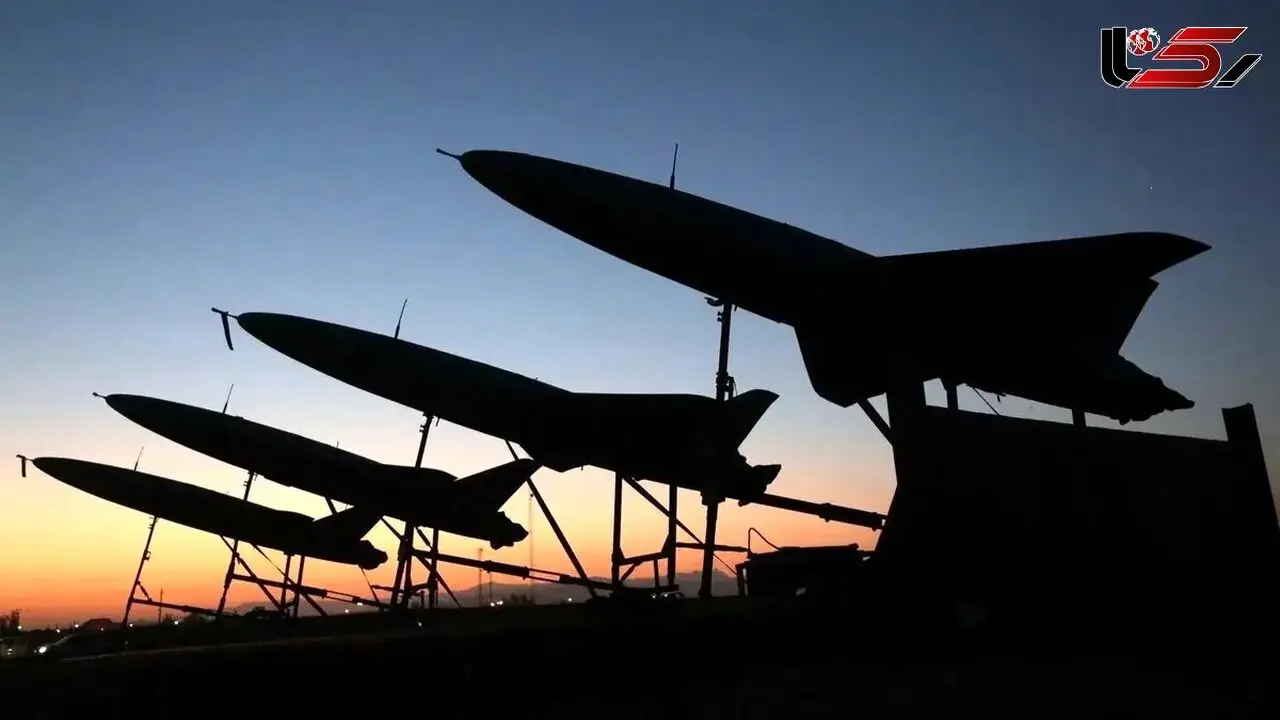
Iran’s drone program is one of the areas of military capability to which the United States attaches particular sensitivity. According to General Kenneth McKenzie Jr., former commander of US Central Command (CENTCOM), Iran’s unmanned triad—ballistic missiles, cruise missiles, and unmanned aerial vehicles—constitutes a set of capabilities that enables Tehran to challenge the air superiority of the United States and its regional allies within the framework of asymmetric and hybrid warfare.
According to Rokna, in light of recent developments and rising tensions between Iran and the United States, various areas of the Islamic Republic’s military capabilities for self-defense and for striking US interests in the region are being examined. One of these areas is the drone program, which, given its importance in Iran’s military doctrine, has come under close scrutiny.
Drone Inventory in the Arsenal
Iran operates a spectrum of combat, reconnaissance, and loitering drones across different branches of its armed forces. Given the low cost of drones and the relatively lower complexity of their production compared to more advanced weaponry and ballistic missiles, the limited estimates available point to a large number of drones produced and stockpiled in Iran. An Israeli website recently reported that Iran achieved the capability to produce at least 400 Shahed drones per day in January 2026 (last Gregorian month). The report estimates that at least 80,000 drones of various types exist in Iran’s arsenal. Attention to news reports can also be informative in this regard. Reports by Israeli and American sources indicate that Iran carried out 1,050 drone attacks during the 12-day war. On February 8, according to an official announcement published in domestic media, 1,000 drones were delivered to the four branches of the Iranian Army by order of the Commander-in-Chief of the Army.
A Weapon for the First Phase of an Attack
Military analysts believe that Iran, in light of certain problems stemming from sanctions over the past five decades, which have manifested in parts of its military capabilities, has focused on developing this triad. In an assessment written in 2023 for the Washington Institute for Near East Policy, McKenzie pointed out that the first phase of any direct confrontation with Iran would involve Tehran’s efforts to saturate US air defense systems, radars, and sensors in the region and to target them, followed by the main attack. Drones, given their low cost and mass-production capability, play a key role in this tactic, as Iran has used this approach in its confrontations over the past two years and in the three “True Promise” operations.
Iran’s Drone Families
Some sources say that Iran possesses around 50 different models of drones. The most well-known Iranian-made drone is the Shahed-136 loitering munition, which has also been used during the Russia–Ukraine war. This drone, for which foreign versions have also been produced, is considered one of the main weapons in Iran’s engagements. Available online information and official reports indicate that the Ministry of Defense, the Islamic Revolutionary Guard Corps, and the Army each pursue their own drone programs, supported by academic institutions and tailored to their respective operational requirements.
One important point in Iran’s drone program is that the capture of several US drones, such as the RQ-170, ScanEagle, RQ-11 Raven, and MQ-1 during the 2010s, enabled Iran to gain access to important technologies in the field of unmanned aerial vehicles. This increased its ability to develop various reconnaissance, electronic warfare, combat, and strategic and tactical loitering drones. In recent years, and also during the 12-day war, Iran managed to capture or intercept and shoot down some Israeli drones such as Harop, Hermes 450, Hermes 900, and Heron within its airspace. Available reports indicate that a significant portion of the Israeli regime’s operations against Iran during the 12-day war were conducted using drones. Part of Iran’s experience in drone operations dates back to the period of the war against داعش (ISIS). Some drones, such as the Shahed-129—whose name has recently appeared again in news related to developments in the Persian Gulf—were used in this war in Iraq and Syria. Iran’s allied groups in the region also possess some Iranian-made drones.
The two main drone families, Mohajer and Shahed, have featured more prominently in news coverage and public awareness compared to other Iranian drone products. Some more advanced drones, such as the Shahed-147, Shahed-149 (Gaza), Qaher-313, and Kaman-22, have also entered service with Iran’s armed forces in recent years, although no reports have yet been published regarding their operational deployment.