

Sanctions Having ‘Major Impact’ on Russian Economy, Says EU Special Envoy
Rokna Political Desk: David O’Sullivan Warns War-Driven Economy May Be Approaching an ‘Unsustainable’ Stage. Western sanctions are exerting a “major impact” on the Russian economy, according to the European Union’s sanctions envoy, as the fourth anniversary of Moscow’s full-scale invasion of Ukraine approaches.
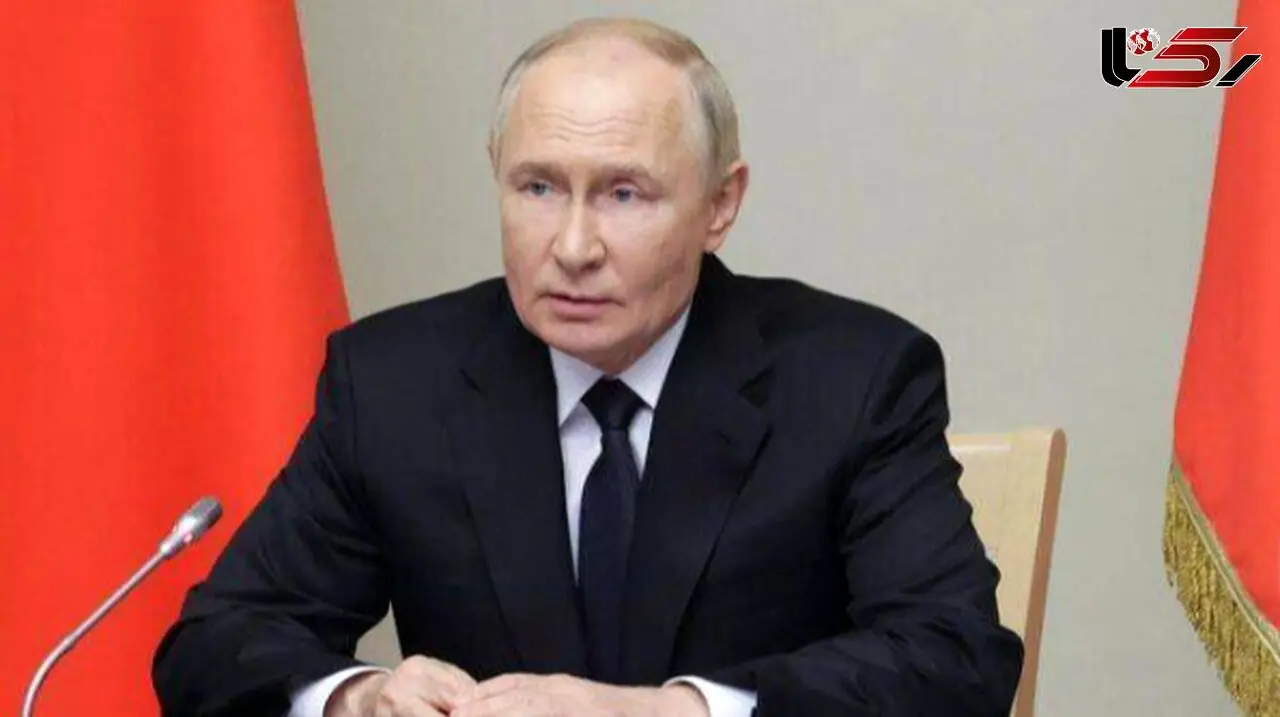
According to Rokna, citing The Guardian, David O’Sullivan, a senior Irish official, said the sanctions were “not a silver bullet” and acknowledged that efforts to bypass them would persist, but stressed that after four years he was convinced they were producing tangible results.
“I’m relatively confident,” he said in a rare interview with the Guardian. “I believe the sanctions have genuinely had a substantial effect on the Russian economy.”
He added: “At some point during 2026, we may reach a stage where this becomes unsustainable, because so much of the Russian economy has been heavily distorted by the expansion of the war economy at the expense of the civilian sector. You can only defy the basic laws of economic gravity for so long.”
O’Sullivan made the remarks following weeks of intense Russian attacks on Ukraine’s energy infrastructure, as the country endures an exceptionally harsh winter, with temperatures in Kyiv dropping to minus 20 degrees Celsius this week.
According to O’Sullivan, Ukrainian officials told him that Russia had managed to launch twice as many drones and missiles last month compared with January 2025.
However, Vladimir Putin’s war effort has imposed significant costs on the broader Russian economy, which analysts believe is under its greatest strain since the early stages of the conflict. Oil revenues are falling sharply, inflation stands at roughly 6%, and interest rates have climbed to 16%.
O’Sullivan, who has over 40 years of experience within EU institutions, was appointed the bloc’s special envoy for sanctions in December 2022, with a mandate to counter evasion and circumvention.
Since Russia’s full-scale invasion of Ukraine in 2022, the EU has imposed an unprecedented 19 rounds of sanctions, targeting more than 2,700 individuals and entities and restricting trade across vast sectors including energy, aviation, information technology, luxury and consumer goods, diamonds and gold.
The sanctions envoy said he was “very cautious about accusing countries” of failing to comply with EU measures, noting that “no non-EU country is legally obliged to respect our sanctions.”
The EU has sought to persuade other nations not to permit the resale of European goods to Russia, particularly components that could be used or adapted for military purposes.
O’Sullivan said the bloc had achieved some success in “preventing the direct re-export of critical weapons-related products” through central Asia, the Caucasus, Turkey, Serbia, the United Arab Emirates and, to a lesser extent, Malaysia. He said most circumvention stemmed from “economic operators spotting opportunities and seeking profit,” rather than being directed by governments.
China, however, represented an exception due to its “no-limits” partnership with Moscow. “China is clearly stepping in to provide support,” O’Sullivan said, although not through direct supplies of military equipment.
He noted that several EU leaders had raised the issue with Beijing. “The response is always the same: ‘There’s nothing to see here. We don’t know what you’re referring to. We see no issue.’”
O’Sullivan also said the EU had taken effective steps to counter Russia’s so-called shadow fleet — ageing oil tankers with opaque ownership structures used to ship Russian crude to markets such as China and India. By December, nearly 600 vessels had been placed under EU sanctions.
“We’ve been very successful in persuading flag states to withdraw their flags from sanctioned ships,” he said. “We’ve tightened the screws on this form of circumvention quite significantly. Russia is clearly struggling to maintain oil exports.”
According to Russia’s finance ministry, federal budget revenues from oil and gas — the backbone of the economy — fell by half in January, reaching their lowest level since July 2020.
Despite this, the EU has faced criticism from the United States for not going far enough. Over the weekend, US Treasury Secretary Scott Bessent accused the bloc of “financing the war against themselves” after it signed a trade agreement with India without imposing additional restrictions on purchases of Russian oil.
Since the invasion, India has ranked as either the world’s largest or second-largest buyer of discounted Russian crude. Days later, the US claimed India would halt Russian oil purchases in exchange for reduced US tariffs on Indian goods.
O’Sullivan defended the EU-India trade deal, citing steps taken prior to its signing, including EU sanctions on a major Indian refinery, a ban on imports of refined products made from Russian crude — including those originating in India — and a decision by the Adani Group, which operates 14 Indian ports, to deny access to sanctioned tankers.
India, O’Sullivan said, was “a hugely imp”