

Tomahawk Strikes in Nigeria: The Start of a Hidden War or a Display of Trump’s Power?
What Lies Behind the U.S.’s Sudden Military Action Against Nigeria?
Rokna Political Desk: U.S. attacks in Nigeria, aimed at countering “ISIS” and protecting Christians, have heightened concerns about Washington entering a complex conflict and the potential for wide-ranging security repercussions.
Rachel Chaison, Washington Post International Security Correspondent
According to Fararu, citing the Washington Post, senior Nigerian officials announced on Friday that U.S. attacks in the country, targeting what Donald Trump called “ISIS terrorist thugs,” could mark the first wave of a broader campaign against armed groups active in Nigeria. However, security analysts have warned that the Trump administration appears to be entering a complex, long-standing, multi-layered conflict, perhaps without full understanding.
The “Massacre of Christians” Narrative and the Multi-Faceted Reality of Violence in Nigeria
In recent months, Trump repeatedly warned that intervention would occur if the killing of Christians in Nigeria did not cease. He followed through on this threat on Thursday night, stating that “several precise attacks” were carried out on Christmas Eve, and warned that more would follow if the “massacre of Christians” continued.
Western and Nigerian security analysts noted that this is the first time in decades that the United States has carried out such strikes in Nigeria, a country of over 230 million people almost evenly split between Muslims and Christians. They emphasized that while violence, particularly from Islamist militants in the north, has targeted Christians, Muslims have not been immune from insecurity.
Neither Trump nor U.S. Africa Command specified who was killed in these attacks. Both the U.S. and Nigerian governments stated that the operations were conducted with Nigeria’s consent. Daniel Bualla, an advisor to the Nigerian president, said the Thursday attacks were only the beginning. Yusuf Tuggar, Nigeria’s Foreign Minister, emphasized that his country had provided the U.S. with the necessary intelligence for these operations and that cooperation would continue.
In a Friday interview with the Washington Post, Tuggar said: “I assure you that more attacks are on the way. This is part of our battle against insecurity. This operation will be a joint and ongoing effort to combat terrorism in Nigeria until their cores are dismantled inside the country and along our borders.”
Two Narratives About Lakorawa: ISIS or Al-Qaeda Branch?
Two U.S. officials, speaking on condition of anonymity due to the sensitivity of the issue, stated that the attacks were carried out with Tomahawk cruise missiles launched from a U.S. Navy vessel in the Gulf of Guinea. The use of Tomahawks, with a range of around 1,000 miles, underscores the challenges the U.S. faces in maintaining counterterrorism presence in the Sahel—a vast region spanning the width of Africa that has become a global hub of extremism in recent years. U.S. presence in the Sahel has decreased in recent years, while Russian involvement has increased.
Violence in Nigeria is multi-faceted and varies regionally. In the northeast, Boko Haram militants and an ISIS-affiliated branch are active; in the northwest, bandits, some linked to Islamist groups, dominate; and in central Nigeria, widespread conflicts between farmers and herders persist.
According to the Armed Conflict Location & Event Data Project, much of the recent violence in Sokoto State, a predominantly Muslim area where the attacks occurred, is attributed to a group called “Lakorawa.” Some analysts associate this group with ISIS, while others say Lakorawa is linked to Al-Qaeda’s branch, Jama’atu Nasrat al-Islam wal Muslimin.
Anelis Bernard, a former U.S. State Department advisor, stated that even if Lakorawa militants were targeted in Thursday’s strikes, it is unlikely that the casualties included senior commanders given the attack locations. However, Bernard emphasized that these strikes indicate a “significant escalation of U.S. military activity in Africa,” noting that the U.S. had not taken similar action even during Boko Haram’s peak attacks in the Lake Chad region in the mid-2010s.
She and other analysts believe U.S. officials are more focused on shaping the narrative desired in Washington than on the complexities of the on-the-ground reality. According to previous Washington Post reports, Trump’s focus on Nigeria resulted from months-long pressure campaigns by Ted Cruz and American evangelical leaders supporting Nigerian Christians.
Exaggerating the “Killing of Christians” and the Risk of Costly Decisions
Led Servat, a senior Africa analyst at the Armed Conflict Location & Event Data Project, stated that in recent weeks he has briefed multiple U.S. officials about violence in Nigeria and emphasized that reported Christian casualties are often exaggerated. He warned that such distortions could result in high civilian casualty risks.
Meanwhile, Malak Samuel, a senior researcher on good governance in Africa who has studied Islamist groups for over a decade, noted that in Sokoto and other northern regions, extremists are increasingly imposing strict interpretations of Sharia law, including requiring conservative dress and even removing music from phones.
This situation, according to Samuel, may lead many Nigerians to welcome U.S. intervention, believing their government has failed to sufficiently counter militants. However, Samuel said Trump’s approach to addressing violence is misleading, emphasizing that the president’s focus on “Christian massacres” is inaccurate, and his claim of targeting “ISIS militants” is also questionable.
Mustafa Al-Hassan, a security analyst with extensive experience in northwest Nigeria, said of Trump’s framing of the attacks: “Politically, it is convenient and appropriate. If these strikes are truly targeting precise points, the Nigerian people would welcome them. But it does not seem that this is what is happening. Ultimately, what is the goal?”
Meanwhile, James Barnett, a Nigeria expert based between Lagos and the U.K., highlighted significant uncertainties about the strikes’ effectiveness and the future of U.S.-Nigeria military cooperation. Barnett said: “If this marks a shift in U.S. policy toward Nigeria, a range of challenges and potential risks lie ahead, including how these operations are framed and narrated.” He added that the fact Trump was the first to announce the strikes is notable, though not surprising. He also recalled that the Nigerian government has historically been cautious in welcoming U.S. strikes due to concerns about national sovereignty and potential consequences.
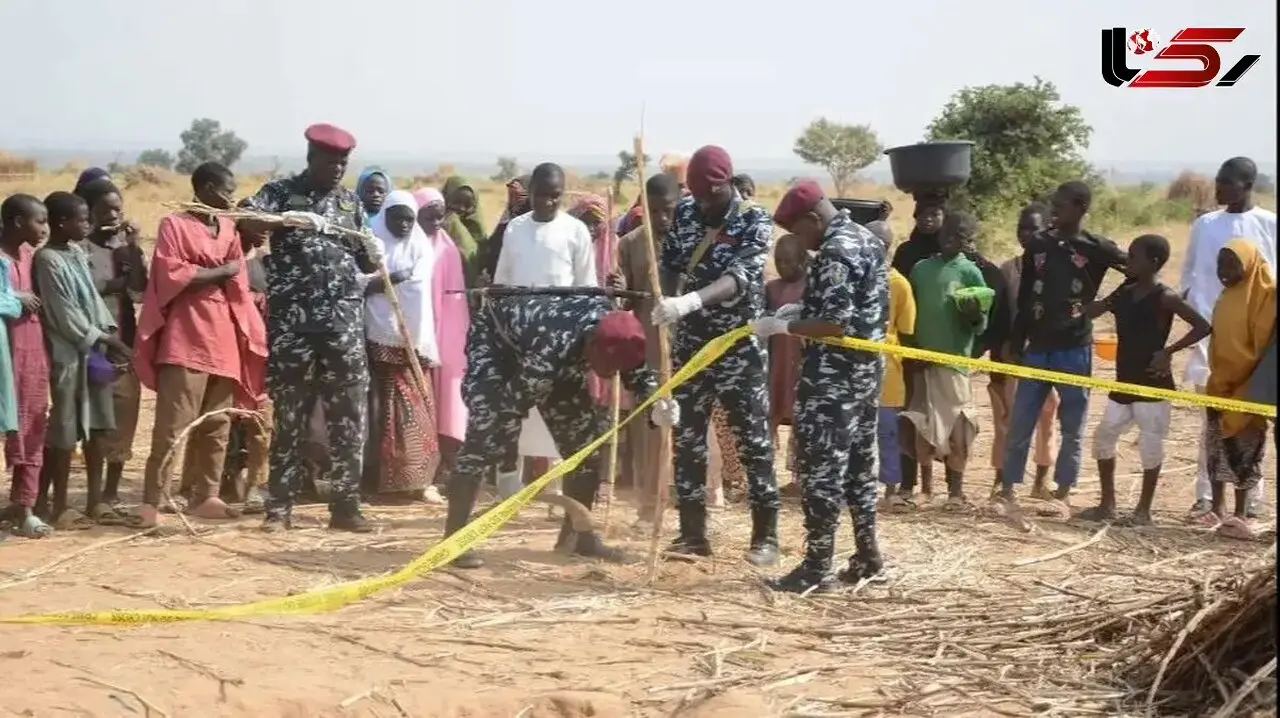
In the normally quiet village of Jabe in northwest Nigeria, three residents told reporters on Friday that they were confused following an attack near their homes, in an area that had largely remained free from violence.