

Khaleda Zia, the former prime minister of Bangladesh and longtime political rival of Sheikh Hasina, has died at the age of 80
Rokna Social Desk: Former Bangladeshi Prime Minister Khaleda Zia, a towering political figure and longtime rival of Sheikh Hasina, has died at the age of 80, the Bangladesh Nationalist Party announced on Tuesday. Zia was the first woman to hold the country’s top office and played a central role in shaping Bangladesh’s politics for decades.
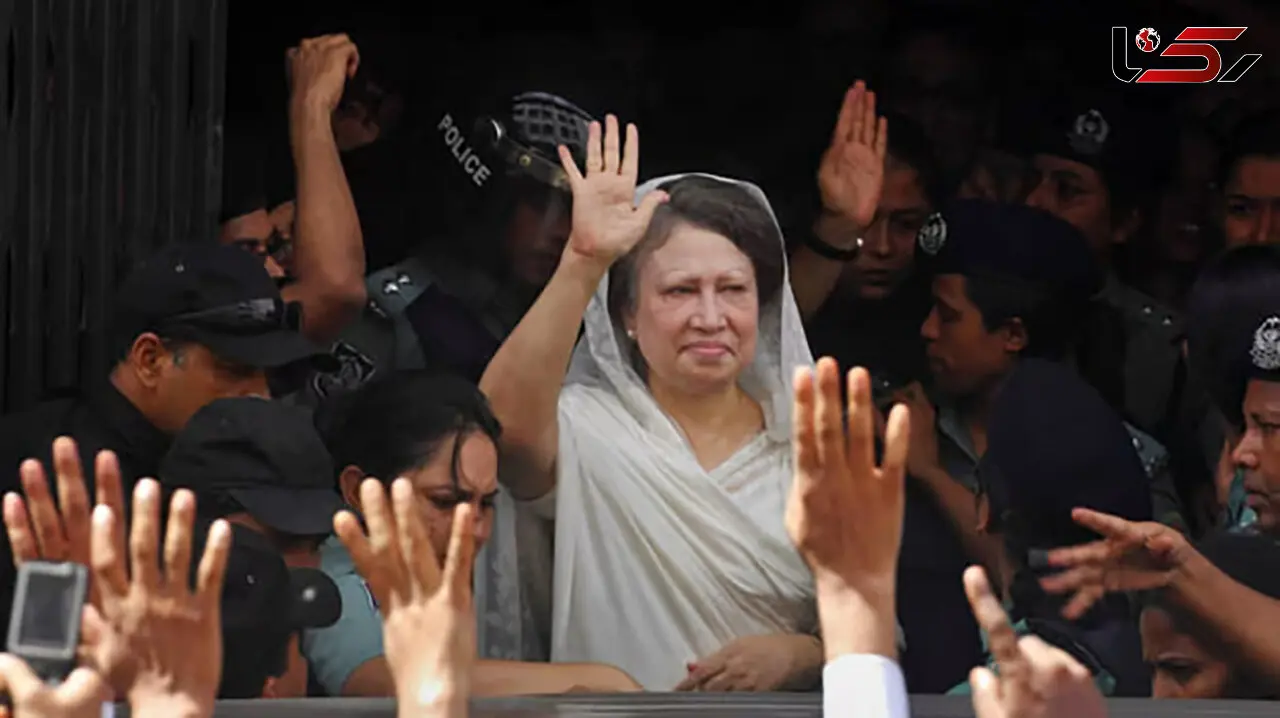
According to Rokna, citing CNN, Zia, whose decades-long rivalry with another former prime minister shaped Bangladeshi politics for an entire generation, was the country’s first woman to be elected prime minister. She had faced multiple corruption cases that she consistently described as politically driven. In January 2025, however, Bangladesh’s Supreme Court acquitted her in the final remaining corruption case, clearing the way for her potential participation in the February general election.
According to the BNP, after Zia was released from prison in 2020 on medical grounds, her family repeatedly appealed—at least 18 times—to the administration of her political rival, former Prime Minister Sheikh Hasina, seeking permission for her to receive medical treatment abroad. All such requests were rejected. Only after Hasina was removed from power in 2024 did an interim government led by Nobel Peace Prize laureate Muhammad Yunus approve her travel. Zia went to London in January and returned to Bangladesh in May.
Bangladesh’s early post-independence years, following the country’s bloody 1971 war of liberation from Pakistan, were marked by political instability, assassinations, and repeated coups as military leaders and both secular and Islamist figures competed for power. Zia’s husband, President Ziaur Rahman, seized power as a military chief in 1977 and founded the Bangladesh Nationalist Party the following year. While credited with restoring democracy, he was killed in a military coup in 1981.
Zia emerged as a key figure opposing military rule, helping to mobilize a mass movement that eventually led to the removal of dictator and former army chief H.M. Ershad in 1990. Her main political rival during her first term in 1991 and in subsequent elections was Sheikh Hasina, the daughter of independence leader Sheikh Mujibur Rahman, who was assassinated in a 1975 coup.
Zia faced heavy criticism over an early 1996 election in which her party secured 278 of the 300 parliamentary seats amid a widespread boycott by major opposition parties, including Hasina’s Awami League, which demanded a neutral caretaker government to oversee the vote. The government lasted just 12 days before a nonpartisan caretaker administration was formed and fresh elections were held later that year.
She returned to power in 2001, leading a coalition that included Jamaat-e-Islami, the country’s main Islamist party, which had a controversial history linked to the 1971 independence war. During this period, Zia’s government pursued pro-investment and open-market policies that reassured the business community.
Zia was often described as having warmer ties with Pakistan and was known for delivering speeches critical of India. Indian authorities accused her government, particularly during her second term from 2001 to 2006, of allowing insurgent groups to operate from Bangladeshi territory to destabilize India’s northeastern regions.
That term was also overshadowed by allegations that her elder son, Tarique Rahman, effectively ran a parallel administration and was involved in widespread corruption. In 2004, Hasina accused Zia’s government and Rahman of responsibility for grenade attacks in Dhaka that killed 24 members of the Awami League and injured hundreds more. Hasina narrowly survived the attack, which she described as an assassination attempt, and later won the 2008 general election.
The BNP and its allies boycotted the 2014 election over disagreements regarding the caretaker system, resulting in a landslide victory for Hasina’s increasingly authoritarian government. Although the party participated in the 2018 polls, it boycotted the 2024 election, enabling Hasina to secure a fourth consecutive term in controversial circumstances.
Zia was sentenced to a total of 17 years in prison in two corruption cases involving the misuse of authority and embezzlement of funds intended for a charity named after her late husband. The BNP maintained that the charges were politically motivated, while Hasina’s government insisted the judiciary acted independently. Hasina faced widespread criticism for imprisoning her longtime rival.
Zia was released from prison in 2020 and moved to a rented residence, from which she regularly sought treatment at a private hospital. Her family’s repeated requests for permission to seek medical care abroad were denied until Hasina was removed from power in a mass uprising in August 2024 and fled the country.
Although Zia largely withdrew from active politics and avoided public rallies in her later years, she remained chairperson of the BNP until her death. Rahman has served as the party’s acting chair since 2018.
She was last seen publicly on Nov. 21 at an annual Bangladesh military event at Dhaka Cantonment, where she met Yunus and other political leaders. She appeared frail, pale, and seated in a wheelchair.
Zia is survived by her elder son, Tarique Rahman, her political heir. Her younger son, Arafat Rahman, died in 2015.
Send Comments