

A Look at Trump’s Plan: A Deadly Army for America’s Future
Rokna Political Desk: Donald Trump’s plan to rebuild the U.S. military, emphasizing advanced technology and enhanced nuclear capability to ensure national security and support the economy and citizens by 2025, has been outlined in the new U.S. National Security Document.
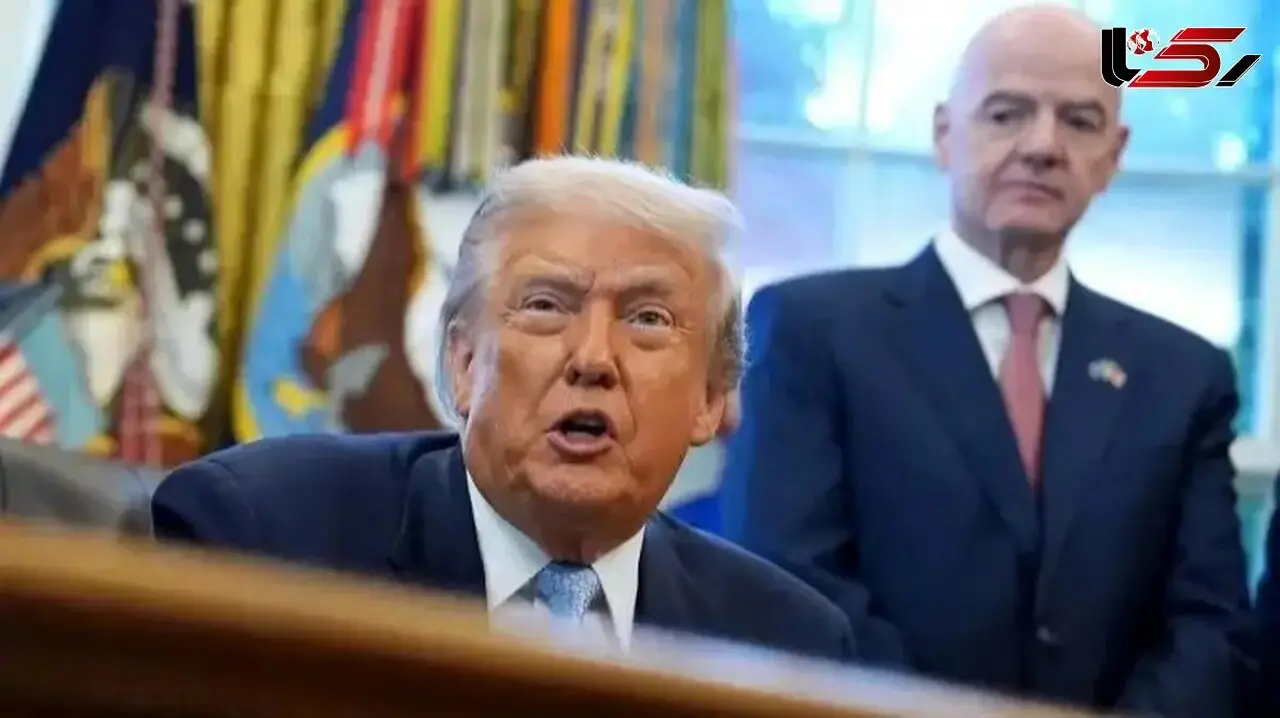
Ebrahim Motaghi,wrote that the latest U.S. National Security Document was released in November 2025. Trump sought to clarify America’s strategic objectives in the coming years. The primary goal of publishing the new U.S. National Security Strategy is to outline the roadmap for U.S. foreign policy and the pattern of strategic behavior in the years ahead. Trump aims to examine the concept of “America First” based on structural rules and tactical action frameworks for the future.
Donald Trump sought to articulate the national goals and interests of the U.S. in terms of territorial security, economic necessities, and emerging geopolitical needs. The main pillars of the U.S. National Security Strategy can first be seen in the critique of past U.S. foreign policy. Second, Trump emphasizes the need to reform U.S. security policy. Third, he focuses on the direction and tactical compass of U.S. actions across various geographic domains.
1. Critique of U.S. Foreign and Security Policy Post-Cold War
One of Donald Trump’s behavioral and personal traits can be understood as a “superiority-seeking attitude.” Many indicators of U.S. political, economic, and security actions can be traced to Trump’s personality characteristics. He consistently seeks to create a distinct model for himself by critiquing others. His critique of past U.S. political actions is intrinsically linked to the future strategy of the United States under Trump.
Trump’s critical stance on foreign policy has emerged because, in the post-Cold War years, the U.S. has faced signs of security threats, economic decline, and reduced strategic credibility. He emphasizes the necessity of a “cohesive and focused U.S. strategy” with other global actors. Trump also stresses that the U.S. must present its political objectives and principles clearly to all citizen groups and international actors.
Trump’s critical perspective on the foreign policy and security actions of past U.S. presidents reflects the fact that they focused primarily on broad objectives, while any national security document must have a coherent, structural, and balanced nature. He emphasizes clarity in foreign policy; the more general and comprehensive the approach, the less effective it becomes internationally.
Additionally, Trump’s National Security Document critiques indicators of neoliberal economics and politics. The ideological and behavioral foundations of U.S. liberalism and globalization are criticized for promoting supranationalism and undermining U.S. sovereignty and national authority. Consequently, liberal ideologies lose relevance in Trump’s political, economic, and security thought. Nationalism and U.S. national interests are central to Trump’s security policy. In his view, each country should prioritize its foreign and economic policy to maximize security, interests, and economic growth. National security encompasses conditions that ensure public interest and societal development, making its enhancement the primary necessity of the document.
2. Comprehensive Security and Optimization of the U.S. Economy
Foreign policy must meet strategic needs and national objectives through cooperation and competition. In Trump’s view, security is extensive, multidimensional, and interconnected. National security is achieved when economic needs, public welfare, and control over external actors are properly addressed. Territorial control is considered alongside economic control. This is realized through organizing “the world’s strongest, deadliest, and most technologically advanced military in terms of recruitment, training, regulation, and strategic equipment.”
Another component of U.S. national power is defined through nuclear deterrence, missile defense, and the “Golden Shield” to protect the population, economy, and governance. Trump focuses on investments in energy, new technologies, and strategic defense. Any security policy must meet the general needs of the nation. Economic growth, innovation, and the optimization of U.S. credibility are key indicators. The concept of “soft power” is also highlighted as a strategic necessity, enhancing U.S. prestige and creating a positive perception among citizens and other nations.
Trump believes achieving U.S. national objectives is possible by mobilizing all sources of national power to counter economic threats, confront terrorist groups, and enhance operational credibility. In such conditions, the U.S. economy, politics, and security are better protected. Achieving security without cooperation with regional allies in Europe, Asia, and Oceania will not yield the desired outcome.
3. Areas of U.S. Conflict Engagement
As a global power, the U.S. seeks to maximize control over resources, events, and global actors. Achieving these objectives inevitably creates challenges for U.S. interests and security. Among U.S. goals is the security of the Western Hemisphere, which has been central to its economic and strategic interests since the early 19th century. Historical relations with Latin American countries have deeper roots compared to other nations, motivating elites and social groups in South and Central America to seek better opportunities in the U.S.
Uncontrolled and excessive migration is a key issue at the core of Trump’s strategic policy. He aims to prevent unregulated migration from neighboring regions into U.S. territory, consistently emphasizing the need for border and immigration controls. Migration and imported goods are central to his social and economic policy. Trump seeks to implement security and economic barriers to limit both imports and migration.
The second strategic objective concerns freedom of navigation and expanding U.S. maritime mobility in economic and security domains. This enhances cooperation with European and certain Asian countries. Trump emphasizes that any country challenging international waterways will face serious responses from the global community, including the U.S.
Trump also stresses countering hostile powers in the Middle East and securing energy resources. The region is continuously exposed to security threats, making it central to the global economy. His strategy emphasizes the use of power to reduce regional security threats. Thus, the Middle East and Southwest Asia are arenas of ongoing competition between the U.S., Russia, and China, balancing regional security.
The third objective involves Israel and the Abraham Accords. Trump’s strategic and tactical approach is that if the Abraham Accords are implemented and Israel gains recognition, regional conflicts can be partly controlled, though many regional countries view cooperation with the U.S. and Israel as a source of new security, economic, and strategic challenges. Military power alone cannot halt regional conflicts; security is ensured when a wider spectrum of countries benefits.
The fourth challenge lies in U.S.-Europe cooperation in managing regional crises. Trump employs the concept of a “New Monroe Doctrine” because he is reluctant to engage in extensive economic and security cooperation with European nations. His security policy prioritizes the U.S. state and nationalism, achieved by limiting ties with Europe.
The fifth challenge concerns Iran. In the 2025 National Security Document, Iran is mentioned only three times. Trump views Iranian threats as reduced following the 12-day war, preventing it from posing a serious risk to the Middle East or U.S. regional interests. Regional security in the Middle East is achieved through active cooperation with regional allies as a tool to counter threats.
Conclusion
Ensuring security in the emerging global order is difficult and high-risk. Many political actors believe that global cooperation is achieved through a balance of power. Russia and China view this balance through the division of political units into the “Global South,” “Global East,” and “Global West,” while Trump’s National Security Document proposes new limiting frameworks for great powers. The core of Trump’s security policy is utilizing power mechanisms in hardware, software, credibility, and operational domains. His approach is based on the necessity of applying power.
The 2025 U.S. National Security Document reflects military, industrial, and technological superiority. Trump also plans to use U.S. military actions in 2025 as a key indicator of peacebuilding through power. Iran is considered a regional actor whose capabilities have significantly declined after the 12-day war. Trump’s security orientation for 2026 continues to focus on “preemptive security,” leading to tactical and staged use of military power. While peace is a strategic goal, his mindset emphasizes using power to achieve it, including military operations, coercive diplomacy, increased sanctions, and tariffs. Trump also seeks to restrain European countries through pressure, economic limitations, and compulsory acceptance of peace through major power agreements.