

New Hubble Images Solve the Mystery of a “Disappearing” Exoplanet
Rokna Social Desk: New Hubble images suggest that the so-called exoplanet Fomalhaut b may never have been a planet at all, but rather a fading cloud of debris from cosmic collisions around a young star.
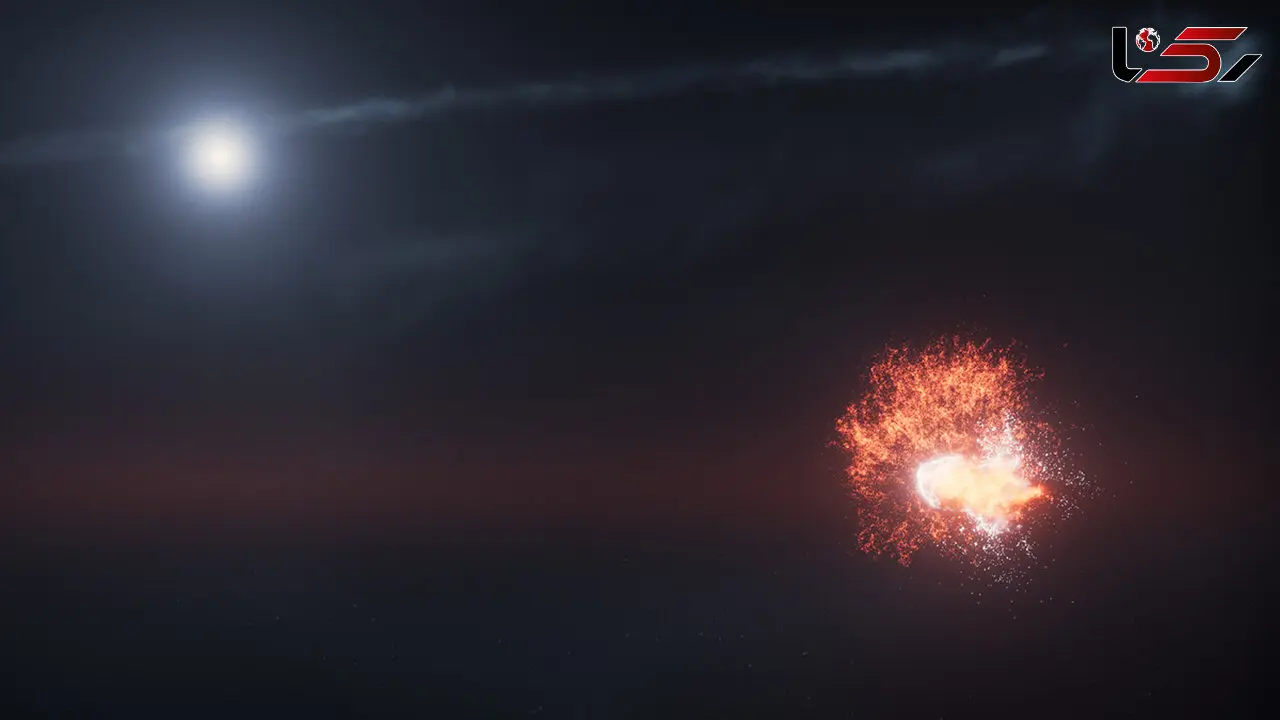
Accordind to Rokna, citing The ScienceNews, astronomers may have finally solved the long-standing mystery of Fomalhaut b, the exoplanet that seemed to vanish from view. Recent observations from the Hubble Space Telescope suggest that what was once identified as a planet was likely never a planet at all, but rather a massive cloud of debris created by a cosmic collision.
The fading dust cloud, captured in high-resolution Hubble images, points to a violent collision between asteroid-sized bodies orbiting the nearby star Fomalhaut. Over time, the material spread out, causing the bright spot initially detected in 2008 to disappear from view. Scientists now believe that the object’s apparent motion and fading brightness are consistent with expanding debris rather than a solid planet.
“This discovery highlights how dynamic and sometimes deceptive young star systems can be,” said one astronomer involved in the study. “It reminds us to be cautious when interpreting faint objects as planets without considering alternative explanations.”
Fomalhaut b was first reported as a directly imaged exoplanet more than a decade ago, making it one of the few candidate planets observed visually. The new findings not only resolve the mystery of its disappearance but also provide valuable insight into the processes shaping planetary systems in their early stages.
The Hubble data continues to reveal remarkable phenomena in nearby star systems, showing that cosmic collisions can mimic the presence of planets and dramatically alter the environment around young stars.
Send Comments