

White House Deadline; The Last Window for Negotiation or the Beginning of a Countdown to Confrontation
Two-Week Deadline by Trump; The End of Diplomacy with Iran?
Rokna Political Desk: Trump, by setting a 15-day deadline for a nuclear agreement with Iran, is simultaneously advancing the options of diplomacy and military threat; Washington has increased pressure on Tehran by reinforcing its military posture and examining scenarios for a limited strike.
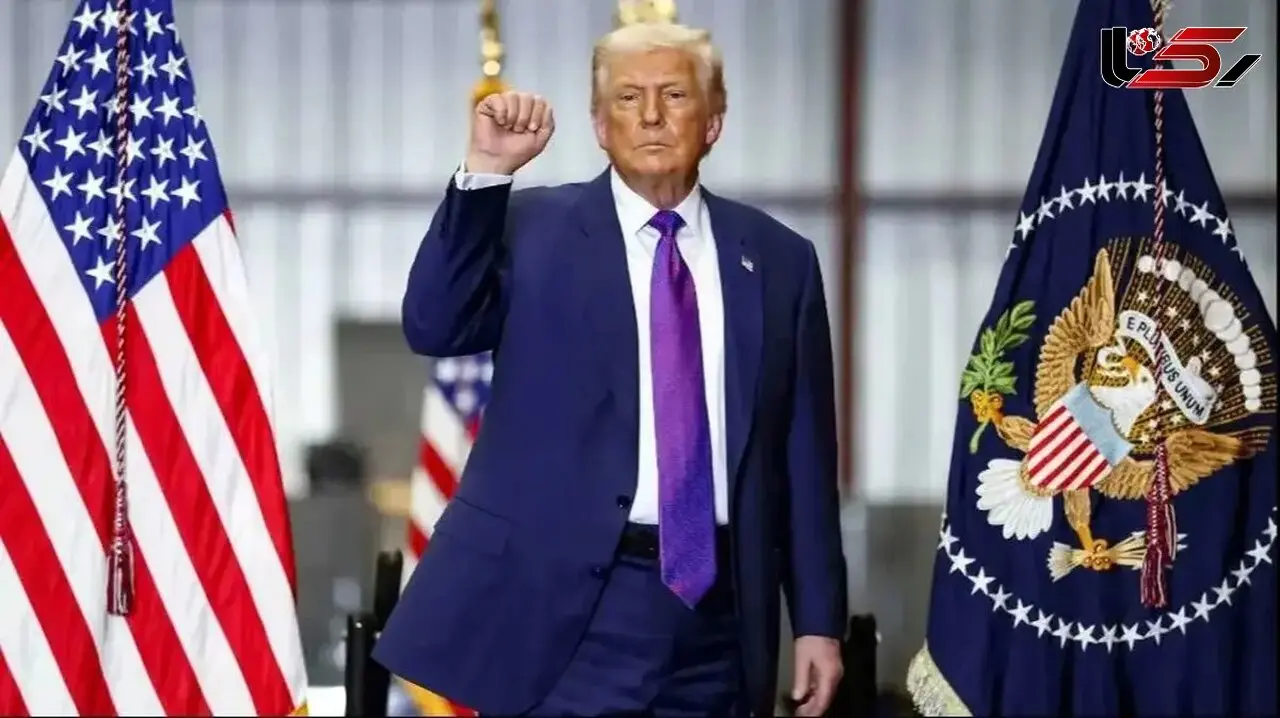
In the latest position taken by the White House, Donald Trump, President of the United States, announced that he has given Iran a maximum of 15 days to reach an agreement regarding its nuclear program before any potential action by Washington; a warning accompanied by explicit and threatening language, speaking of the occurrence of “very bad things” should diplomacy fail.
According to Rokna, Trump made these remarks during the opening of the first meeting of the “Peace Council.” In his speech, he emphasized that “negotiations with Iran to resolve this tense crisis are progressing well,” but at the same time clarified that mere progress in talks is not sufficient and must lead to a “serious agreement” with tangible results.
The U.S. President, referring to the sensitivity of the circumstances, stressed the necessity of achieving an agreement that, from Washington’s perspective, guarantees the security interests of the United States, and stated that this process cannot continue indefinitely. According to him, the time for decision-making has arrived and the Iranian side must clarify its choice.
Hours later, in a conversation with reporters aboard the presidential aircraft, Trump reiterated his position in an even firmer tone. He said: “Sooner or later, we will reach an agreement… either we reach a deal, or it will be unfortunate for them.” When reporters asked about a specific deadline, Trump responded: “You will probably know within the next ten days. I think that is enough time… 10 or at most 15 days.” The U.S. President once again spoke of “really dire consequences” and emphasized that “Iran, in any case, must reach an agreement.”
On Tuesday, Iranian and American negotiators met behind closed doors; a session that, although accompanied by signs of progress, clearly shows the remaining distance to a final agreement. Abbas Araghchi, Iran’s Minister of Foreign Affairs, announced that the two sides had reached an understanding on “guiding principles”; a phrase which, from Tehran’s perspective, can serve as a basis for moving toward a more comprehensive agreement. However, the atmosphere in Washington reflected a more cautious narrative. Karoline Leavitt, the White House spokesperson, stated on Wednesday that “differences remain on certain issues and the gaps have not been bridged.”
Geneva Between Hope and Threat; A Divide in Washington Over “Diplomacy or Preemptive Strike”
Within U.S. decision-making circles, a clear divide has taken shape. One faction emphasizes the necessity of keeping the diplomatic window open and believes that signs of flexibility in Tehran’s conduct could lead to a “qualitative breakthrough.” In contrast, another faction warns against trusting Iran’s promises and suggests that the option of a surprise military action to alter the equation should remain on the table.
According to media sources, the recommendation presented by Steve Witkoff, the senior U.S. negotiator, and Jared Kushner, the President’s son-in-law, has been evaluated positively. These two influential figures have stressed continuing the path of negotiations and stated that encouraging signs have been observed from Iran that could pave the way for progress without resorting to the military option. Informed sources have also emphasized that Donald Trump places considerable trust in Witkoff’s assessments regarding negotiation pathways and has once again shown a positive inclination toward this approach. Accordingly, he has granted additional time for diplomatic efforts so that the opportunity to achieve an agreement through political means is not lost.
On the other side, the more hardline faction within Trump’s inner circle continues to insist on its stance. In their view, the President’s previous warnings are now materializing in the Geneva negotiations and Iran is seeking to buy time. They argue that Tehran is not pursuing a rapid resolution of the crisis, but rather attempting to strengthen its bargaining position through time management and to mitigate U.S. pressure.
From the perspective of this faction, Iran politically maintains its commitment to the negotiating table and offers limited proposals to contain Trump’s anger; yet in practice it is unwilling to grant strategic concessions and simultaneously continues to send deterrent signals. The holding of Iranian military drills in the waters of the Persian Gulf with Russia’s participation is also interpreted within this framework; an action regarded as a political signal of strength indicating that Tehran does not intend to undertake a fundamental retreat.
Washington Between a Show of Force and Avoidance of a Broad War
According to The Washington Post, informed sources have reported the gradual formation of a military posture that has been taking shape over recent weeks and is now awaiting the arrival of the aircraft carrier USS Gerald R. Ford and its accompanying strike group. This carrier, considered one of the most advanced vessels in the U.S. Navy, had its mission extended last week by military commanders and was ordered to move from the Caribbean Sea toward the region to complete the operational formation and strengthen Washington’s deterrent presence.
Meanwhile, Daniel Shapiro, former U.S. Ambassador to Israel and a former senior Pentagon official under the Biden administration, has warned that in the event of joint U.S.-Israeli strikes, Iran would face significant damage. However, he stressed: “This does not mean that the conflict would end quickly or without cost; the Iranians have the capacity to impose reciprocal costs and have preserved their ability to respond.” This assessment indicates that even in a scenario of U.S. military superiority, the equation would not necessarily be one-sided and Tehran’s response could expand the scope of the crisis.
According to The Wall Street Journal, a potential strike plan, if implemented, would target specific military and governmental centers and would be defined as an initial step to assess Iran’s reaction. This scenario has been designed to send a deterrent message and evaluate the level of Tehran’s response, while simultaneously keeping the option of expanding operations in the event of Iranian defiance on the table in order to preserve escalation capability.
Analysts believe such a strike could be interpreted as an attempt to demonstrate U.S. military power and increase pressure on the decision-making structure in Tehran; an action to be executed prior to activating broader options, including a comprehensive campaign against nuclear facilities and vital infrastructure, so that the level of confrontation can be managed in a controlled manner. Within this framework, Washington seeks, through a limited but high-profile action, to alter the psychological balance on the ground and maintain the upper hand in potential negotiations.
According to informed sources, the current strategy is based on a delicate balance between direct military pressure and diplomatic threat; an effort to compel Tehran to accept Washington’s conditions without the United States entering into a large-scale war that could endanger American forces and regional allies and simultaneously disrupt the global energy market. Any broad conflict, particularly in a region sensitive for oil exports, could trigger a wave of price increases and economic instability and impose heavy political costs on the White House.
However, analysts warn that even a limited strike may provoke a harsh Iranian response; including missile attacks against U.S. forces or regional allies, targeting energy infrastructure, or causing severe volatility in global markets. Such a scenario could place the Trump administration under pressure for rapid and costly decision-making and upset the delicate balance between military power and diplomacy.
Deployment of the E-3 and the Shadow of Hard Scenarios Over the Region’s Skies
Its takeoff may signal alarming scenarios; it is sufficient for its rotating radar dome to appear on the horizon for many to conclude that the drums of war have effectively begun to sound and a new phase in field deployment has commenced. This aircraft is the E-3 Sentry; a flying fortress of which Washington possesses only 16 units. This numerical limitation renders the simultaneous deployment of six units to the Middle East more than a routine relocation and may be perceived as a declaration of maximum alert. Now approximately 40 percent of this fleet is moving with its heavy shadow over the region, sending a clear message regarding the level of preparedness and concern.
The E-3 operates as an electronic laboratory at high altitude. The massive radar mounted atop its fuselage scans the horizon in all directions, revealing the adversary’s movements from distances exceeding 400 kilometers and providing a comprehensive picture of the battlefield. This capability allows commanders to identify threats before they approach engagement lines and to make decisions accordingly. Its technological core is based on an advanced pulse-Doppler system; a technology that enhances target detection in complex environments and enables the identification of aircraft flying at low altitude under the cover of terrain, thereby filling radar visibility gaps.
The E-3 is not merely a sensor; it is the thinking brain of the battlefield. An eye that sees everything and a hand that precisely charts the trajectory of missiles and fighter jets and establishes operational coordination. Inside its display-filled cabin, a team of specialists directs operations. The “control officer” sits at the center of this network and designates targets; instead of fighter pilots searching for the enemy, this officer transmits target coordinates directly to their screens, shortening the decision-making cycle and minimizing reaction time. Thus, the aircraft functions as a guide in a high-risk environment; observing terrain irregularities and low-altitude enemy movements, directing operational routes, and clarifying the field for friendly forces.
The principal secret lies here: this aircraft does not communicate solely through traditional radio, but transmits “silent data.” The information recorded by its radar instantly appears on the screens of ships at sea, Patriot systems on land, and aircraft in the sky, creating an integrated network of situational awareness. Such coordination enables an air strike to descend as a single, simultaneous blow from multiple angles, increasing its effectiveness and enhancing surprise.
The function of the E-3 does not conclude with the initiation of an attack. Even after explosions occur, it does not leave the field; its radar monitors the target location to track any potential reaction and, if necessary, facilitate a second strike. Simultaneously, it secures the return route of friendly fighter jets and identifies any potential interceptor aircraft pursuing them, thereby reducing risk.
Despite the relative aging of this fleet and anticipation of more advanced replacements, the Sentry remains the cornerstone of any large-scale air operation. The deployment of six out of the existing sixteen units to a tense region is not merely a technical relocation; this move carries a strategic message and indicates that Washington is preparing for hard scenarios.
Oil in a State of Tension; The Global Market Between the Shadow of Conflict and the Test of U.S. Domestic Policy
Oil prices have reached their highest level since last summer; a surge that directly reflects concerns about the possibility of military confrontation between the United States and Iran and has placed global energy markets on maximum alert and anxiety. According to Axios, the market now faces a dual threat: first, the potential loss of Iranian oil exports, and second, the risk of broader disruption to regional supply; particularly through the Strait of Hormuz, through which approximately one-quarter of the world’s seaborne oil trade passes and which constitutes a vital artery of the global supply chain. Any instability in this strategic passage could produce ripple effects in the energy market and upset the balance of supply and demand.
In recent trading, Brent crude surpassed $71 per barrel and West Texas Intermediate was traded around $66; registering more than a 4 percent increase on Wednesday alone, with the upward trend continuing on Thursday morning and reinforcing inflation expectations. Analysts emphasize that concerns are not limited to Iran’s exports; any conflict could affect the oil exports of the entire region and challenge the stability of the global energy market, generating systemic risk.
This comes as, under normal conditions, supply is assessed as relatively smooth, demand growth remains limited, and production has increased. This situation has thus far allowed the U.S. administration to benefit from relatively moderate domestic gasoline prices and to enjoy greater geopolitical maneuverability while reducing internal pressure. Ben Cahill, energy analyst at the University of Texas at Austin, stated: “Geopolitical factors, especially Iran, are the primary driver of price increases at present,” emphasizing that the market is effectively supported above $70 because of these political concerns. According to him, this situation could encourage the White House to act more cautiously or even provide grounds for political leverage.
Clayton Seigle, oil analyst at the Center for Strategic and International Studies, outlined possible scenarios as follows: if the United States or Israel were to constrain Iran’s exports without targeting infrastructure, the price per barrel could temporarily increase by $10 to $12; however, a direct strike on oil facilities could generate a far larger surge and push the market into a more severe phase of tension. The more sensitive scenario concerns the Strait of Hormuz. If Iran, in response to pressure, attempts to disrupt shipping in this strategic passage, prices could exceed $90 per barrel and gasoline prices in the United States could rise above $3 per gallon, creating domestic political consequences.
Ultimately, U.S. domestic policy will become a decisive factor in the scope and intensity of any confrontation. Given President Trump’s sensitivity to rising gasoline prices and their impact on public opinion, any military or diplomatic decision regarding Iran will constitute a dual test between economic considerations and Washington’s foreign policy objectives, producing a complex and multilayered equation—an equation whose first reflection will appear in the oil market.
Send Comments