

Araghchi: Iran Can Reach a Deal Better Than the JCPOA
Rokna Political Desk: Abbas Araghchi stated that Iran is ready to reach an agreement better than the JCPOA, but it requires real guarantees from the United States.
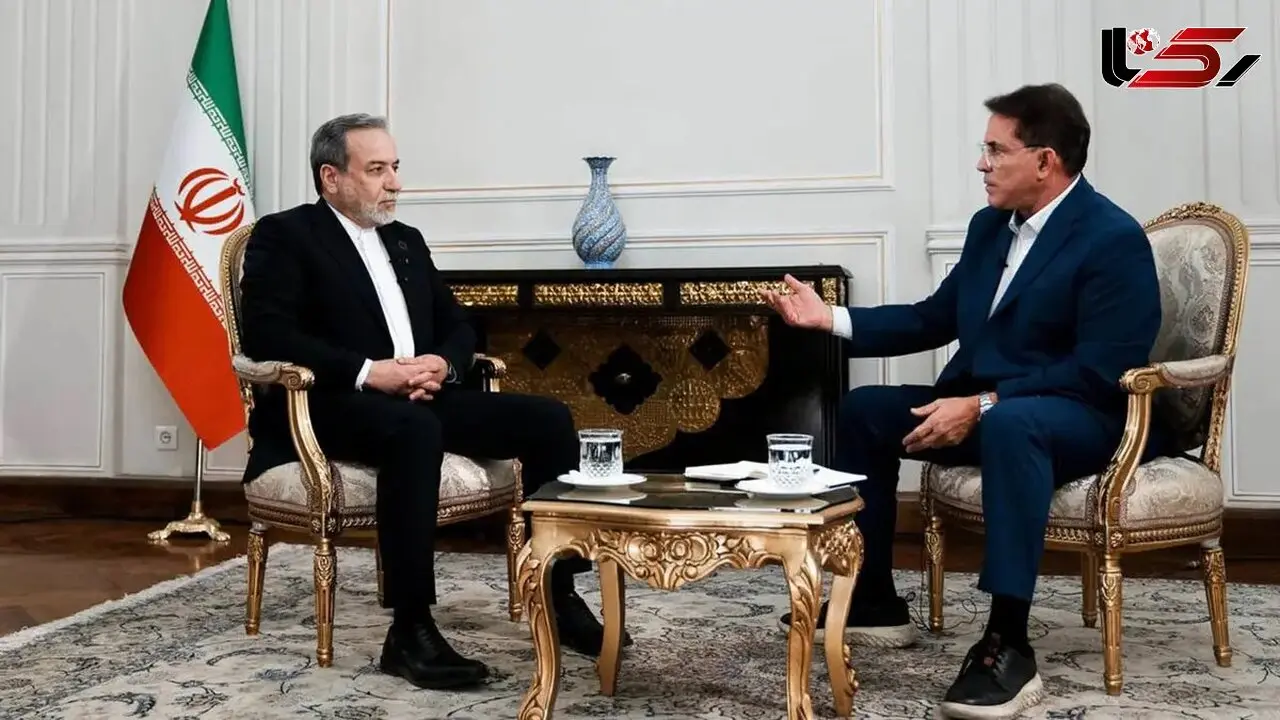
According to Rokna, Dr. Abbas Araghchi, Iran’s Deputy Foreign Minister, in an interview with RT (Russia Today) referring to recent Israeli maneuvers and Benjamin Netanyahu’s meetings in Washington, emphasized that the Israeli Prime Minister is fundamentally opposed to peace and diplomacy and has always sought to drag the region into war. Referring to indirect negotiations and the role of intermediaries, he stressed that Iran is ready to achieve an agreement better than the JCPOA if there is genuine goodwill; an agreement that guarantees the absence of nuclear weapons while recognizing Iran’s legitimate rights to peaceful nuclear technology. Araghchi also recalled the bitter experience of the U.S. attack during previous negotiations and highlighted the necessity of receiving tangible guarantees from Washington.
The following is an excerpt of the interviewer’s questions and Dr. Araghchi’s remarks.
Interviewer: I feel that your negotiations with Mr. Kushner, Mr. Witkoff, and Mr. Bradley, Admiral, are progressing well. My sense comes from the fact that Benjamin Netanyahu immediately held an emergency session in Washington with Mr. Trump. I think Netanyahu does not like the progress in negotiations and will argue that Iran should give up its ballistic missiles and stop aligning with countries opposing Israel. What is your view?
Dr. Araghchi: Clearly, he does not like peace. He does not like diplomacy. He is a supporter of war. In the past two years alone, he has attacked seven countries in our region. Can you believe that? Seven countries, the last being Qatar, a country allied with the U.S. and our Western friends. He has no solution in mind except war.
This is something everyone must understand. He has made every effort to drag the United States into a war with Iran. And when he succeeded, the result was a disaster. They failed. If they try a failed experience again, the outcome will not be different.
Interviewer: Do you feel that previous U.S. presidents always agreed with Netanyahu or Israel’s needs, or is Trump willing to go further than before? What is your sense of Trump in this regard? How do you see him?
Dr. Araghchi: Let me speak about the impression I got from the negotiating parties, Mr. Witkoff and Mr. Kushner. I think they are trying to prevent war and find a diplomatic solution, which is the wisest decision President Trump can take. We have been told their intention is to find a peaceful solution. If they are serious, we are serious as well, though we are not yet fully certain.
The peaceful nature of enrichment is important. For power reactors, enrichment below 5 percent is necessary. In specific cases, like the Tehran Research Reactor (TRR), enrichment up to 20 percent is required. Therefore, I believe we can reach a deal better than Obama’s agreement or the JCPOA. I have been involved in nuclear negotiations for the past twenty years.
I know this is achievable; we can reach a better agreement than before and can ensure that no nuclear weapons exist. The absence of nuclear weapons is the main concern of those worried. We can guarantee that.
I have instructed my team to work on a practical plan or proposal that can ensure no nuclear weapons will exist while also guaranteeing Iran’s rights to use peaceful nuclear technology—for electricity generation, medicine, agriculture, and all other purposes.
I believe this is doable and achievable. We just need to use our creativity and goodwill. Let me be clearer: we still do not have full trust in the Americans.
I think we have the right not to trust, because the last time we negotiated, in June, in the middle of talks, they decided to attack us. That was a very, very bad experience for us.
We must ensure that scenario does not repeat. This depends largely on the Americans.
Interviewer: You need Mr. Trump to personally tell you, because he was the one who broke the promise last time.
Dr. Araghchi: We need a guarantee. We need a tangible guarantee that the previous scenario will not repeat, and that the United States will not use force to resolve disputes with others, at least with Iran.
They tried this once last year and failed. Iran’s nuclear program cannot be destroyed by bombing because this is a technology we have developed ourselves. Therefore, there is no solution except a diplomatic one.
Interviewer: Is Iran willing, at Netanyahu’s request, to reduce or adjust relations with allies who hold hostile positions against Israel? Is Iran willing in any way to limit its ballistic missile capabilities?
Dr. Araghchi: These issues have nothing to do with our nuclear program. We are only negotiating with the U.S. regarding our nuclear program.
Interviewer: So these issues are off the table?
Dr. Araghchi: Absolutely.
Interviewer: How confident are you that discussions with Mr. Witkoff and Mr. Kushner can lead to a solution and prevent a very ugly and dangerous situation in the region and globally?
Dr. Araghchi: I am confident on our part; we are as prepared to defend ourselves against any new aggression as we are ready for a diplomatic solution. Last June, during negotiations, first the Israelis and then the Americans attacked us while we were negotiating. Now, militarily, both quantitatively and qualitatively, we are more prepared to defend ourselves than before the twelve-day war, and we are also more prepared for diplomacy. We have learned many lessons from the past twelve months and the twelve-day war. In both war and diplomacy, we have learned our lessons and are now ready for both.
Dr. Abbas Araghchi, Deputy Foreign Minister of the Islamic Republic of Iran, in an interview with RT (Russia Today)