

Mar-a-Lago: Netanyahu’s New Gamble for Survival?
Rokna Political Desk: The meeting between Benjamin Netanyahu and Donald Trump at Mar-a-Lago has sparked speculation about the underlying objectives, amid strategic differences over managing Middle Eastern tensions.
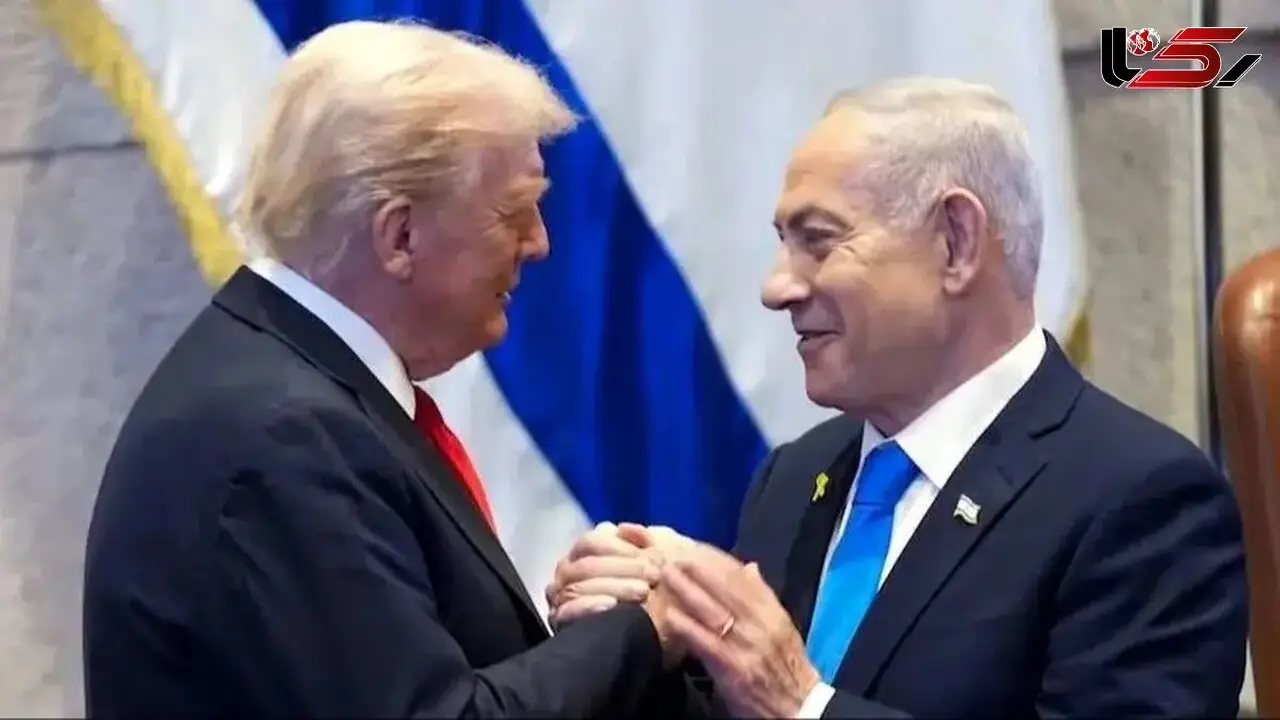
Benjamin Netanyahu, the Prime Minister of Israel, met with Donald Trump on Monday night at Mar-a-Lago, Palm Beach, Florida, during his sixth trip to the United States. This visit has raised significant speculation, as it comes amid escalating crises in the Middle East and increasing regional instability, and is perceived as Netanyahu’s attempt to launch a new round of costly confrontations with Trump’s green light.
According to Rokna, some analysts argue that it is unlikely that the U.S. President will fully agree to Netanyahu’s maximalist demands this time. Western media outlets such as CNN and The Guardian report that various topics were on the agenda, with the primary focus on establishing a ceasefire in Gaza, which in October ended the two-year destructive war between Israel and Hamas. Nevertheless, according to some observers, while the initial phase of the ceasefire agreement has mostly been implemented—with Israeli forces repositioned and Hamas releasing all living hostages and nearly all deceased hostages—significant challenges remain for the implementation of the second phase of Trump’s 20-point plan.
Alongside Gaza, concerns have risen over the possibility of new Israeli attacks on Hezbollah positions in Lebanon, which could trigger a ceasefire violation with the group. Additionally, Iran is another alleged target of Israel, which, according to Tel Aviv officials, has a powerful missile program and has sought to enhance its missile capabilities and strengthen deterrence following the twelve-day conflict.
This visit comes as Netanyahu faces a decisive upcoming election. Polls indicate that his coalition would be unable to form a government if the campaign proceeds, as many voters are dissatisfied with failures stemming from the Hamas attack, military exemptions for Orthodox Jewish men, and multiple scandals. However, close ties with Trump could boost Netanyahu’s popularity among voters and his political base. In this context, to analyze Netanyahu’s objectives in his U.S. visit, we spoke with geopolitics professor Abdolreza Faraji-Rad and senior international relations expert Hassan Beheshtipour.
Abdolreza Faraji-Rad: Netanyahu seeks to bypass electoral obstacles with Trump’s support
Professor Abdolreza Faraji-Rad explained that Netanyahu himself requested the visit, noting that Trump stated two weeks ago that Netanyahu had asked for a meeting, which was expected to take place the following week. This statement indicates Netanyahu’s serious interest in the meeting, while Trump appears somewhat reluctant, reflecting differences in perspective and approach. Trump is well aware of Netanyahu’s objectives in this request and visit.
Faraji-Rad believes Netanyahu will raise multiple issues with Trump, including matters concerning Lebanon, Gaza, Syria, Iraq, and Iran, alongside his personal domestic political challenges. Regarding Gaza, Trump is seeking to implement the second phase of his peace plan. The first phase has concluded, with hostages and remains returned. In the crucial second phase, Israeli forces are to be stationed near borders, and Hamas is to be disarmed. Here lies the main divergence between Netanyahu and Trump: Netanyahu insists that Hamas must be completely dismantled and its weapons handed over to the Israeli army, whereas Trump believes the weapons should be removed from Hamas but delivered to another entity—the Palestinian executive authority managing internal affairs—while showing little concern for light weaponry. This divergence is significant, even within Israel, where Netanyahu’s opponents urge him to resist such an approach.
Regarding Lebanon, Faraji-Rad emphasized that Trump has so far prevented Israel from launching a full-scale attack. Daily attacks continue, but no comprehensive war similar to previous conflicts has occurred. Trump seeks to disarm Hezbollah through diplomacy and politics. Recently, the U.S. has aimed to ensure a political relationship between Lebanon and Israel if Hezbollah remains armed, aligning Lebanon with the Abraham Accords and assigning border security responsibilities to the Lebanese government, particularly since Hezbollah has withdrawn from south of the Litani River. Negotiations have begun, with additional rounds planned.
On Syria, Israel seeks to retain control over certain areas, such as Suwayda, to maintain operational capacity while limiting Turkish influence. Conversely, Trump prioritizes Syrian stability and aims to incorporate Syria, along with Lebanon, into the Abraham Accords framework. Consequently, the U.S. has compelled both Syria and Israel to engage in negotiations, with partial results achieved, though Israel resists losing its influence in Syria.
Regarding Iraq, the focus is on the Popular Mobilization Forces (PMF) and Iran-aligned groups. Israel and the U.S. aim to disarm these groups, communicating through an Arab state and presenting intelligence and threats. Some PMF factions have agreed to cooperate on arms issues, while others resist and have conducted maneuvers asserting continued opposition. Unlike Lebanon, Gaza, and Syria, Israel and the U.S. maintain a unified stance on Iraq, agreeing on strict pressure to disarm these forces, which the U.S. also finds undesirable.
Faraji-Rad highlighted Iran as potentially the most critical axis of disagreement and discussion between Trump and Netanyahu. Netanyahu is deeply concerned about Iran’s missile capabilities, fearing it may establish deterrence against Israel and the U.S. while resuming uranium enrichment. Rumors circulate about Iran producing missiles with an 8,000-kilometer range capable of striking Europe and the U.S.—claims largely exaggerated to influence Trump and secure U.S. backing for action against Iran, as Israel cannot act alone.
Faraji-Rad also noted Netanyahu’s personal agenda: Trump has reportedly asked Israeli President Isaac Herzog to pardon Netanyahu, who has officially requested clemency. Opposition parties strongly oppose these requests, placing Israel’s president in a difficult position. Netanyahu is anxious about his political and judicial future, considering both elections and the potential return to court. Analysts predict a high likelihood of imprisonment if rulings are finalized, making U.S. support via Trump crucial.
Hassan Beheshtipour: Netanyahu’s U.S. visit overstated; reality is more complex
International relations expert Hassan Beheshtipour argued that media coverage has exaggerated the importance of Netanyahu’s visit. While significant, the coverage aims to project that Netanyahu and Trump control all Middle Eastern affairs—decisions on Lebanon, Yemen, Iran, Iraq, and Syria. In reality, cooperation and disagreements coexist, and some plans have failed or incurred substantial costs.
Beheshtipour emphasized that internal Israeli opposition is strong, as are criticisms in the U.S., questioning the justification for such extensive expenditures, particularly military. He noted that Trump’s son-in-law, Jared Kushner, has invested heavily in Netanyahu’s political position, yet U.S. public support remains uncertain.
Overall, Netanyahu’s visit reflects a combination of personal political survival, regional strategic interests, and attempts to secure U.S. backing, all complicated by divergent perspectives between Trump and Netanyahu.