

Grossi’s View on Russia’s Role in Iran’s Nuclear File
Rokna Political Desk: Rafael Grossi, Director General of the International Atomic Energy Agency, stressing Russia’s key and influential role in resolving Iran’s nuclear program, spoke about the importance of Moscow’s cooperation on issues related to Iran.
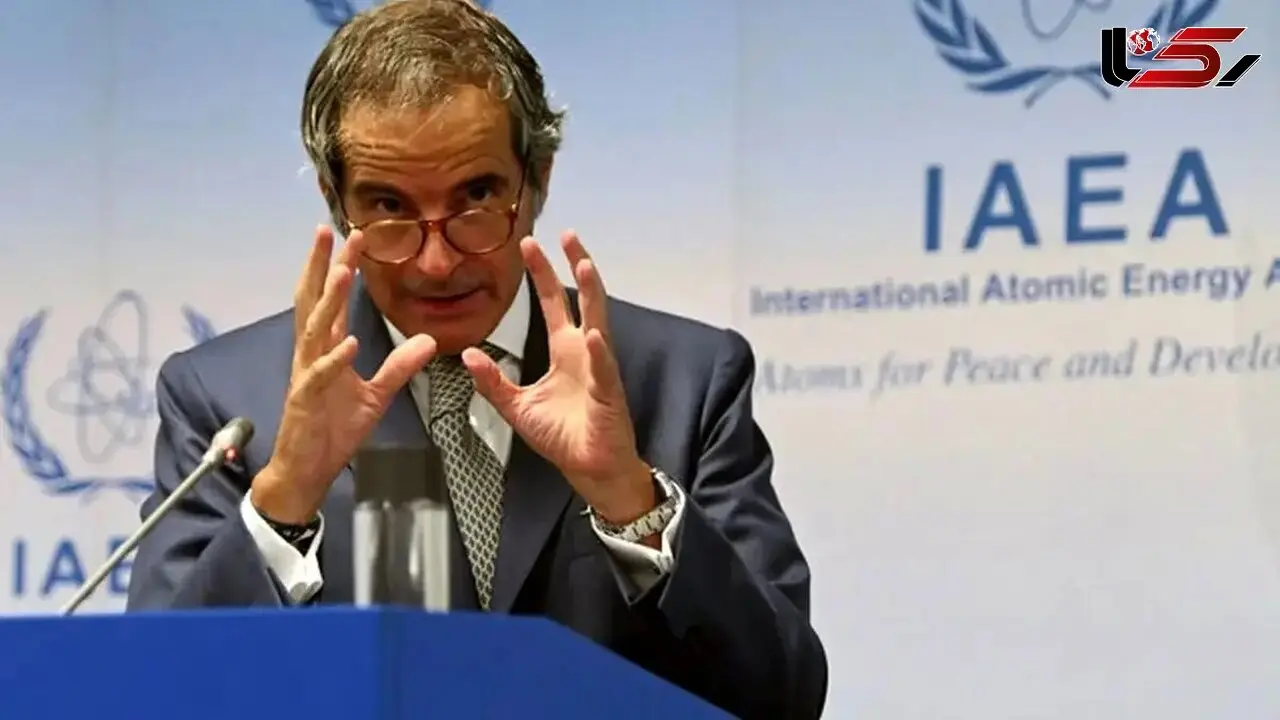
The Director General of the International Atomic Energy Agency, stating that serious damage to Iran’s nuclear facilities cannot serve as a justification for the absence of inspectors from these sites, emphasized Russia’s “very important” role in resolving Iran’s nuclear program.
According to Rokna, Russia’s RIA Novosti news agency published the full text of its interview with Rafael Grossi, Director General of the International Atomic Energy Agency, on Monday. Portions of the interview had previously been released.
In response to a question on whether the Agency has made any practical progress in resuming inspections following the aggressive attacks by the United States and the Israeli regime on Iran’s nuclear facilities in June, and when he believes Agency experts will be able to regain access to the bombed facilities in Natanz, Isfahan, and Fordow, Grossi said: “This is the most important issue we are currently facing in Iran. We have managed to restore and resume inspection activities, but this has been done in a very limited manner.”
Grossi said: “We have only been granted access to facilities that were not hit. This is positive in the sense that these facilities are included in the agreed inspection list, which is important to us. Of course, the other three facilities are more important, because significant amounts of nuclear material and equipment are still located there, and we must return to those sites.”
The IAEA Director General stated: “We have initiated a dialogue with Iran. I am in regular contact with the foreign minister and other officials, but the level of cooperation remains limited. That is the current situation. The talks are ongoing.”
He continued by responding to a question on whether the Agency is considering a scenario in which Iran might completely abandon extensive inspections and restrict international experts’ access to its nuclear facilities, explaining: “We must consider all possible scenarios. Doing so would not be far-sighted. Therefore, we are examining all options. I can only say that I hope this never happens, because it would amount to a clear and complete violation of Iran’s obligations under the Nuclear Non-Proliferation Treaty (NPT).”
Following the aggressive attacks by the United States and the Israeli regime on its nuclear facilities, which were covered by the Agency’s safeguards agreement but for which the UN nuclear watchdog took no action to protect them, Iran suspended its cooperation with the Agency.
Some time later, the parties reached an agreement in Cairo on determining new modalities of cooperation, which included access to non-bombed facilities in Iran.
Grossi, who now monitors Iran’s nuclear program solely within the framework of the Nuclear Non-Proliferation Treaty following the expiration of UN Security Council Resolution 2231, the legal document underpinning the 2015 nuclear deal, has previously said that his consultations with Iran to implement the Cairo agreement and enable greater monitoring access are continuing.
Russia’s Role in Resolving Iran’s Nuclear Program
The Director General, stating that Russia can play a “very important” role in advancing the resolution of the situation surrounding Iran’s nuclear program, and noting that he has discussed this matter with Russian President Vladimir Putin, Foreign Minister Sergey Lavrov, and other Russian officials in the nuclear and defense fields, said: “My message here has always been consistent. Russia is a trusted member of the NPT and, together with the United States, has played a key role in these issues for more than 50 years. Russia has also played an important and indispensable role in all matters related to Iran.”
Expressing the view that “Moscow has the ability to maintain an ongoing dialogue with Iran,” he said: “I do not tell Russia what to do, but I can say that I am pleased to be able to convey my assessments and messages to the Russian government, and I believe that Russia has always clearly supported non-proliferation regulations.”
“This is absolutely essential for me. We cannot afford to lose Russia as one of the pillars of the non-proliferation system. That would be a devastating blow to the entire system. I truly believe Russia has a unique role, but Russia itself decides how and when to play it.”
Continuation of IAEA Monitoring in Iran and the Level of Access After the June Attacks on Iran’s Nuclear Facilities
Grossi went on to respond to a question about how, given the serious damage inflicted on Iran’s nuclear facilities during the June attacks, the Agency intends to justify its continued presence in Iran and the need for inspections under such conditions. He explained: “First of all, Iran has far more than just these three facilities. These three are very important in terms of uranium processing, conversion, and enrichment, but Iran’s nuclear program is not limited to them. Iran has a very advanced nuclear program with a strong research sector and many other facilities across the country. There is a nuclear power plant at Bushehr and plans to build new power plants, including, if I am not mistaken, in cooperation with Russia. Therefore, work in all these areas continues.”
Regarding the Agency’s level of oversight of Iran’s nuclear program following recent developments, he said: “We are facing a serious lack of information, and from a non-proliferation perspective this is very negative, because even if these facilities have been severely damaged, there is a clear understanding that the bulk of the enriched uranium Iran possesses is still inside the country. This is extremely significant from a non-proliferation standpoint.”
The Director General emphasized: “Under the NPT and the Comprehensive Safeguards Agreement, Iran is obliged to provide access to these facilities. This is actually part of our dialogue. They say: ‘It is not safe; you cannot go there.’ But in that case, inspectors must be allowed to verify that it is indeed impossible to go there. This is the type of dialogue we are currently engaged in, and I hope we can make progress.”
Referring to his previous remarks that some Agency inspectors were present in Iran, Grossi said: “Not today. But this does not mean the Agency has withdrawn from Iran. It simply means that the volume of inspection activities has now been reduced. We send inspectors when there is a need to carry out a specific mission, and then they return. Previously, the intensity of work was such that you would constantly see four, five, or ten Agency staff moving from one facility to another; now the situation is different.”
In response to a question about whether he visited any facilities in Iran in June, regardless of the fact that prior to the attacks Iran had been actively engaged in a diplomatic process to resolve the nuclear issue but faced what Tehran described as a “betrayal of diplomacy,” Grossi said: “No, I have not gone since the June attacks. As you know, Iran has very sharply criticized me, including on a personal level. I hope that we can gradually return to normal dialogue, emotions will subside, and we will be able to have a rational discussion on these very important issues to help Iran regain the confidence of the international community, without which nothing can be achieved.”
Asked whether the Agency has received any report from Iran on the status of its enriched uranium stockpiles and the extent of damage to nuclear facilities as a result of the attacks, he said: “No, we have not.”
Cooperation With Russia on the Safety of Ukraine’s Nuclear Power Plants Amid the War
In another part of the interview, responding to a question about the rotation and replacement of Agency staff at the Zaporizhzhia nuclear power plant—the largest nuclear power plant in Europe, which Russia took control of after the war with Ukraine—Grossi noted that the choice of access route has been politicized from the outset. He said the current route for transferring experts to the plant through Russian territory is a safe and reliable route, selected under current conditions and existing realities, including the plant’s location in a war zone and attacks on other routes.
He described the decision as practical and non-political.
Grossi also said that the level of cooperation between the Agency and Russia to ensure the safety of the Zaporizhzhia plant is assessed as “highly professional,” involving all key relevant Russian institutions, including Rosatom, the Russian Foreign Ministry, and Russian military forces. According to him, this interaction includes detailed technical discussions on plant operations, analysis of the surrounding security situation, and planning for physical protection.
The Director General also emphasized the Agency’s activities at the Chernobyl facility in addition to Zaporizhzhia and expressed concern about damage to the plant’s sarcophagus (protective covering).
Stating that after damage to the Chernobyl sarcophagus the Agency did not record any abnormal or increased radiation levels, Grossi warned that the loss of the previous protective layer means the situation could worsen over time, and any work involving highly radioactive materials could rapidly lead to increased radiation levels.