

How Trump’s Trump Card Turned Into a Weakness
Rokna Political Desk: The decline in public confidence in Donald Trump’s economic management in 2025 has transformed what was his trump card during his first presidency into a fundamental weakness. Polls indicate that only 40 percent of Americans now approve of his economic performance.
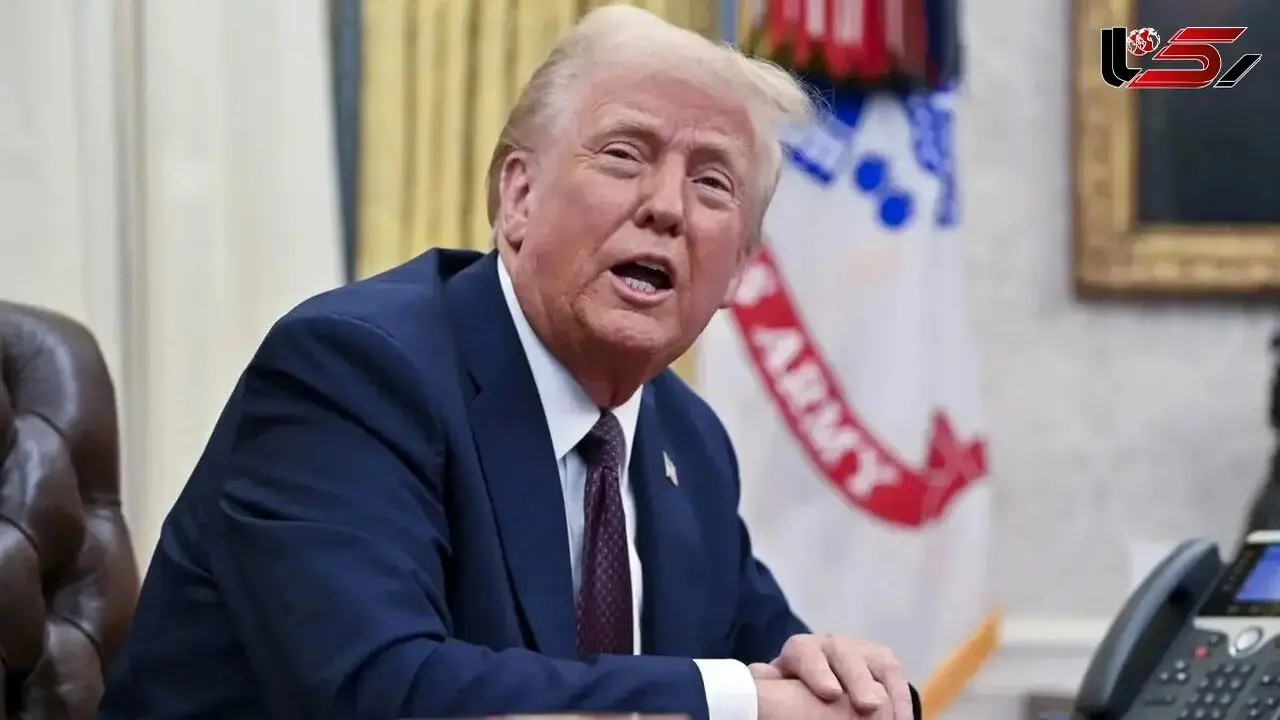
Amid a multitude of conflicts, controversies, personnel changes, policy shifts, legal battles, enmities, and changing alliances, 2025 has emerged as a year in which several dynamics surfaced in the United States, likely shaping the electoral landscape for 2026, 2028, and beyond.
According to Rokna, citing Bloomberg’s report on America under Trump in 2025, among these key developments, the most significant is the collapse of trust in Trump’s economic management. Throughout his first term, nearly every poll showed that more people approved of his economic performance than disapproved. Furthermore, Trump’s economic performance was considered a strength.
Even when facing criticism or controversy in other areas, support for his economic policies acted as a “minimum safety net,” preventing his overall popularity from falling too sharply.
However, during Trump’s second presidency, the situation has reversed. Recent polls consistently indicate that fewer Americans approve of Trump’s economic management than at any point during his first four years in office; most surveys conducted this month show that only 40 percent or fewer Americans give him positive marks on the economy, with even fewer approving of his handling of the cost of living.
This represents a complete inversion from his first term; the state of the U.S. economy now casts doubt on overall assessments of Trump’s performance.
The popularity of U.S. presidents has always been closely linked to economic conditions. Yet Trump’s challenges extend beyond this. Polls consistently show that the majority of Americans believe the current president has not adequately focused on the cost-of-living issues affecting citizens. Even more voters feel that Trump’s overall agenda has harmed them financially, particularly disliking the recent tax tariffs he imposed.
Most importantly, the single greatest asset Trump had during his first presidency—trust in his economic expertise—has become his biggest problem in his second term.
“Unless inflation is corrected, I think the economy remains Trump’s problem and, ultimately, the very area he excels in will pull him down,” says J. Campbell, an analyst and member of a bipartisan polling team that examines economic and political attitudes for CNBC.
The collapse of confidence in Trump’s economic performance largely explains the second key electoral dynamic of 2025: the shifting position of the president among new voter groups critical to his reelection.
In 2024, Trump had significantly improved his performance among several key constituencies, including Latinos, young men, and non-college-educated nonwhite voters. Republican strategists had envisioned reshaping the political map.
However, with Trump’s return to the White House in 2024, his standing among these groups rapidly declined. Recent polls, which broadly examine attitudes among Latinos and young voters with much larger sample sizes than general surveys, show that his popularity in each group has fallen below 30 percent.
Fatigue and economic frustration account for much of this decline, but not all. For example, a recent comprehensive Pew Research Center survey of Latinos indicated that more than seven in ten believed the government was overzealous in deporting immigrants, and nearly eight in ten said Trump’s overall agenda was harming the Latino community.
Carlos Curbelo, a former Republican representative from a predominantly Latino district in South Florida, stated that Trump “had a good relationship with Latinos,” but lost that opportunity with recent immigration enforcement measures. Curbelo added, “The administration went too far. Regaining some of this support will be difficult for Republicans.”
The third major development in 2025 is that Trump’s decline has allowed the Democrats to perform well in major elections this year. Nevertheless, the overall public image of the Democratic Party remains weak. This may have little significance next year, as the midterm elections largely serve as a referendum on the current president’s performance.
Simone Bazelon, an advisor at Welcome, a new centrist Democratic group, said, “In 2028, the question of who we nominate will be extremely important. Even if Democrats win the 2026 referendum on Trump’s unpopularity, it would be wrong to assume voters are satisfied with us again—they may still be angry.”
Meanwhile, heated debates between progressives and centrists over the party’s course in Senate primaries in Maine, Michigan, Minnesota, Iowa, Texas, and elsewhere are expected to continue. Yet the real battle will occur in the 2028 presidential primaries. This contest may relate less to ideology and more to political posture, as Democratic voters consider who is most committed to countering Trump’s “Make America Great Again” movement and most likely to defeat him.
Inside and outside the U.S., Trump behaves like an unrestrained ruler, while most Republican officials, with rare exceptions, have bowed to his excesses. This has provoked reactions among voters beyond his core coalition.
Thus, 2025 has reaffirmed the most significant political trend in the past 60 years. The rapid erosion of Trump’s 2024 achievements underscores that the United States continues to experience the longest period in its history without a party achieving sustained dominance.
Nothing in 2025 indicates that Trump can prevent changes in 2026.