

Al Jazeera Analysis:
Iran’s Future on the Agenda of the Trump–Netanyahu Meeting / This Time the Focus Is on Iran’s Missile Program
Rokna Political Desk: Trump and Netanyahu have discussed Iran’s future; pressure from pro-Israel financial backers to expand the U.S. role stands in contrast to opposition within the American president’s social base to intervention in Iran.
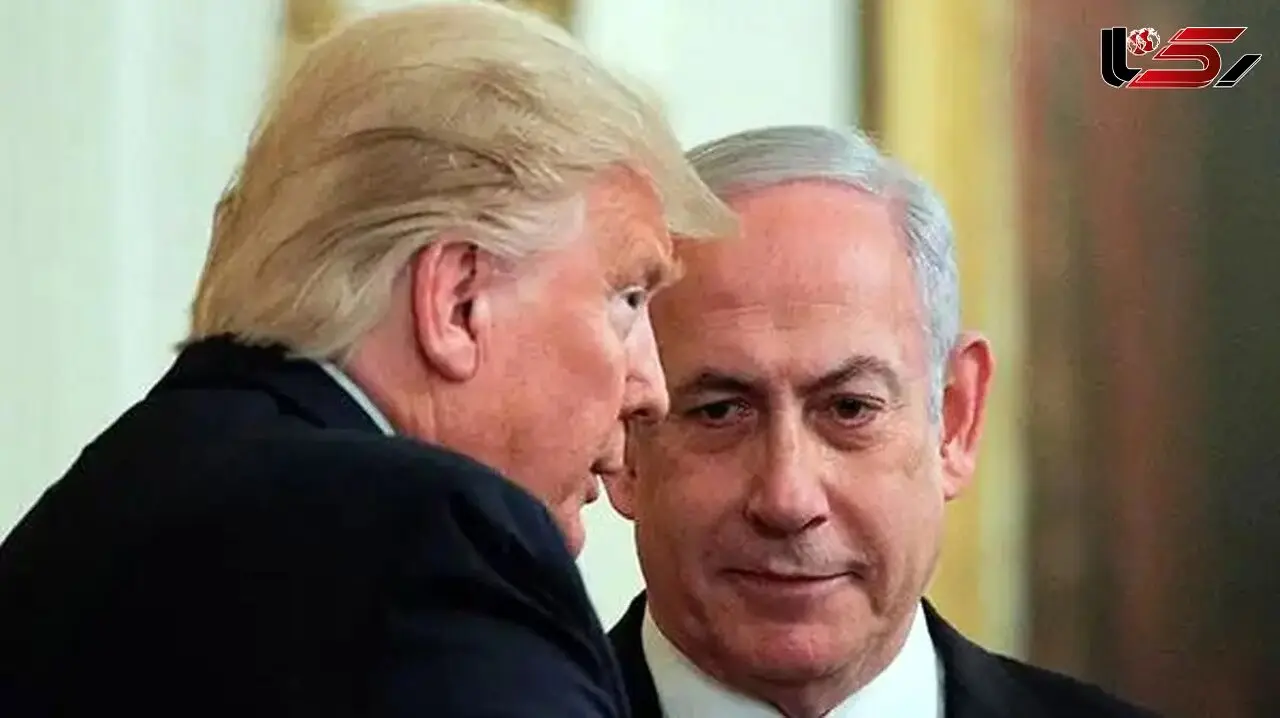
The social base of the U.S. president opposes intervention in Iran, while pro-Israel donors and hardliners are pressing for a greater American role.
According to Entekhab, the report continues as follows: Benjamin Netanyahu, the Prime Minister of Israel, has for more than 30 years warned of a “grave” threat posed by Iran to Israel and the world.
Donald Trump, the President of the United States, took these warnings seriously in June and bombed Tehran’s nuclear facilities. However, Netanyahu appears unsatisfied and is expected to push for further military action against Iran when he returns to Florida on Sunday to meet Trump at the Mar-a-Lago residence.
This time, the focus is on Iran’s missile program.
Israeli officials and their American allies are once again beating the drums of war against Iran, arguing that Tehran’s missile capabilities must be addressed immediately.
However, analysts say that another confrontation with Iran would clearly contradict Trump’s stated foreign policy priorities.
Sina Toossi, a senior fellow at the Center for International Policy think tank, said that while Trump is seeking to deepen economic cooperation and establish diplomatic ties between Israel and Arab countries, Netanyahu is pursuing military dominance in the region.
Toossi said: “This desire for permanent U.S. confrontation and repeated wars against Iran to break the Iranian state reflects Israel’s goal of unrivaled dominance, unchallenged hegemony, and expansionism.”
He added: “In my view, this is the root of Netanyahu’s objectives and the direction in which he wants to push the United States to provide support; however, this path clashes with U.S. interests, which are moving in another direction and seek greater regional stability—without requiring direct U.S. military intervention.”
Since Trump mediated a ceasefire in Gaza—which Israel has violated almost daily—he, portraying himself as a peacemaker, has claimed that for the first time in 3,000 years he has brought peace to the Middle East.
The newly released national security strategy of his administration also states that the region “is becoming an arena of partnership, friendship, and investment” and is no longer the primary focus of the United States.
Moving the Goalposts
While the United States promises to reduce its military and strategic presence in the Middle East, Israel appears to be lobbying for a war that could draw Washington into conflict.
Over past decades, Israel has highlighted Iran’s nuclear program as the most significant threat to its security and to the world.
However, Trump insists that U.S. strikes on three Iranian nuclear facilities in June destroyed that program.
Regardless of whether this assessment is correct, analysts say Trump’s declaration has forced Israel to find a new enemy narrative in order to avoid openly contradicting the U.S. president.
Trita Parsi, executive vice president of the Quincy Institute—a U.S. think tank that promotes diplomacy—said that because Trump has declared the nuclear issue resolved “rightly or wrongly,” Israel is shifting the focus to missiles to maintain pressure on Tehran.
Parsi told Al Jazeera: “Netanyahu is pushing the United States to join another war with Iran—this time focused on missiles—partly because Trump is not receptive to revisiting the nuclear issue, having said that he solved it and ‘destroyed’ the program.”
He added: “The Israelis keep moving the goalposts to ensure that confrontation with Iran turns into an endless and perpetual war.”
Iran has consistently stressed that its nuclear program is peaceful, unlike Israel, which is widely believed to possess an undeclared nuclear arsenal.
Tehran has also never fired missiles at Israel without prior provocation.
During the June war, Iran launched hundreds of missiles toward Israel, dozens of which penetrated the country’s multilayered air defense systems; however, it was Israel that initiated the war without clear provocation.
Pro-Israel Focus on Missiles
Nevertheless, Israel and its allies have sounded the alarm over Iran’s missile program, warning that Tehran is rebuilding and expanding its production capacity.
The American Israel Public Affairs Committee (AIPAC) wrote in an email to supporters this month: “While Israel’s Operation ‘Rising Lion’ succeeded in destroying much of Iran’s ballistic missile capability, Israel estimates that out of the 3,000 missiles Iran previously possessed, about 1,500 remain.”
The statement continued: “The threat of Iran’s ballistic missiles will be on the agenda when Prime Minister Netanyahu travels to Florida on Sunday and meets President Trump at Mar-a-Lago on Monday.”
Lindsey Graham, a hardline anti-Iran senator close to Trump, traveled to Israel this month and again warned about the danger of Iran’s long-range missiles, saying Tehran produces them “in very large numbers.”
He told The Jerusalem Post: “We cannot allow Iran to produce ballistic missiles, because they can overwhelm the Iron Dome.” He added: “This is a major threat.”
Israeli Defense Minister Israel Katz has also emphasized Iran’s missile capacity and has implicitly stated that Netanyahu’s government will tolerate no threats in the region.
Quoted by The Times of Israel, he said: “The defense establishment is closely monitoring developments, and naturally I cannot elaborate beyond this.”
He added: “But there is no disagreement on one principle: what existed before October 7 will not be repeated.” This was a reference to Hamas-led attacks in 2023. “We will not tolerate threats of annihilation against the State of Israel.”
Critics, however, argue that Israel’s goal is not merely the removal of existential threats, but regional hegemony.
In their view, the ultimate objective is either regime change in Iran or periodic attacks to keep the country weak and deprived of meaningful military capability.
Parsi said: “The Israelis come back every six months with a new plan to bomb Iran, and this will not end until Trump decides to stop it.”
He added: “If Trump gives in again—as he did in June—then next June he will face another war plan, and the following December, and the June after that as well. This cycle will not stop until he puts an end to it.”
Trump’s Political Base
Foreign policy hawks seeking regime change in Iran once dominated Trump’s Republican Party.
But partly due to Trump himself, large segments of his base are now strongly opposed to military interventions and prefer a focus on domestic U.S. problems.
The “America First” movement, represented by influential right-wing media figures such as Tucker Carlson and Steve Bannon, urged Trump in June not to attack Iran.
Even Charlie Kirk—who recently passed away—a close Trump ally and staunch supporter of Israel, opposed U.S. involvement in the war.
Carlson has previously sharply criticized Israel’s renewed push for war.
He wrote in his newsletter this month: “Less than six months have passed since Trump risked war with Iran for Netanyahu, but instead of gratitude, the prime minister now wants more. This is the very definition of a parasitic relationship.”
Nevertheless, the Republican caucus in Congress remains firmly aligned with Israel, and Trump’s senior foreign policy adviser, Secretary of State Marco Rubio, is considered a hardliner against Iran.
Pro-Israel mega-donors who helped finance Trump’s election campaign—such as Miriam Adelson—are also likely to exert counter-pressure against “America First” voices within the Trump movement.
Parsi said of the domestic considerations surrounding a war with Iran: “These are very important factors, but it must be understood that they operate in two opposing directions.”
He added: “Voters do not want this. Donors—at least a significant portion of them—do. And as the midterm elections [November 2026] approach, these two groups will exert pressure in opposite directions; from two groups Trump believes he needs both of.”
Toossi said the political calculations of a war with Iran are now more significant than in June, as the 2026 elections—which will determine control of Congress—draw closer.
He said: “Trump’s popularity is now very low due to the cost-of-living crisis and divisions among conservatives over foreign policy. Therefore, I think all these factors limit Trump’s ability to enter a major war.”
Risk of Escalation
Trump was able to claim victory after the June attacks.
He supported Israel, damaged Iran’s nuclear program, and preserved his political base without dragging the United States into another prolonged conflict.
After Iran fired missiles at a U.S. base in Qatar—causing no American casualties—Trump announced a ceasefire after 12 days to end the war.
However, analysts warn that a second round of bombing against Iran may not end so easily.
Parsi said Iran’s restraint in June is unlikely to be repeated, as Tehran’s reluctance to escalate was interpreted in the West as weakness.
He said: “Iran’s response will be much harsher and faster, because Iranians understand that if they do not respond decisively and eliminate the perception that Iran is a country that can be bombed every six months, then Iran becomes a country that Israel bombs every six months.”
Parsi warned that Israel may unilaterally initiate an attack on Iran and rely on U.S. air defenses in the region, gradually drawing Washington into the conflict.
He said Trump must prevent Israel from launching an attack from the outset.
He added: “If they do not want Israel to start that war, tell Israel: ‘Do not start that war. And we will completely step aside.’ That is the ‘America First’ position.”
Parsi pointed to Trump’s national security strategy, which states that the “historical rationale for America’s focus on the Middle East will recede,” as the region moves toward greater cooperation and less conflict.
He said: “Well then, let it recede.”
And added: “Successive administrations have said these same things—both in national security strategies and outside of them. So do it.”
Send Comments