

Clashes Erupt as Senior Turkish Officials Visit Syria Ahead of Kurdish Integration Deadline
Rokna Political Desk: Clashes erupted in Aleppo on Monday between Syrian government forces and Kurdish fighters as senior Turkish officials visited Damascus ahead of a looming deadline to implement a deal integrating the Kurdish-led Syrian Democratic Forces into the country’s new army, leaving at least two civilians dead and eight others wounded.
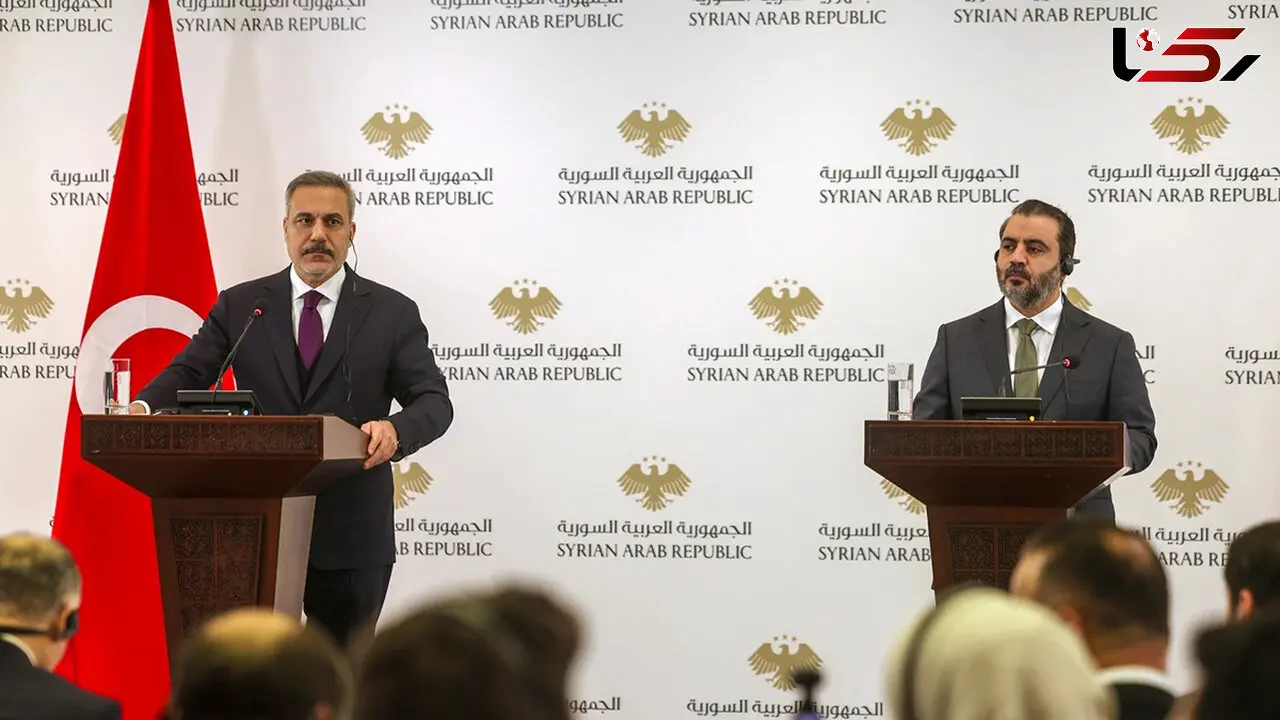
According to Rokna, citing NBC, two civilians were killed and eight others wounded by shelling in Aleppo, Syria, according to the state-run SANA news agency, as fighting broke out between Syrian security forces and Kurdish fighters on Monday. The clashes coincided with a visit to Damascus by top Turkish officials, occurring ahead of a deadline to implement a deal between the Syrian government and Kurdish-led forces in the country’s northeast.
Dozens of families reportedly fled the Sheikh Maqsoud and Achrafieh neighborhoods of northern Aleppo, areas that have previously witnessed outbreaks of violence. The precise cause of the renewed clashes remains unclear. Syria’s Civil Defense agency stated that two of its emergency responders were injured after gunfire from the Kurdish-led Syrian Democratic Forces (SDF) struck their vehicle.
A spokesperson for the SDF claimed government forces fired on a Kurdish checkpoint, while officials in Damascus accused the SDF of initiating the attack.
During meetings in Damascus, Turkish Foreign Minister Hakan Fidan, appearing alongside his Syrian counterpart, said discussions focused on integrating the SDF into the new Syrian army, as well as addressing Israeli military operations in southern Syria and countering the Islamic State group.
“Syria’s stability is integral to Turkey’s stability. This is extremely important for us,” Fidan stated, urging the SDF to “stop being an obstacle to Syria’s stability, unity, and prosperity.”
Fidan’s delegation also included Turkish Defense Minister Yasar Guler and intelligence chief Ibrahim Kalin, and met with Syrian interim President Ahmad al-Sharaa.
Challenges in Implementing the Integration Deal
Under the March agreement between al-Sharaa’s government and the SDF, the Kurdish-led force was to merge with the new Syrian army. However, details were left vague, and progress has stalled. A major point of contention is whether the SDF would join as a unified unit or be absorbed individually into the military.
Turkey opposes the SDF’s integration as a single unit, considering it a terrorist group due to its links with the Kurdistan Workers’ Party (PKK), which has long conducted an insurgency in Turkey. Kurdish officials, however, have indicated that a preliminary agreement may allow three SDF divisions to integrate as units, though the finalization of this arrangement remains uncertain. The original deadline for implementation was the end of the year, raising fears of potential military confrontations if delays continue.
Syrian Foreign Minister Asaad al-Shibani, speaking alongside Fidan, accused the SDF of lacking initiative and serious intent to implement the agreement, citing “systematic procrastination.” He confirmed that Damascus submitted a proposal to the SDF over the weekend but did not provide further details.
Turkey Criticizes Israel’s Actions in Syria
Fidan also condemned Israel’s “expansionist policies” in Syria and accused the SDF of coordination with Israel, though no evidence was provided. Since the fall of former President Bashar Assad in December 2024, Israel has remained cautious toward new Syrian authorities. Despite al-Sharaa’s statements that he does not seek conflict with Israel, Israeli forces have occupied a U.N.-monitored buffer zone in southern Syria and carried out hundreds of airstrikes on Syrian military positions.
Turkey, which previously had a complex relationship with al-Sharaa during his leadership of Hayat Tahrir al-Sham, has supported his government since it overthrew Assad. Alongside Saudi Arabia and Qatar, Ankara persuaded U.S. President Donald Trump to lift long-standing sanctions on Syria. The Turkish military has also assisted the new Syrian army by providing training for cadets and officers.
When asked about the potential for Turkish military intervention against the SDF, Omer Celik, spokesman for President Recep Tayyip Erdogan’s ruling party, emphasized that preparations are in place to safeguard Turkey’s security, but added, “We do not want it to be necessary.” He stressed that the provisions of the March agreement “must be implemented swiftly,” urging focus on the peaceful coexistence of Turks, Kurds, and Arabs in the region.