

Ukraine: Imposed Peace as a Geopolitical Concession to Moscow and Beijing
The Secret Behind U.S. Neglect of Other Powers
Rokna Political Desk: A major secret of U.S. foreign policy during the Trump era has been revealed: the disregard for the objectives of China and Russia, both of which seek to dismantle the global order and rewrite power dynamics, poses a major warning for Washington’s future.

Hal Brands, Senior Europe Analyst and Bloomberg Columnist
According to Bloomberg, one of the greatest threats in foreign policy is when a country forgets exactly what its adversaries want. Today, the United States is making precisely this mistake. China and Russia, as America’s primary rivals, are actively undermining its economic and political influence. Their ultimate goal is clear: to dethrone the United States as a superpower and reduce it to a second-tier, isolated nation.
The Post-Western Era: Russia’s Imperial Project Amid U.S. Denial
During his first term, Donald Trump warned that the U.S. had entered an era of great-power competition. Yet in his second term, rather than confronting this reality, it appears he is attempting to obscure it. The war initiated by Vladimir Putin in Ukraine is not merely about capturing Donbas; from the Kremlin’s perspective, it represents a broader confrontation with the West—a West that, in Putin’s view, reduced Russia from a great empire to a weakened, historically-bound power after the collapse of the Soviet Union.
Putin has not limited himself to conventional warfare in Ukraine. He has simultaneously waged a covert and hybrid campaign against U.S. European allies, including drone operations, political sabotage, and destructive activities. Reports indicate that Russian-affiliated actors have even targeted critical U.S. infrastructure, such as water networks and major food production facilities, and have attempted attacks on airplanes bound for the United States.
These actions are neither mere warnings nor displays of power; they are potentially lethal and have a clear objective. Putin seeks to weaken the United States as a rival superpower while simultaneously undermining the transatlantic alliance, the primary source of Washington’s global influence. As Sergey Lavrov noted years ago, Russia aims to create a “post-Western” world, one in which U.S. power collapses and Russia reclaims an imperial stature.
From Restraint to Ambition: China’s Rise to the Global Stage
Meanwhile, Xi Jinping has entered the arena with even greater ambitions. In 2017, he declared China’s desire to be at the center of global developments, effectively moving beyond the policy of restraint. Today, Chinese media proudly report Beijing’s goal to regain the highest position in the global power hierarchy.
China has concentrated much of its effort in the Western Pacific, rapidly expanding its military capabilities to reduce U.S. influence in this region. However, Xi’s objectives extend far beyond this area. The Belt and Road Initiative is intended to expand China’s infrastructure and influence across Eurasia. Additionally, China’s aggressive economic policies could weaken industrial powers such as the United States and Germany, turning them into suppliers of raw materials and energy under a system where key industries are controlled by China.
The cumulative effect of Xi Jinping’s global initiatives portrays a future in which China writes the rules of the world, and U.S. influence becomes increasingly limited to the Western Hemisphere. In such a world, the United States is compelled to accept a diminished and marginal role. During his first term, Trump warned of these trends. His 2017 National Security Strategy explicitly stated that China and Russia aim to create a world incompatible with U.S. values and interests, prompting the adoption of tougher policies and a broad, comprehensive competition with China for years to come.
Ukraine: Imposed Peace as a Geopolitical Gain for Moscow and Beijing
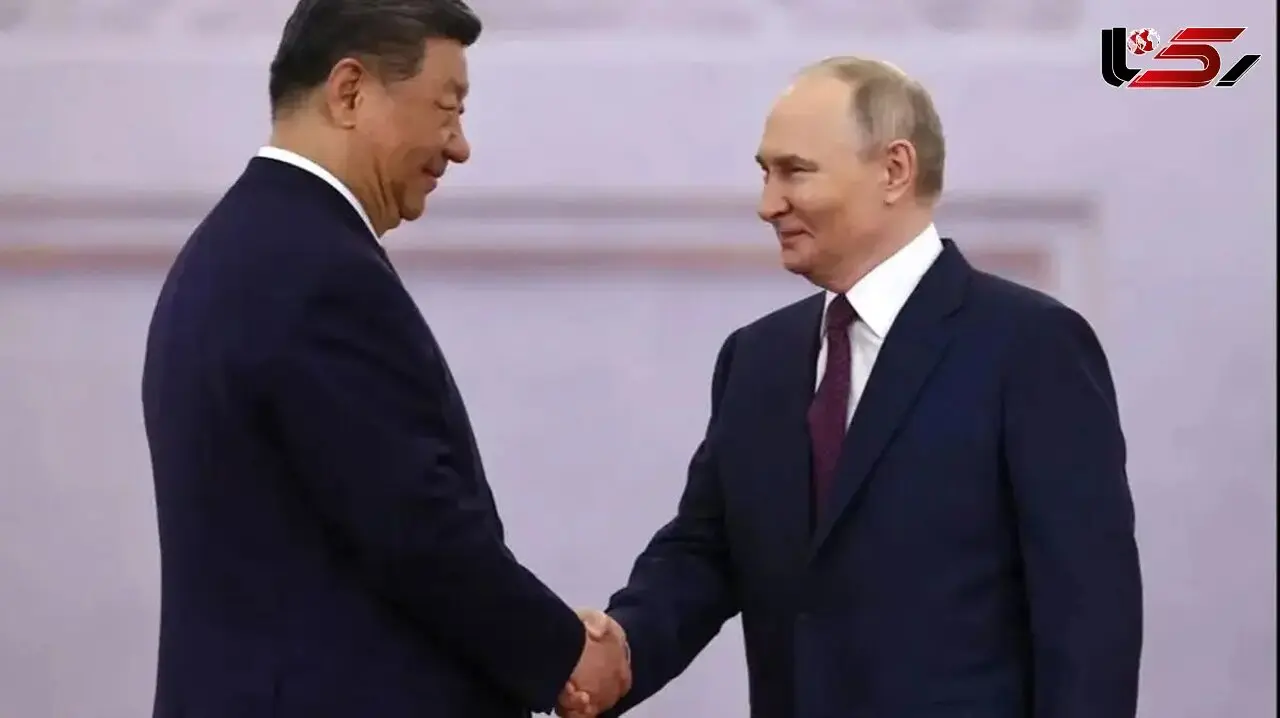
However, Trump’s transactional approach has consistently clashed with strategic competition logic. In his second term, feeling less constrained and supported by a fully MAGA-aligned administration, he appears to have pursued a different path. Trump seeks to impose an ill-suited peace on Ukraine, a peace that benefits both Russia and China, particularly considering Beijing’s support for Moscow. His administration positions itself as a mediator between Europe and Russia—that is, between the union that enhances U.S. power and a revisionist country with which it has deep hostility.
Trump has also decided to sell advanced chips to China, technologies that could advance Beijing’s position in artificial intelligence. Efforts to reach a trade agreement with China have further reduced the competitive sensitivity of his administration. In the newly released National Security Strategy, little clear explanation is offered about the threats posed by China and Russia. Instead, the document implies that Washington’s main adversaries are European allies and globalist elites, rather than international rival powers.
This strategic confusion is accompanied by a fantasy: the belief that trade relations can replace firm competitive policies to ensure peace. Trump suggests that Ukraine’s security is better served if the U.S., Russia, and Ukraine share stability and prosperity through commerce and development projects. His administration has revived the old idea that closer technological integration with China ensures both geopolitical stability and U.S. advantage. Yet history repeatedly shows this optimism to be naïve and ineffective.
In the 18th century, some Enlightenment thinkers argued that trade would eliminate conquest, yet the French Revolutionary Wars soon engulfed Europe. Before World War I, Norman Angell claimed globalization would render wars between great powers meaningless, yet the First World War proved otherwise. After the Cold War, many U.S. officials believed economic integration could align Russia and China with a U.S.-led order, but experience demonstrated that for ambitious and revisionist powers, financial gain ultimately yields to the temptation of geopolitical domination, and the logic of power overrides the logic of the market.
Trump’s first-term National Security Strategy had already acknowledged this point: the assumption that interdependence leads to alignment shaped a generation of U.S. policy, but “in most cases, this assumption proved false.” In his first term, Trump ended this period of strategic complacency. Now, by downplaying threats that have only grown more severe, his second term risks undermining the most constructive legacy of his first: the strategic clarity that revealed what America’s rivals truly seek.