

Unprecedented U.S. Deployment: Deterrence or Preparation for Attack?
Is a New War on the Horizon? The Role of U.S. Military Movements
Rokna Political Desk: Indirect negotiations between Iran and the United States, mediated by the Sultanate of Oman in Geneva, have reached agreement on guiding principles for drafting the final text; at the same time, the United States, by increasing its military presence in the Middle East, is also keeping the military option under consideration.
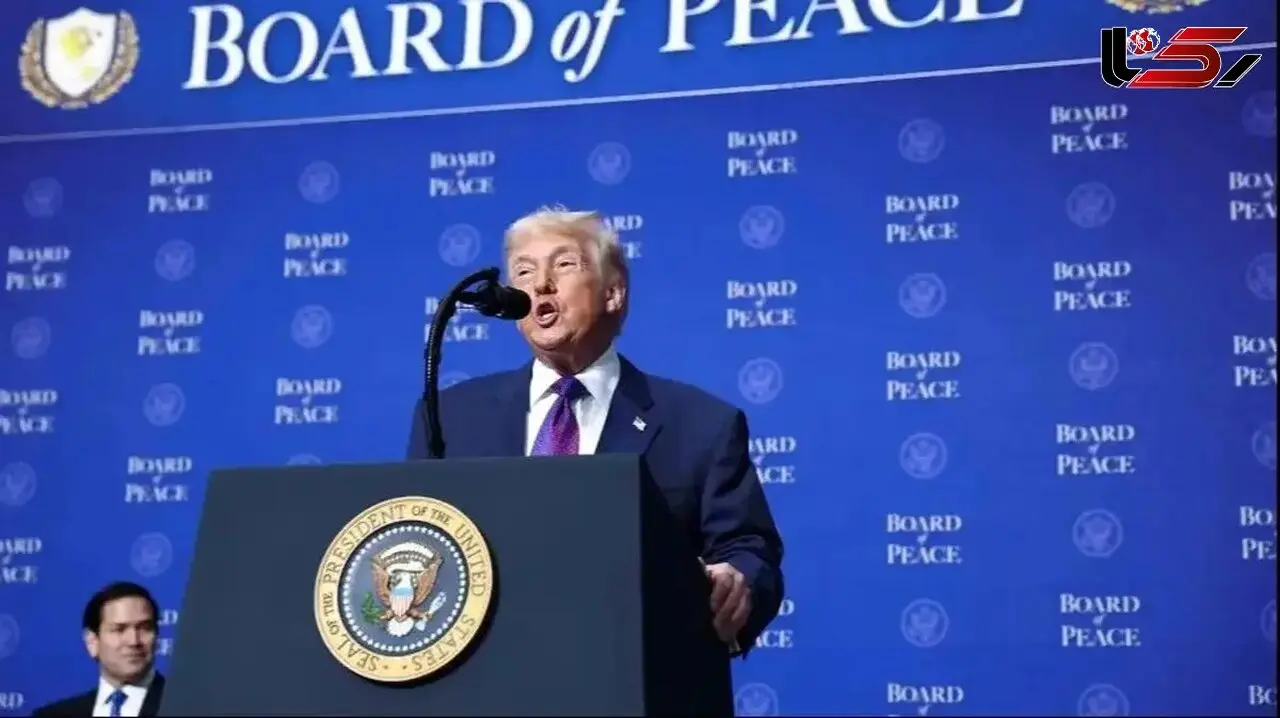
The second round of indirect talks between the United States and Iran, mediated by the Sultanate of Oman, was held in Geneva and lasted approximately three hours; a meeting marked by a clear technical and political focus. Iran’s announcement that a “set of guiding principles” has been achieved for the next steps signals a transition in the negotiation process from the stage of testing positions to the stage of consolidating a reference framework.
According to Rokna, in negotiating practice, guiding principles mean agreement on the boundaries of discussion, defining the issues to be included in a potential text, and determining the scope of possible commitments. This formula therefore places the process on a path toward gradual drafting and opens the door to detailed discussions on enrichment levels, monitoring mechanisms, and the سقف of sanctions relief.
In practice, the consolidation of “principles” prior to drafting the agreement text indicates a desire to reduce the scope of future surprises; because a shared reference framework enables the management of differences within defined parameters and allows each side to test the flexibility of the other without declaring final commitments. This stage becomes the anchor point for future work, as dialogue shifts from general headings to executive details.
Within this framework, the telephone conversation between Keir Starmer, Prime Minister of the United Kingdom, and Donald Trump, President of the United States, regarding the nuclear agreement in the Geneva context, places the negotiations at a level beyond the bilateral relationship between Washington and Tehran; because London’s entry into the scene indicates that any future understanding will require transatlantic coordination, whether in the field of sanctions or at the level of political guarantees.
This communication reaffirms the European dimension of the پرونده; since the United Kingdom, as one of the parties to the previous agreement, possesses negotiating experience and plays a role in shaping the political environment surrounding the talks. Thus, coordination between the United States and the United Kingdom gives the process an international dimension and strengthens the capacity to translate any understanding into practical measures at the United Nations Security Council or within sanctions regimes.
Diplomacy Under the Tense Skies of the Middle East
Simultaneously with the continuation of negotiations in Geneva, the United States has reinforced its military presence in the Middle East and, according to reports published over the past two days, has deployed more than 50 advanced fighter jets to bases in the region. This deployment includes aircraft from different generations capable of conducting air superiority missions and long-range precision strikes, reflecting a high level of operational readiness. Its concurrence with the negotiations places this action within a constellation alongside the political process and indicates that the diplomatic track is moving within a disciplined security framework; as the reinforcement of air presence increases monitoring and deterrence capacity and provides operational cover for any sudden development.
The British newspaper The Telegraph revealed that fighter jets recently ordered by Donald Trump to be deployed to the Middle East are paving the way for a large-scale bombing campaign against Iran. Citing a source within the U.S. government, the newspaper reported that the likelihood of war in the coming weeks has now reached 90 percent; while a former head of one of Israel’s intelligence agencies has stated that he believes an attack could be carried out within the next few days.
Experts have stated that the increase in the number of warplanes dispatched to the Middle East will most likely be used to prepare the way for the entry of heavy bombers to target the “heart of Iran’s system.” The Telegraph also noted that a large number of U.S. fighter jets and support aircraft, including aerial refueling tankers, have been observed moving eastward throughout the week, and that these movements have accelerated.
Analysts, pointing to the approach of the U.S. aircraft carrier Gerald R. Ford and the presence of the aircraft carrier Abraham Lincoln, which had previously been stationed in the region, believe that Donald Trump is preparing himself for a sustained military campaign against Iran. According to the newspaper, within the 24 hours leading up to Tuesday evening, more than 50 American fighter jets, including F-35 and F-16 aircraft, were transferred to the region. In addition, dozens of aerial refueling flights have been observed heading eastward, increasing the scale of movements.
One website tracking military flights on the internet has stated that “it appears that everything capable of flying or refueling is moving toward the region,” and that this trend continues. Sasha Buchman, a researcher at the International Institute for Strategic Studies in Bahrain, told The Telegraph that fast jets such as the F-16 and F-35 would most likely be used to “open the path toward primary targets.”
Informed sources told Axios that any potential confrontation would not be limited to restricted strikes such as those that occurred last summer; rather, it could lead to a prolonged campaign lasting several weeks. Analysts told Newsweek that this military expansion is not merely deterrent in nature, but indicates preparation for sustained air and naval strikes; strikes that would be necessary to conduct a prolonged campaign against Iran’s nuclear and missile facilities. These movements suggest that if Iran continues to refuse to accept the red lines set by Trump, Washington will be prepared to carry out large-scale military operations.
The Largest U.S. Air Deployment in the Middle East Since 2003
The Wall Street Journal has reported that the United States is forming its largest air deployment in the Middle East since the invasion of Iraq in 2003. A second aircraft carrier carrying attack and electronic warfare aircraft is also en route to the Middle East and will join the existing naval deployment. Within the framework of this maritime reinforcement, the aircraft carrier USS Abraham Lincoln, along with several destroyers equipped with ballistic missile interception systems, is present in the region, and the USS Gerald R. Ford, together with its strike group, is moving toward the region and will add to this concentration of power.
U.S. officials say that the United States is now capable, instead of conducting a limited strike — similar to Operation “Midnight Hammer” last June that targeted Iran’s nuclear facilities — of carrying out a sustained air campaign that could last for weeks and expand the scope of operations. According to the newspaper, the options before Donald Trump begin with limited strikes against nuclear facilities and ballistic missile bases and extend to a broader campaign that could target Iran’s political and military leaders.
Despite the breadth of the current deployment, this level of force remains significantly lower than the deployment carried out by Washington during the 1991 Gulf War or prior to the 2003 invasion of Iraq. In the 1991 Gulf War, six aircraft carriers and more than 1,300 American aircraft participated, and prior to the invasion of Iraq approximately 863 aircraft were stationed in the Middle East, forming a more extensive deployment. However, despite this military preparedness, the aforementioned sources emphasize that Trump has not yet made a final decision to initiate an attack and prefers to reach a diplomatic agreement that halts uranium enrichment, limits Iran’s missile programs, and contains tensions.
Send Comments