

Europe at a Momentous Crossroads
Rokna Political Desk: Emmanuel Macron’s warning about the possibility that the United States might betray Ukraine, together with Friedrich Merz’s explosive remarks regarding Trump’s policies, have further exposed the trans‑Atlantic crisis of confidence and presented Europe with its gravest security challenge since World War II.
Morteza Maki wrote: The war in Ukraine and the policies of the Trump administration aimed at ending this war “by any means” have placed Europe before the most serious security challenge since 1945. What the magazine Der Spiegel revealed — a confidential conversation among European leaders — is only the tip of a much deeper iceberg. The trans‑Atlantic trust crisis in that alliance which, for seven decades, has served as the backbone of Western collective security is at its most acute.
Macron’s unprecedented warning about a possible American betrayal of Ukraine and Merz’s candid assertion that Trump’s representatives “have played us for fools” have sounded the alarm for the end of an era — an era in which Europe defined its strategic identity by relying on Washington’s security guarantees. Now the Continent stands at a historic turning point: either it consents to a peace that would amount to a geopolitical defeat and long‑term security weakening, or it accepts the heavy and uncertain costs of moving toward defense autonomy.
At the heart of this crisis lies a paradigm shift in Washington’s view of global threats. The Trump approach, reflected in the 2025 Security Charter, no longer regards Russia as an existential threat, but rather as a negotiable rival. This viewpoint undermines the philosophical foundations of NATO — foundations built initially on the common Soviet threat, and later on Russia. When Trump Jr. states that “Ukraine is not a priority for Americans,” he effectively lifts the veil on Washington’s new priority list: a focus on China, technological competition and domestic matters, in exchange for a reduced commitment to European security. This attitude is precisely why Trump’s peace plan — a direct deal with Russia handing over parts of Ukraine without clear security guarantees — is viewed by Europe not as a solution, but as a redefinition of “might makes right.” Accepting such a plan would mean undermining the principles Europe claims to uphold. Rejecting it, however, implies embarking on a difficult and costly path.
Here arises Europe’s first major obstacle: the inability to compensate for any shortfall in U.S. financial and military support. Despite increases in defense budgets and the establishment of initiatives such as the European Peace Fund, Europe’s defense industries remain fragmented, disparate and lacking scalable capacity to support a conventional war of Ukraine’s magnitude. The United States has not only been the largest supplier of high-end weaponry and military intelligence, but has also managed the logistic infrastructure and command systems required to deliver aid. The removal or reduction of Washington’s support would dismantle this structure, confronting Europe with a merciless reality.
If Europe rejects Trump’s plan, it lacks the capacity to continue aiding Kyiv; if it accepts the plan, it consigns itself to political defeat and long-term security weakness. The second obstacle is internal divisions within the European Union. The dream of “strategic autonomy,” championed over decades by France, has always met resistance from countries that regard NATO and their relationship with the United States as central to their security. Although the danger of a U.S. withdrawal from its traditional commitments has alarmed many governments, this shift in Washington’s posture has not forged unity. Eastern European and Baltic states — who perceive Russia as a more immediate threat — want to retain America’s security umbrella and oppose any peace plan that hands the upper hand to Moscow. By contrast, some other European countries, like Hungary or Slovakia, under the strain of economic and energy costs, might prefer a quicker agreement — even if that means accepting a reduced role for Ukraine.
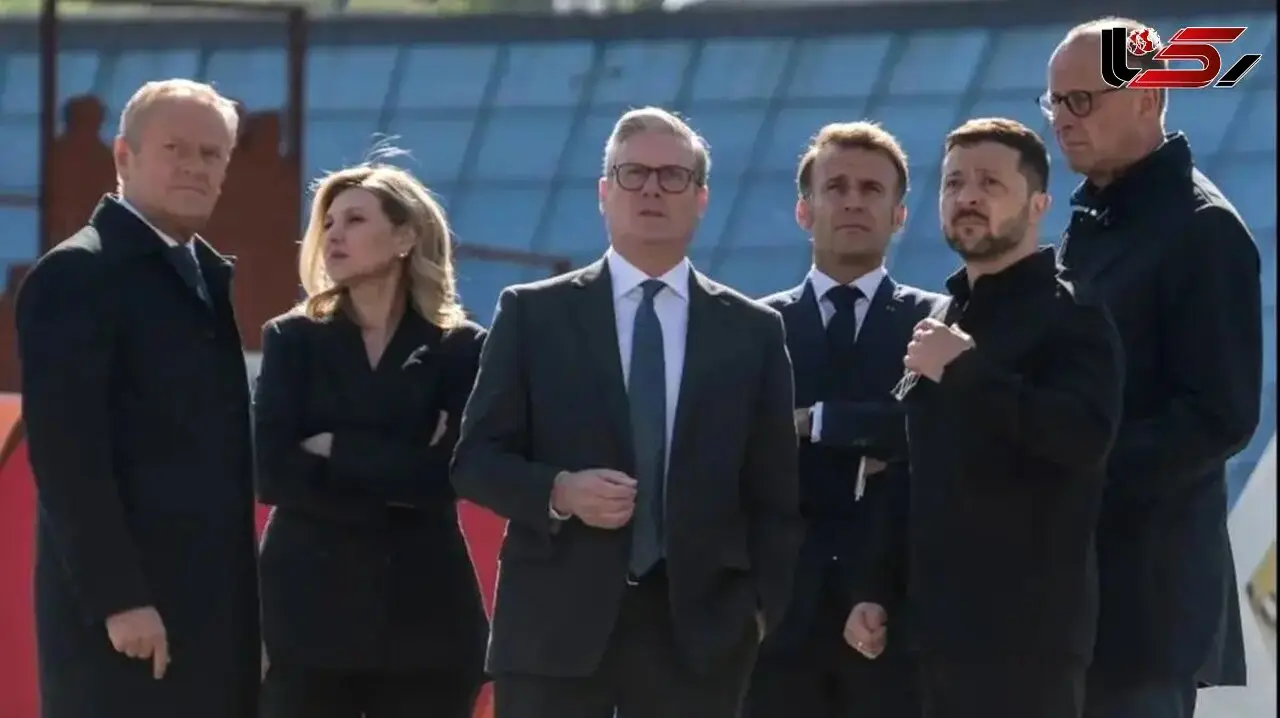
These divergences render the formation of a united and decisive European stance — essential either for negotiating with the Trump administration or facing Russia independently — extremely difficult. The joint trip of Macron, Merz and Volodymyr Zelensky to London on Wednesday to meet with Keir Starmer is an effort to forge a unified front, but it remains unclear whether this coordination can withstand the heavy pressure from Washington.
The third barrier is time and the strategic psychology required for transformation. For Europe to transition from being a “security consumer” to becoming a “security provider” — a transformation that would require substantial increases in defense spending, integration of military industries, formation of a joint command structure and construction of coordinated defense infrastructure — would take years. Yet the war in Ukraine is ongoing, and crucial decisions must be taken in the coming weeks and months. Trump, aware of this temporal squeeze, is increasing pressure on Europe. Simultaneously, Europe faces a major psychological barrier. For seven decades, its security architecture has been built on trust in Washington, and abandoning that framework demands a deep change in the strategic culture of many governments. A change that is neither easy nor swift.
In this context, the future of NATO itself faces an existential threat. If the Trump plan leads to a reduction in U.S. military commitment in Europe — while Russia remains a major threat — NATO will be hollowed out from within. When the NATO Secretary‑General says “we must protect Ukraine,” as reported by Der Spiegel, he is pointing to a bitter reality: safeguarding Ukraine within a NATO devoid of America’s presence is impossible. In such circumstances, Europe must choose between two arduous paths. Either it redefines and revives NATO in the absence of American leadership, or it moves swiftly to build an independent defense architecture. Both paths are heavy, costly, political and security‑wise uncertain, and neither guarantees success.
Europe now stands at a historic inflection point. Pressure from the Trump administration to end the war in Ukraine “by any means” is not merely a tactical divergence with its European allies — it is a challenge to the foundations of the Western security order. The disclosure of the private conversation among European leaders has revealed that distrust, concern and confusion in European capitals have reached unprecedented levels. The road ahead is not easy. Europe must simultaneously maintain internal unity, manage a vital war on its doorstep, negotiate with an increasingly unpredictable ally, and build the infrastructure for defense autonomy. Endorsing Trump’s plan might end the war, but it would deepen Europe’s distrust in America and magnify feelings of vulnerability toward Russia — weakening the continent in the long run. Rejecting the plan would mean prolonging the war, bearing economic pressure, and risking defeat against Russia. Trump's plan is the test for re‑interpreting Europe’s security order. If Europe fails this test, a new chapter will begin. A chapter in which borders, security and old alliances can no longer be trusted — and each country must decide for itself. But if Europe chooses resolve and determination — resolve that is currently being voiced behind statements and meetings — then perhaps this crisis can open a door for the birth of a European security identity. An identity independent, responsible and ready to carry the burden of protecting itself and its allies. For the first time since 1945, Europe might independently decide about its own security. A decision that will determine not only Ukraine’s fate but also the future of the European project and this continent’s place in the global order.