

Venezuelans Hopeful for Change Face Disappointment as Government Maintains Grip
Political reality is settling in as Venezuela’s government, once led by the deposed Nicolás Maduro, continues to hold firm. Many Venezuelans who opposed Maduro were initially jubilant when U.S. special forces captured him over the weekend, hoping this would quickly lead to a transition toward a new government.
According to Rokna, citing NBC News, in recent days, those expectations have dimmed. No political prisoners appear to have been released, and authorities have cracked down on any signs of dissent, arresting people reported to have celebrated Maduro’s capture.
Security forces and intelligence agencies are active across the country, with masked paramilitary groups known as “colectivos” patrolling on motorcycles and military intelligence agents in civilian clothes circulating in vans, setting up checkpoints, and displaying official insignia. The top leadership remains largely intact, aside from Maduro himself.
A recent classified intelligence assessment noted that senior members of the Maduro regime, including former Vice President Delcy Rodríguez—sworn in as interim president on Monday—are best positioned to maintain government stability. The report considered President Donald Trump’s dismissal of exiled opposition leader Maria Corina Machado as unsuitable to lead the country, sources told NBC News.
For residents like Michelle, a 34-year-old architect in Caracas, the developments have been disheartening. “For years, I hoped for a change in my country’s government, and I imagined that when it happened, I would feel happy. But that’s not the case,” she said. “Somehow we will have to pay: either with our oil or with our dignity and sovereignty.”
Michelle and others spoke to NBC News on the condition of anonymity, citing fear of government reprisals. “A dangerous precedent is being set between the United States and Latin America,” she said. “We are just another piece on the chessboard in a struggle between powers who value resources more than human life.”
Trump has repeatedly expressed his desire for Venezuela, home to the world’s largest oil reserves, to open its markets to American companies. On Tuesday, he stated that Venezuela would provide up to 50 million barrels of oil to the U.S., with revenues benefiting both Americans and Venezuelans.
Not all opposition supporters share the same pessimism. Former political prisoner Luis Mata, now living in exile, likened the process to eating a pizza “slice by slice,” advocating patience. Questions remain about the 800 to 900 political prisoners still incarcerated following the July 28, 2024, presidential elections. Mata, 26, was one of thousands who safeguarded vote tallies during the election. After the Maduro government overturned what independent observers deemed an opposition victory, Mata was detained, charged with seven offenses, and imprisoned for four months in Tocorón jail.
“Many argue the U.S. wants the oil, but the United States is a trade ally supporting freedom in Venezuela,” Mata said. “Change is closer than ever. Nicolás Maduro is out of the country and will never return. Freedom is on the way.”
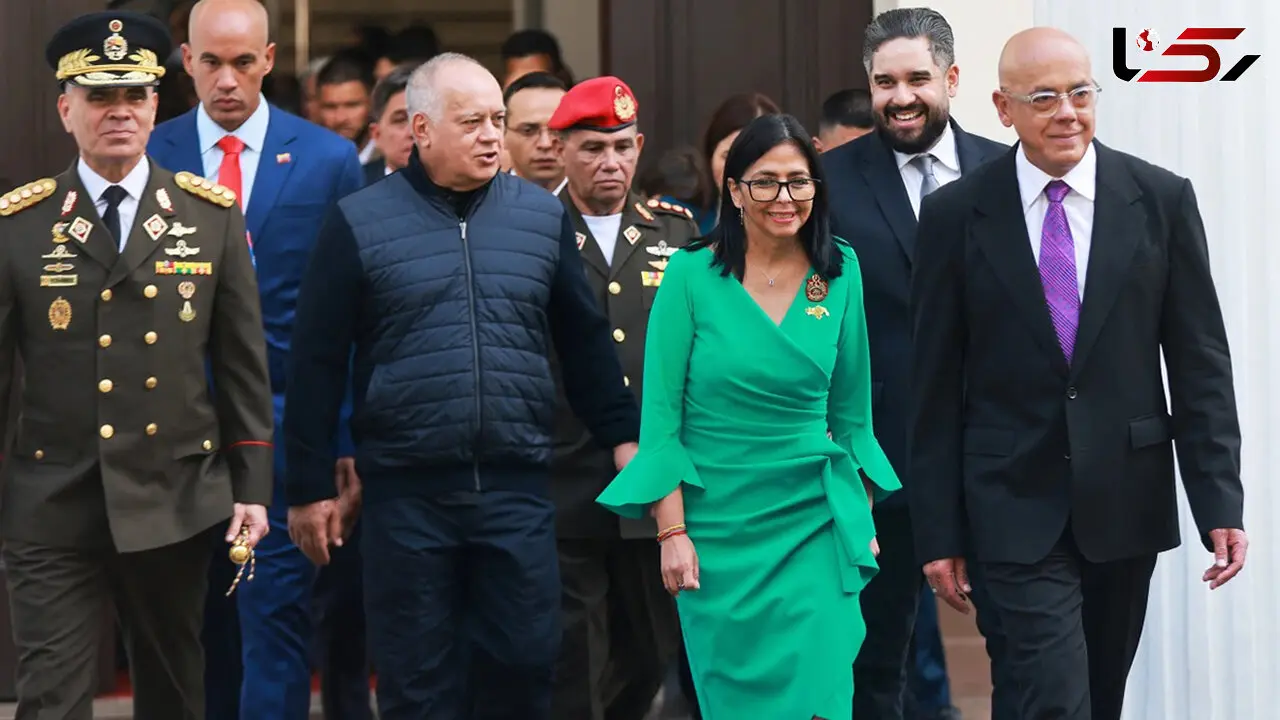
Despite these hopes, the Maduro regime is signaling continuity. When Delcy Rodríguez was sworn in as interim president, the country’s leadership marched in unison in front of the National Assembly. Photographs released by the presidential palace show Rodríguez flanked by her brother and National Assembly President Jorge Rodríguez, Interior Minister Diosdado Cabello, Defense Minister Vladimir Padrino, and Maduro’s son, Nicolás Maduro Guerra.
The images contrast with repeated claims from Trump that the U.S. is “in charge” in Venezuela. “They are targeting anyone who supported the U.S. mission against Maduro,” said James Story, the last U.S. ambassador to Venezuela, at an Atlantic Council event. “They’ve already detained some individuals. If they are doing that, then we do not control the country.”
For ordinary Venezuelans, daily life continues amid uncertainty. Marlenis, a domestic worker in Caracas, expressed a pragmatic outlook: “After 25 years of a system that has made us poorer, we have nothing to lose by trying something different. If everything goes wrong, we are already accustomed to hardship.”