

Why Did Trump Change His Approach to Asia’s Economic Power?
Rokna Political Desk: The shift in Washington’s strategy in the new National Security Strategy has transformed China from a systemic adversary into a partner for fair trade, emphasizing economic balance rather than ideological confrontation.
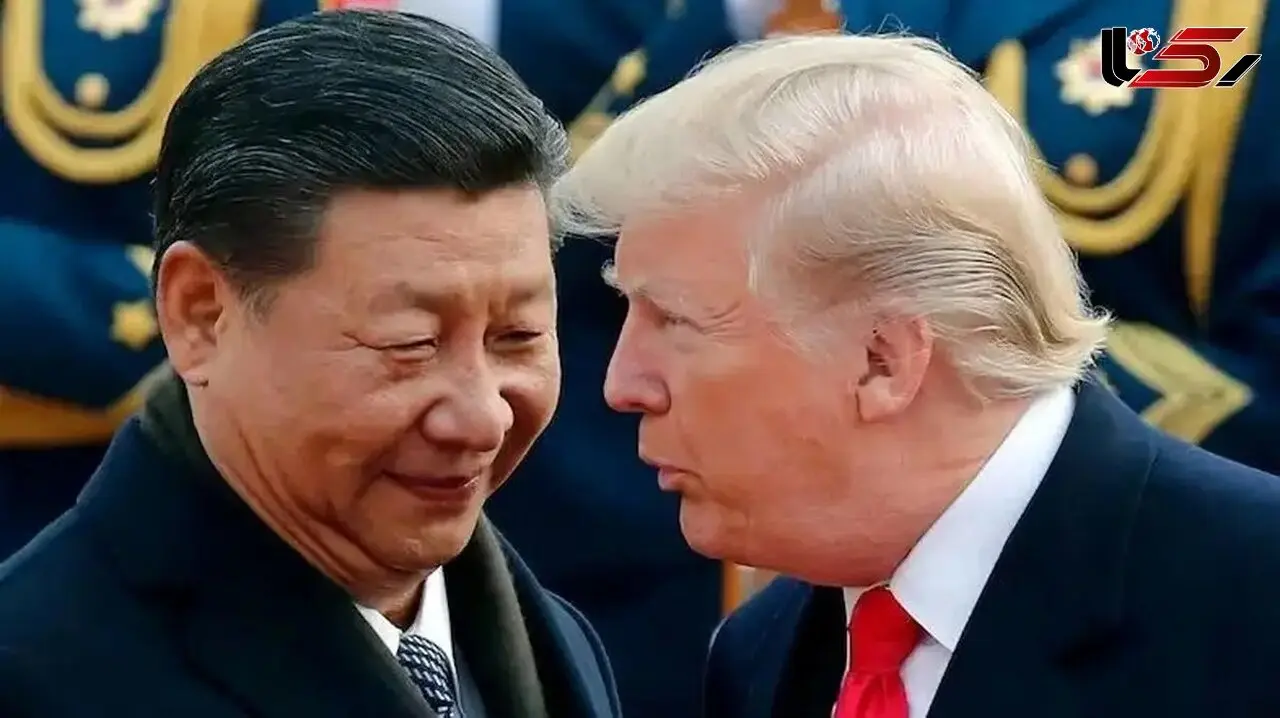
The new U.S. National Security Strategy recognizes China not as an existential threat but as a major power with which fair trade relations should be maintained.
According to Rokna, citing Asia Times, Washington has long regarded China as its primary rival. However, the newly released 33-page U.S. National Security Strategy on Thursday, December 4, signals a softening of this approach.
This deliberate shift, which China had long anticipated, comes after decades of adversarial framing and labeling Beijing as a systemic competitor in Pentagon documents. The language of the new strategy abandons ideological confrontation and emphasizes economic balance.
This change reflects Washington’s realization that tariff and trade wars harm American farmers, manufacturers, and consumers as much as Chinese traders. Beijing, exercising prudence before domestic shifts in either country, has seized the opportunity to open space for engagement with Washington.
Evidence of these changes was visible during the meeting of the two countries’ presidents in Busan, South Korea, where export controls and tariffs were suspended. China facilitated imports of American soybeans and access to rare earth elements, while Washington reduced tariffs on fentanyl and extended exemptions for hundreds of Chinese production lines until the next year.
U.S. Treasury Secretary Scott Bessant, the architect of this softening approach, delayed publishing the strategy until these agreements were finalized and framed it to emphasize bilateral trade over military competition. Chinese diplomats described it as the most favorable U.S. strategic statement in the past 15 years.
Since Taiwan remains China’s most sensitive issue, the strategy addresses it cautiously, prioritizing “avoiding conflict over Taiwan while maintaining military superiority.” This sends a message to Beijing that Washington does not intend to provoke China and focuses instead on cooperation with allies and economic powers.
This approach provides strategic breathing space for middle powers in Asia, such as Singapore and Hong Kong, relieving them from choosing sides. It allows access to ports and facilities of both parties, provided economic reciprocity is maintained.
Meanwhile, Hong Kong retains its role as a trade gateway, and Singapore continues as a neutral logistics hub. Chinese capital flows through the Belt and Road Initiative into Southeast Asia without fear of U.S. counteractions, benefiting ASEAN countries the most.
Nonetheless, Beijing remains vigilant regarding Washington’s efforts to strengthen military forces and pressure allies, including South Korea, Japan, and Australia, for greater military investment. Taiwan represents a vulnerability for the U.S., which partly explains why Trump has preferred economic engagement over military measures.
It should be noted that this strategy is not a love letter to China, but it is the closest document to what China has sought for a century. The most probable next step for Chinese leaders is to expand cooperation in various fields, including clean energy and artificial intelligence, signaling to Washington that a prosperous China does not pose a threat to the United States.
Send Comments