

“America First”: A Betrayal of Allies or Pure Realism?
Trump’s Game: Will the Global Order Become a Casualty of His Policies?
Rokna Political Desk: Donald Trump’s new national security strategy, aimed at cementing the “America First” doctrine, begins with a focus on countering China’s influence in Asia, strengthening the U.S. military presence in Taiwan and the South China Sea, and increasing the defense contributions of America’s Asian allies. The document reflects fundamental changes in the global order and in the U.S. approach to international alliances.
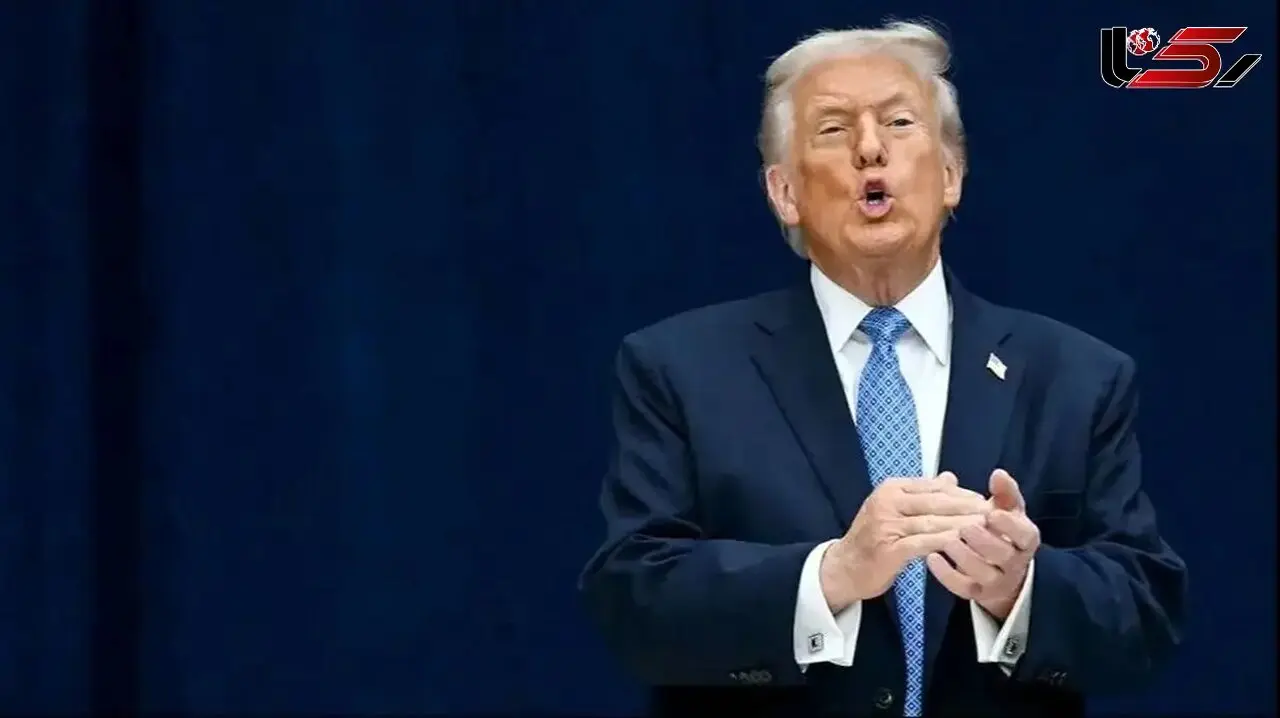
Trump’s new national security strategy, released quietly in the middle of the night, is an attempt to translate the “America First” slogan into practical foreign policy. The document discards reliance on “shared values” and the value-based foundations of alliances, and under the banner of “flexible realism,” returns openly to the logic of raw power. It outlines Trump’s preferred vision of the world: Asia as a “volunteer ally” against China, the Western Hemisphere as an intervenable backyard, and Europe as a space for identity engineering and appeasement of the Kremlin.
According to Rokna, citing the Economist, it may at first seem that drafting a new national security strategy in “Trump’s world” is a marginal and insignificant endeavor. John Bolton, Trump’s national security adviser during his first term, has repeatedly lamented that the president had no coherent or consistent strategy at all. Instead of relying on strategic documents, Trump depended on his own spontaneous reactions—while avoiding lengthy meetings and voluminous intelligence briefings. At times, he would shift course dramatically from one day to the next, completely reversing policy direction.
“Flexible Realism”: A Theoretical Veneer for the Nakedness of “America First”
Despite this, the new national security strategy is of critical significance. Released in an unexpectedly late-night posting on December 4–5, the document will be studied meticulously in the months and years ahead by military officials, diplomats, and advisers in the U.S. and abroad. It offers the most detailed and extensive explanation yet of what the “America First” slogan means in practice for foreign policy. The strategy outlines the framework for an imminent overhaul of U.S. military power and clarifies priorities for everyone attempting to interpret the president’s intentions. For many readers, the document will be profoundly alarming.
The strategy discards the decades-old notion that a set of shared values forms the backbone that unites America’s alliances. It states explicitly that the new strategy “does not rest upon traditional ideologies or conventional political frameworks,” but is instead guided by “whatever works for America in practice.”
Instead, the official text embraces what it calls “flexible realism”—a concept that means the following: America seeks to “be pragmatic without being branded a ‘pragmatist’; be realistic without being called a ‘realist’; emphasize principles without appearing idealistic; act firmly without being described as ‘warmongering’; and exercise restraint without fitting into the mold of a ‘passive pacifist.’”
When the Enlightenment-based values that shaped U.S. foreign policy for decades are set aside, “America First” becomes a bare assertion of power—more reminiscent of nineteenth-century logic than of the post-World War II order. The result is a document filled with contradictions and inconsistencies in both principle and practice.
From “Volunteer Ally” in Asia to “Submissive Underling” in the Western Hemisphere
In some regions, particularly Asia, Trump expects countries to serve as “voluntary and aligned allies,” while in many other areas, those same countries are expected to submit to U.S. economic and military dominance. In one section, the national security strategy rejects interventionist approaches that seek to impose “democratic changes or other transformations that are fundamentally incompatible with the traditions and history of other countries”—a stance that reassures Russia, China, and Middle Eastern monarchies. But in Europe—where the “Make America Great Again” movement fears wokeism, immigration, and the dominance of liberal values—the document states clearly: “Our goal should be to help Europe correct its current course.”
When the strategy applies this regional template globally, the full implications emerge gradually. Nowhere is this clearer than in the section on the “Western Hemisphere.” It states: “We want to ensure that the Western Hemisphere remains sufficiently stable and governed adequately to prevent large-scale migration toward the United States.”
Governments across the Americas are required to mobilize seriously to control migration and combat drug flows. They are expected to accept U.S. control—or at least veto power—over key assets, resources, and strategic zones. This expectation essentially means rejecting Chinese investment in areas where Beijing could gain influence over ports or assets such as the Panama Canal. In countries where law enforcement has failed to curb drug trafficking, the strategy warns that the U.S. will use military force if necessary.
This sweeping, interventionist claim has been labeled the “Trump Corollary” to the Monroe Doctrine—echoing the “Roosevelt Corollary” of 1904, in which President Theodore Roosevelt asserted America’s quasi-policing right to intervene across the Western Hemisphere.
It is difficult to imagine that such a declaration would not revive anger and bitter memories of America’s heavy-handed interventions in the region during the twentieth century—from military invasions and blockades to CIA-backed coups and Cold War security policies that armed authoritarian regimes guilty of extrajudicial killings and torture. By conditioning aid and trade on levels of cooperation, the strategy signals that the White House believes this historical resentment will not prevent Latin American governments from following Washington’s directives.
Security in the Taiwan Strait, Insecurity in NATO’s Soul
In Asia, unlike the Western Hemisphere, America’s allies will read the document with a mix of short-term relief and long-term pessimism. The Taiwan section could have been far more alarming. A nightmare scenario for allies like Japan, the Philippines, and South Korea would have been a declaration that Taiwan’s fate is no longer a vital U.S. interest.
However, the strategy restates the long-standing U.S. position: America “does not support any unilateral change to the status quo in the Taiwan Strait.” While the document does not reference Taiwan’s importance as a liberal democracy whose population overwhelmingly rejects Chinese rule, it takes a cold, realist view, emphasizing the island’s value as a strong and functional anchor within the “first island chain”—from Japan to Taiwan to the Philippines—which restricts China’s naval and air maneuverability. It also notes Taiwan’s central role as the world’s largest producer of advanced semiconductors.
Accordingly, the U.S. will maintain forces capable of deterring any attempt to seize Taiwan or control the shipping lanes surrounding the island or in the South China Sea. Meanwhile, Asian allies are asked to dramatically increase their defense spending and expand U.S. access to their ports and bases.
In short, the strategy asks Asian countries to help the United States contain China’s ambitions in the Indo-Pacific—and to bear Beijing’s anger in the process. Yet throughout the entire document, not a single word directly condemns China’s (or Russia’s) expansionist ambitions or their efforts to dismantle the post-1945 legal and multilateral order.
Instead, the sharpest criticism targets Europe. The strategy depicts the continent as trapped in a profound crisis—not due to economic decline or military weakness, but due to a breakdown in national identity that threatens Europe with “the dark prospect of civilizational dissolution.”
It warns that “it is entirely conceivable that within a few decades, some NATO members will become societies with non-European majorities,” adding: “It is an open question whether such countries will see their place in the world or their alliance with the United States in the same way as the original signatories of the NATO Charter.” In essence, the document claims that immigrants will alter the values of the societies they join—a striking and contradictory argument coming from a country built on immigration.
Peace at the Price of Surrender: Trump’s Prescription for Ukraine and Europe
The strategy’s recommendations for Europe stem from this “Judeo-Christian nationalism” narrative. It endorses “celebrations and unembarrassed pride in the unique qualities and histories of European nations,” and it encourages the cultural revival sought by “patriotic European parties.” This language is a direct reference to the European populist right, including France’s National Rally, Britain’s Reform Party, and Germany’s Alternative for Germany (AfD)—parties openly praised by J.D. Vance in a speech in Munich earlier this year. If this is the Trump administration’s plan for Europe, then on what basis should moderate European governments—who view these parties as threats to their democracies—consider the United States a reliable ally?
When applied to Ukraine, the same logic produces devastating conclusions. The strategy suggests that most Europeans want peace—even at the price of surrender to Vladimir Putin—and that it is their governments who stand in the way. It calls for a rapid end to the war to prevent escalation.
The document urges the U.S. to temper Europe’s view of Russia as a persistent and dangerous threat and warns that NATO cannot remain “an alliance that expands indefinitely.” Even more concerning, it does not mention— even in passing—Putin’s repeated aggression, hostile behavior, and acts of military coercion. To many Europeans, such appeasement is not a guarantee of peace but an invitation to future conflict.
In a letter to the American people prefacing the strategy, Trump writes: “In everything we do, we put America first.” But it is an earlier line in that same letter that America’s allies will read with alarm—and China and Russia with satisfaction: “America is strong and respected again—and for that reason, we are bringing peace to the world.” Unfortunately, this claim comes from an administration that has undoubtedly provoked fear, anger, and anxiety in others, and which ranks among the least respected and least trusted U.S. governments in decades.
Send Comments