

Mamdani on Netanyahu: Is Arrest Possible?
Rokna Political Desk: The Mayor of New York has announced the possibility of arresting Benjamin Netanyahu over allegations of war crimes, though legal disputes and U.S. policies regarding the International Criminal Court remain the main obstacles to enforcing such a warrant.
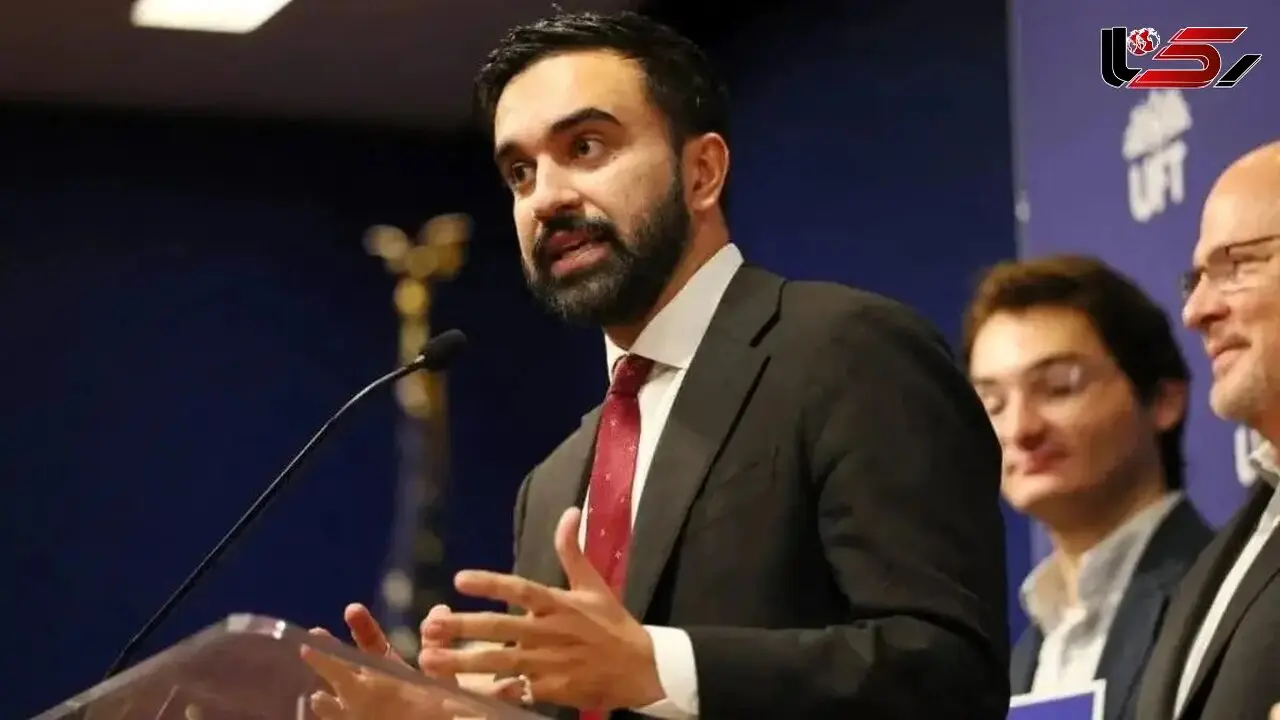
The New York mayor emphasized that if the Prime Minister of the Israeli regime enters the city, he will issue an arrest order. However, the question remains: does he actually have the authority to do so?
According to Rokna, Zaharan Mamdani, Mayor of New York, stressed that based on the arrest warrant issued by the International Criminal Court against Benjamin Netanyahu, the Prime Minister of the Israeli regime, who is wanted by the court for committing war crimes and crimes against humanity against Palestinians in the Gaza Strip, he would immediately issue an arrest order once Netanyahu sets foot in the city.
The analytical outlet Middle East Monitor reported that despite the allegations against Netanyahu, he rejected Mamdani’s statements regarding the potential execution of the arrest warrant and confirmed that he is still planning to travel to New York. The question, however, is whether under international law, the mayor of a U.S. city has the authority to arrest a foreign official.
The report added that the International Criminal Court does not have a special enforcement mechanism and relies on member states to execute arrest warrants. In 2025, the United States imposed sanctions on ICC officials, including blocking bank accounts and denying visas, aiming to prevent investigations into alleged crimes by U.S. and Israeli officials in Afghanistan and Palestine.
Middle East Monitor further noted that when the ICC’s rulings face enforcement obstacles, international law provides an alternative mechanism known as universal jurisdiction. This principle allows any country to prosecute individuals accused of serious international crimes, such as genocide, war crimes, and crimes against humanity, regardless of where the crimes were committed or the nationality of the perpetrator. Several countries, including Switzerland, Portugal, Spain, France, and Germany, have successfully used universal jurisdiction to prosecute foreign officials. One example is the conviction of former Gambian Interior Minister Ousman Sonko for crimes against humanity in 2024.
The report added that TRIAL International asserts that individuals committing major crimes, such as war crimes and crimes against humanity, cannot claim immunity due to their political position. Given the threat such crimes pose to international peace and security, they strip the perpetrator of any protection. Therefore, Benjamin Netanyahu’s political and diplomatic immunity as a war criminal does not protect him from arrest. This principle was previously applied to former Chilean President General Augusto Pinochet, who was accused of genocide, administrative detention, murder, and torture. In October 1998, he was arrested in London under a Spanish-issued arrest warrant based on the framework of universal jurisdiction.