

An Uncertain Future for U.S.–Israel Relations Amid the New Crisis
Rokna Political Desk: The future of U.S.–Israel relations has entered a vague and challenging phase, given Washington’s unconditional support for Tel Aviv over the past three decades and the negative consequences this policy has inflicted on the interests of both sides.
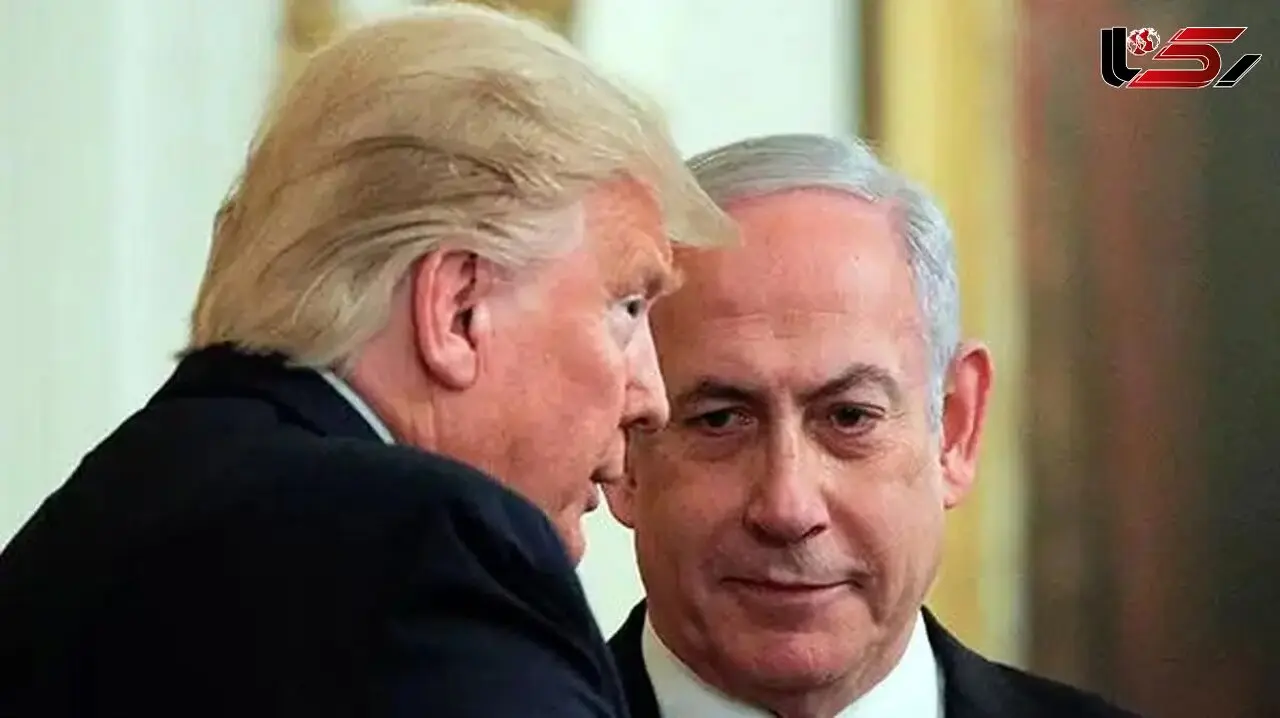
According to the Andrew Miller, this exceptionalism has not only caused serious harm to the Palestinians but has also damaged the interests of both the United States and Israel. Rather than helping ensure the “survival of Israel,” which is the declared aim of this policy, America’s unconditional support has allowed the worst instincts of Israeli leaders to flourish.
According to Rokna, the bond between the United States and Israel over the past three decades has been exceedingly close, to the extent that the United States has maintained full coordination with Israel in both peace and war, offering unconditional diplomatic and military support.
Foreign Affairs magazine, building on this idea, has provided a comprehensive analysis of the crisis in this relationship, noting that it has evolved over decades into an exceptional partnership grounded in unconditional and unprecedented preference. But due to the political, security, and humanitarian damage it inflicts on all three parties—the Americans, the Israelis, and the Palestinians—it is no longer sustainable.
In a lengthy article by Andrew Miller, the magazine refers to the 1990s, when Washington believed its absolute support for Israel would encourage it to take steps toward peace, and explains that the U.S. approach toward Israel has been based on four fundamental assumptions.
According to the article, the first assumption is that American and Israeli interests are largely—if not entirely—aligned. The second assumption is that Israel understands its own interests and the threats it faces. The third assumption is that resolving any disagreements between them should not be done publicly. And the final assumption is that Israel will respond to major American concerns.
According to the author, over time this relationship has evolved into a system that grants Israel political and military immunity, guarantees enormous assistance regardless of its policies, and ensures U.S. diplomatic protection in the United Nations—while exempting Israel from laws that are applied to other states, particularly regarding human rights violations.
Heavy Costs
According to the magazine, the Gaza war that followed the October 7, 2023 attack demonstrated that maintaining this kind of bilateral relationship exacts a heavy cost, as Washington—due to the “exceptional” nature of its relationship with Israel—failed to recalibrate how Israel conducted the war.
In reality, despite concerns over the rising number of Palestinian civilian casualties and the methods employed by the Israeli military, Washington refrained from applying any real pressure on Israel. According to the author, the United States did not enforce its own laws prohibiting military aid to states that obstruct humanitarian assistance, nor did it attach clear conditions to the aid it provided.
Over time, the relationship built on a defined approach between Washington and Tel Aviv has evolved into a situation that grants Israel political and military immunity and guarantees enormous assistance regardless of its policies.
According to the author, this exceptionalism has harmed both sides, in addition to severely damaging the Palestinians. Instead of helping secure the “survival of Israel,” America’s unconditional support has enabled the worst impulses of Israeli leaders.
As the author notes, the consequences include the continued expansion of illegal Israeli settlements and settler violence in the West Bank, the large number of civilian casualties in Gaza, and the spread of famine there.
This policy has also encouraged reckless Israeli military actions across the Middle East, contributing to greater regional tensions—ranging from military operations in Syria and Lebanon to a lightning war with Iran—which have heightened existential risks.
Moral Hazards
Although Washington has helped contain tensions, its shaky relationship with Prime Minister Benjamin Netanyahu’s government has limited its influence. According to the author, with the return of U.S. President Donald Trump to the White House and his embrace of supportive positions toward all Israeli actions in Gaza, Israel’s freedom of action has expanded, exacerbating the humanitarian catastrophe.
Nevertheless, Israel—beyond the destruction inflicted on the Palestinians—is also facing dangerous consequences: growing international isolation, unprecedented decline in American public support, especially among the youth, increasing domestic tensions due to Netanyahu’s policies, and strategic risks related to Iran, Gaza, and the West Bank.
According to the author, the United States—like Israel and the Palestinians—has paid a heavy price in terms of its international standing and domestic political stability, as adversaries such as China and Russia have exploited its diminished image, and partisan divisions within the United States have deepened due to the war.
According to the magazine, unconditional support has created moral hazards for both countries, because Israel no longer has any incentive to heed American concerns or interests—ignoring them carries no cost. This in turn encourages Israel to adopt hardline positions that often contradict American interests and sometimes even Israel’s own interests.
Based on these results, the author concludes that continuing the U.S.–Israel relationship in its current exceptional form encourages even more dangerous Israeli policies, obstructs political solutions, and threatens U.S. global interests.
Strategic, Political, and Moral Necessity
Accordingly, the article proposes a new model based on “normalizing” the relationship—setting clear conditions for aid, applying U.S. and international law to Israel as it is applied to others, establishing mutual red lines, and refraining from interference in each other’s domestic politics.
The author believes that such a reform—though it may come late—is a strategic, political, and moral necessity for the United States, particularly as a normalized U.S.–Israel relationship could produce better outcomes than an exceptional one, which often encourages dangerous Israeli behavior and weakens America’s global influence.
According to the author, such a shift could prevent dangerous Israeli actions such as the annexation of the West Bank, open the door to more effective coordination regarding Iran, and help rebuild a political pathway for the Palestinians.
Miller warns that failing to undertake this reassessment will lead to escalating damage for all parties, and the future may witness the collapse of the foundations of the relationship if it continues unchanged—especially with an extremist Israeli government and an unstable American administration.
Andrew Miller concludes that recalibrating the relationship between the two governments is not an act of hostility, but a necessity to safeguard the interests of Americans and Israelis—and to open a path that offers Palestinians a chance at a stable political life.
Send Comments