

Eisa Kalantari in Rok Program:
Iran’s Water Sustainability Is Irreversible; 7,000-Year-Old Civilization at Risk
Rokna Social Desk: Eisa Kalantari, politician and former head of the Department of Environment, in a candid interview with Rok program on Rokna News Agency, emphasized that unlike economic and political issues, which can be resolved by changes in governance, Iran’s water crisis, soil erosion, and environmental destruction have reached an irreversible point. He warned that a significant portion of the country’s water reserves has been depleted, the soil compacted, and wetlands destroyed one after another, making their restoration a process that will take decades and will never return to their former state.
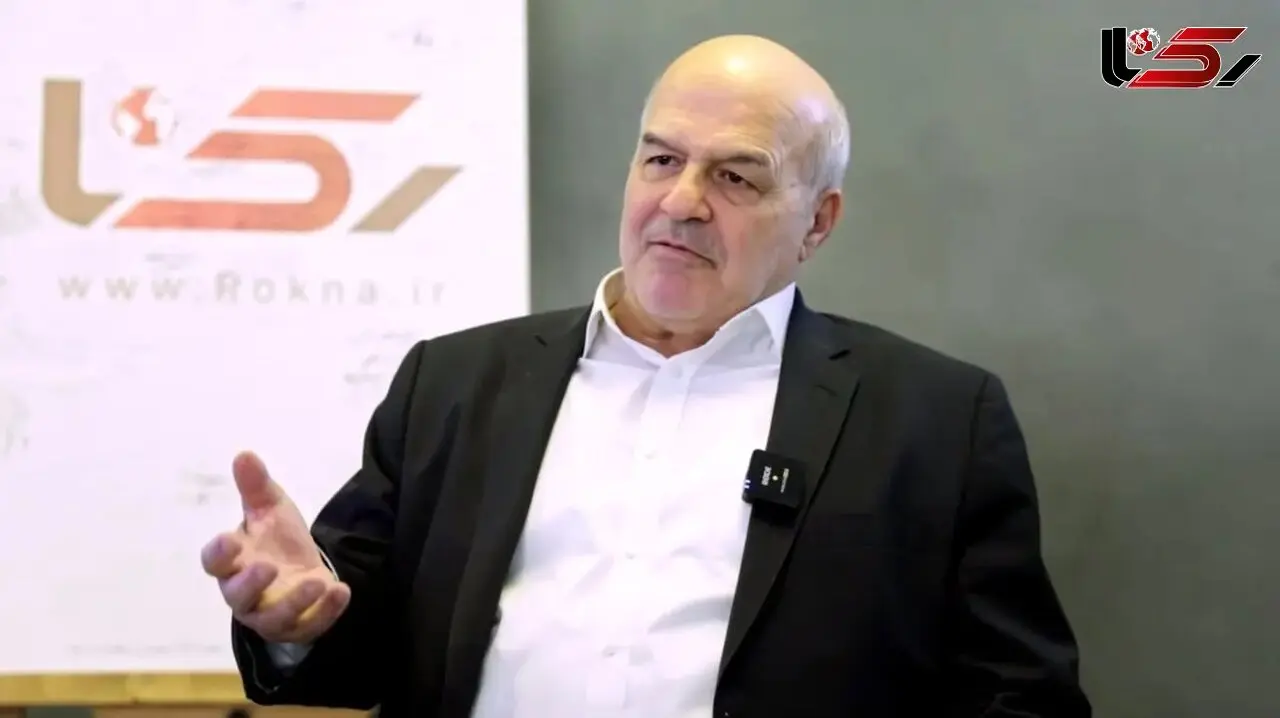
In the interview with Rok program hosted by Afshin Amirshahi, Kalantari highlighted the critical environmental situation of the country, stating: “Economic issues can be resolved if the government desires; inflation and international challenges are solvable. If the government and national leaders reconsider their policies, these issues can be managed. But what is irreversible and unsolvable is the country’s water issue, the soil problem, and the natural environment of the nation.”
He continued: “We are destroying the country; we are turning it into a desert. The sustainability of our water is no longer recoverable. Protected underground water resources are being depleted. Even if rainfall in Tehran and Isfahan were to increase tenfold over the next ten years, nothing would penetrate the soil. The civilization of our country depends on water, and in my view, our water has been sacrificed for other policies. All development and production policies have wasted the country’s water resources.”
Kalantari referred to the drastic decline in groundwater levels: “We used to extract water from a depth of 30 meters; now we draw from 500 meters. This signifies the drying up of our civilization. Economic, political, and social issues can be solved with a simple decision, but the territorial existence of Iran—our 7,000-year-old civilization—is at risk.”
Regarding the possibility of restoring the country’s water and soil resources, he emphasized: “Given the current disaster, very little can be done. Suppose policies change now and the situation does not worsen; it will still take time. At least thirty years are needed. Even then, we will not return to the past because we have lost a significant portion of our water reserves and the soil is compacted. Perhaps after thirty years, we can achieve at most a twenty percent improvement.”
Kalantari also pointed to the extensive destruction of wetlands and rivers: “All your wetlands are gone; rivers are gone. Currently, only Hoor al-Azim remains, but its inflow is industrial and agricultural wastewater. 90 percent of Gavkhouni Wetland is lost, Kafar Wetland has dried, Jazmurian is dried, and wetlands in Khuzestan… Hamun is dried. All of these are lost. Truly dried. What a disaster has occurred!”
He highlighted that the costs of restoration would fall on future generations: “Restoring this situation will incur huge costs that future generations will bear. We will no longer be here. I am now 73 years old, among the youngest of the first revolutionary generation. The others are over 80. In ten years, all of us will be gone. What will happen to these issues? No one is thinking about them.”
Send Comments