

Abbas Araghchi in an Interview with CNN Türk:
"We Will Designate European Armies as Terrorist Organizations"
Rokna Political Desk: In an interview with CNN Türk, Iran’s Deputy Foreign Minister Abbas Araghchi stated that, in response to the designation of the Islamic Revolutionary Guard Corps (IRGC) as a terrorist organization, Iran could, through the Islamic Consultative Assembly, add European armies to its list of terrorist groups.
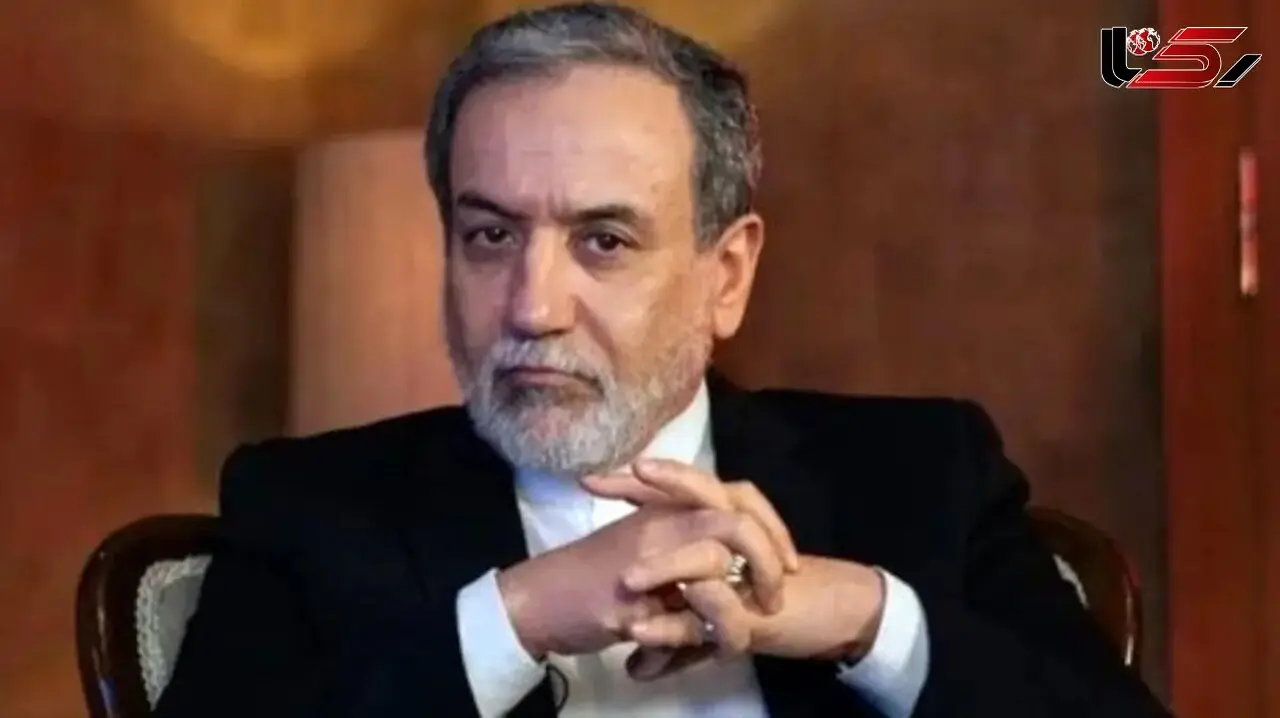
According to Rokna, citing the government’s official information portal, Iran’s Deputy Foreign Minister Abbas Araghchi, during his visit to Turkey, held an interview with CNN Türk, the full text of which is as follows:
Journalist: Minister, welcome to Turkey. We appreciate you taking the time to speak with us at this extremely sensitive moment. While the United States has deployed additional troops and military equipment to the region, and President Donald Trump has threatened a new attack on your country, you are in Istanbul. Undoubtedly, you first had a significant meeting with Foreign Minister Hakan Fidan and were later received by President Erdoğan. What were the outcomes of these meetings? Were any new proposals or requests presented? Do Supreme Leader Ayatollah Khamenei or Parliament Speaker Mohammad Bagher Ghalibaf have any special messages to convey to Ankara or via Ankara to Washington?
Araghchi: Today, I had very productive meetings in Turkey. We have a very good neighborly and close friendship with Turkey, and we are constantly exchanging views. The relationship between Iran and Turkey is excellent. I am here to discuss and see what avenues of cooperation we can find. The Islamic Republic of Iran is always ready to use diplomacy and emphasizes that we are prepared to reach results through negotiation. Today, I met with Foreign Minister Hakan Fidan and also with President Erdoğan. In these meetings, we discussed how to activate diplomatic channels and align our perspectives to find the right approach.
Journalist: Ankara has openly called on the United States not to attack Iran and stressed that issues should be resolved diplomatically. But we are curious—what is happening behind the scenes? What exact role is Turkey playing? Has it proposed mediation between Washington and Tehran?
Araghchi: Turkey’s stance on Iran has always been very constructive, and frankly, these views are very important to us. Especially during the 12-day conflict between Iran and the Israeli occupation regime, Turkey adopted highly constructive positions, which shows a strong bond between the peoples of Iran and Turkey.
Our trust in the Turkish government and our friends there is complete. President Erdoğan also said that “we can use diplomacy and create benefits in the region.” Turkey is working to find solutions in the region. We view these efforts positively and hope they yield results. I am also consulting with other regional countries on this matter.
Journalist: Is there a plan, or at least a possibility, for a trilateral meeting among Trump, Erdoğan, and Ghalibaf, either in person or via videoconference? Has Ankara suggested this to you?
Araghchi: At the moment, there is still a significant gap between us and the conditions needed to hold serious talks with the United States. For negotiations to be real and substantive—not superficial—they require proper preparation. In particular, the content, format, and rules of the negotiation must be discussed first. Before entering such a framework, any threats or pressure must be removed. If these conditions are met, a space for dialogue can be created; currently, no serious negotiations are taking place.
Journalist: Today, you said, “Iran does not accept dictation.” The U.S. has repeatedly requested negotiations with Iran. What exactly happened? When was this last proposal made? Recently?
Araghchi: Yes, almost every day.
Journalist: For example, the last time?
Araghchi: As I mentioned, almost every day. Various intermediaries contact us.
Journalist: Third-party countries?
Araghchi: Yes, third-party countries. They convey messages from U.S. officials and request diplomacy. Our position is clear; we are ready for fair and balanced diplomacy. If the agreement is truly just and impartial, as Trump claims, we are ready. But both sides must understand that negotiation is different from dictation. No one can determine the outcome before talks begin.
Naturally, the United States must remove threats and intimidation and be ready to negotiate on an equal footing, based on mutual respect and shared interests. Negotiation means give-and-take; no one can dictate to the other. That is not negotiation, and it is not fair or impartial. Fair negotiation occurs when both parties sit respectfully and discuss real issues to reach results through dialogue. We are ready for such negotiations.
Journalist: As you mentioned, Iran has had bad experiences with the current U.S. administration, for example the June attack during the Muscat process. Trump insists on a “deal” focused on “no nuclear weapons.” Can Iran interpret U.S. intentions and reach an agreement to reduce tensions?
Araghchi: As you mentioned, we have had very bad experiences negotiating with the Americans. When Israel attacked in June and the U.S. joined them, it was precisely in the middle of negotiations. This created a climate of distrust. If the U.S. genuinely wants serious diplomacy, it must remove this distrust. Considerable effort is needed; they must change their approach, be ready to negotiate fairly, and provide guarantees that no new attacks or threats will occur. We are always ready, but they must ensure safety and security.
Journalist: Since the June attack, have you had any direct contact with the United States?
Araghchi: No, we have had no direct talks. Before June, there were indirect discussions, and after that, we received and sent messages via the U.S. representative during last September’s U.N. General Assembly. We tried to reach an understanding regarding the snapback mechanism and prevent major errors by European countries, but that failed, giving us another negative experience. Overcoming this distrust is very important, and we need a new diplomatic process based on respect and honesty.
Journalist: Do you want to use this interview to send a direct message to your U.S. counterparts?
Araghchi: I believe all my statements are being heard, and I hope they listen.
Journalist: In the press conference, you said Iran will strengthen its defense systems. What is your exact plan? Have you received or will you receive military support from Russia or China?
Araghchi: Do you really expect me to answer that?
Journalist: Yes.
Araghchi: I prefer not to answer.
Journalist: Is closing the Strait of Hormuz among the options?
Araghchi: There is a range of options.
Journalist: Is there consensus within Iran about the type of response?
Araghchi: Absolutely, all Iranians are united.
Journalist: Reports indicate eight U.S. aircraft carriers are threatening Iran. Some European countries have also deployed forces. What does your intelligence say about this military buildup? What might they be preparing for? Are there any assassination plots against Iranian officials?
Araghchi: We are evaluating all scenarios and preparing for all possibilities.
Journalist: You are not afraid?
Araghchi: No.
Journalist: What role do Israel and its upcoming elections play? How do they influence the Trump administration?
Araghchi: We are not concerned with elections in Israel or elsewhere. We are prepared for any scenario. I must say that there is no real democracy in Israel.
Journalist: What does Europe’s position tell you? The EU designated the IRGC as a “terrorist organization” and imposed new sanctions.
Araghchi: Today, in the press conference with my dear brother Fidan, we responded to this issue. The EU’s designation of the IRGC as a terrorist organization was a major strategic error. They lost something significant, and we see Europe’s role in the region diminishing day by day. Unfortunately, Europe did not even consider its own interests. The IRGC has played a crucial role in combating ISIS and other terrorist groups. If the IRGC did not exist, Europeans in Paris or other cities would be facing ISIS directly. Unfortunately, Europe has been very ungrateful in this matter, and we know they will regret their decision.
I should also say that in a reciprocal reaction, through the Islamic Consultative Assembly, we can designate European armies as terrorist groups. European actions do not reduce regional tensions. Today, regional countries strive for the welfare and peace of this region, not European powers; Europe only inflames the situation.
Journalist: What is the latest status of protests in Iran? How many killed, wounded, or arrested? What message did protesters send, and what actions are you taking?
Araghchi: As previously explained, it is necessary to distinguish between legitimate protesters and those engaging in terrorist or destructive acts. From December 28 to January 8, there were reasonable protests regarding economic conditions or currency rates. These were acceptable, and even our president engaged with them on some issues. However, from January 8 to 10, the situation escalated over three days. Terrorists engaged in armed confrontations, targeted security forces, and sometimes ordinary citizens. They exploited Trump’s messages to increase casualties. According to official sources, 3,100 people were killed, of which 2,000 are considered “martyrs” as most were security personnel. Legal provisions will apply for the families of martyrs, and names will be officially announced.
Journalist: There are conflicting reports. Former U.N. prosecutor and Iranian human rights lawyer Payam Akhavan claims at least 33,000 deaths. He says the casualty rate in Iran is worse than Srebrenica.
Araghchi: Hitler had a famous saying: “Tell a big lie and people will believe it.” Unfortunately, the bigger the lie, the more effective it seems. Claims of 30,000 to 50,000 deaths are all false. The official figure is 3,117. If anyone wants to add even one person, they should present evidence.
Journalist: Are you concerned about regime change? Where is Supreme Leader Ayatollah Khamenei, and how is his health?
Araghchi: Regime change is purely imaginary. Some are trapped in this fantasy. Our system is deeply rooted, and leadership changes do not affect it. The system remains and continues its work.
Journalist: What is your view on recent developments in Syria? The Damascus government is regaining control, and YPG areas are shrinking.
Araghchi: We always support Syria’s territorial integrity, independence, and stability. Any instability in Syria destabilizes the region. We hope the Israeli occupation forces leave Syria promptly.
Journalist: Ankara believes neutralizing the PKK/ PJAK is also an urgent security need for Iran. What steps are you taking against these groups?
Araghchi: Our security is paramount, and we are prepared to confront any terrorist group.
Journalist: Finally, Turkey has long proposed a regional coalition. Did you discuss this with Minister Fidan and President Erdoğan today? What is your view on such a coalition?
Araghchi: We have agreements with regional countries and share common goals. I met with President Erdoğan, and we hope that through joint cooperation, we achieve our shared objectives—namely, the welfare and stability of the region.