

Most of U.S. Government Shuts Down but Expected to Reopen Early Next Week
Rokna Political Desk: The Senate has approved a deal between Democrats and the White House to fund the government, but the House will not vote until Monday. If the shutdown is brief, it is expected to have minimal impact.
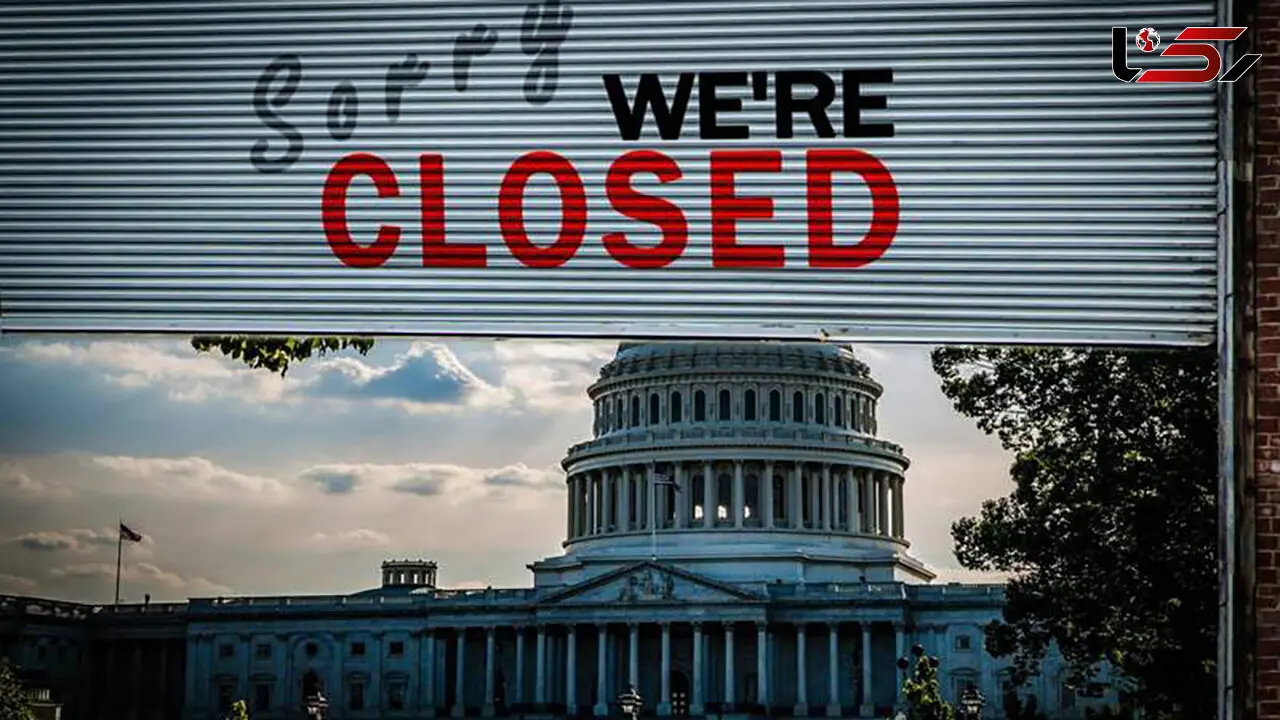
According to Rokna, citing The NBC News, as of Saturday, Jan. 31, most of the U.S. government has shut down, though the funding gap is expected to be short-lived. The Senate passed legislation Friday evening to fund the government, but with the House absent from Washington, a partial shutdown has taken effect over the weekend.
The bill comes from an agreement between President Donald Trump and Senate Democratic leaders. House Speaker Mike Johnson, R-La., told members during a Friday call that a vote is planned for Monday, according to a source familiar with the matter.
The lapse in funding is not expected to significantly disrupt operations, as most federal employees do not work on weekends, and Trump has pledged to quickly sign the measure into law. However, any unexpected delay in the House could prolong the partial shutdown into next week.
Agencies temporarily affected include the Department of Homeland Security, which oversees immigration enforcement and has faced criticism following two high-profile killings of American citizens in Minneapolis by immigration officers. Other impacted departments are Defense, State, Treasury, Transportation, Health and Human Services, and Housing and Urban Development.
The Office of Management and Budget issued a memo Friday night, instructing “affected agencies to implement plans for an orderly shutdown,” and added, “It is our hope that this lapse will be brief.”
Once the House passes and the President signs the Senate-approved bill, government funding will continue through the end of September, except for DHS. That department will receive short-term funding for just two weeks, as Democrats demand reforms to Immigration and Customs Enforcement (ICE) and Customs and Border Protection (CBP).
The bipartisan agreement emerged after Democrats opposed a previously negotiated DHS funding measure following the fatal shooting of Alex Pretti by DHS agents, which sparked public outcry. In a partial win for Democrats, Trump and GOP leaders agreed to defer DHS funding for two weeks. Still, the specific policy changes for ICE and CBP remain under negotiation, as Democrats push for reforms.
During this two-week period, Democrats aim to implement changes such as ending “roving patrols,” tightening requirements for arrest warrants, establishing a code of conduct for immigration agents, and requiring them to wear identification and body cameras.
“If Republicans take seriously the very reasonable demands Democrats have made regarding ICE, there is no reason we cannot quickly produce legislation,” Senate Minority Leader Chuck Schumer, D-N.Y., said Friday. “It should take less than two weeks. These are not radical demands—they are basic standards Americans already expect from law enforcement.”
A new DHS funding bill, due Feb. 13, will again require 60 Senate votes. Schumer cautioned Republicans after Friday’s vote: “If our colleagues are unwilling to enact meaningful change, they should not expect Democratic support.”
Some Republicans remain doubtful that negotiations will succeed. “My prediction is that the next two weeks regarding the so-called ICE reforms will have all the substance and efficiency of an eighth-grade car wash,” Sen. John Kennedy, R-La., told reporters. “I will not vote for a set of reforms designed to weaken ICE, nor do I think my Republican colleagues will. I hope I’m wrong, but I foresee a prolonged DHS shutdown.”
The funding package advanced after the Senate rejected a series of amendments pushed by senators to speed up the process. Highlighting shifting political dynamics around immigration, Sens. Susan Collins, R-Maine, and Lisa Murkowski, R-Alaska, joined all Senate Democrats and independents to support an amendment by Sen. Bernie Sanders, I-Vt., to repeal $75 billion in additional ICE funding approved under Trump’s “big, beautiful bill” last year. The amendment failed 49-51.
Earlier, Sen. Lindsey Graham, R-S.C., had blocked Senate action Thursday, calling the deal “bad.” Graham demanded a vote on his legislation to end sanctuary cities, including making it illegal for local officials to impede federal immigration enforcement. He was also upset that the House’s funding package repealed his bill allowing senators to sue over phone record subpoenas in former special counsel Jack Smith’s “Arctic Frost” investigation. Graham, one of eight senators uniquely affected by the legislation, later dropped his hold in anticipation of a vote in the coming weeks.
Speaker Johnson expressed frustration that the Senate did not consider the six-bill package the House passed last week, which included full-year DHS funding. With Trump supporting the Senate deal, Johnson had little option but to bring it to a House vote.
“I have consistently insisted that the Senate should take up the House’s bills, negotiated carefully in a bipartisan way, and pass them,” Johnson said Thursday. He added that DHS-specific changes should be handled separately from funding.
“The Homeland Security appropriations bill covers much more than ICE; FEMA is also involved,” the speaker noted. “We are in the midst of a winter storm, and having these agencies unfunded or shut down is a dangerous situation.”