

Can the S-500 End the B-21 Bomber Nightmare for Russia?
Rokna Political Desk: Russia’s advanced S-500 missile system, which claims the capability to destroy U.S. stealth aircraft and bombers such as the B-21 and F-35, could shift the global balance of air power in Moscow’s favor.
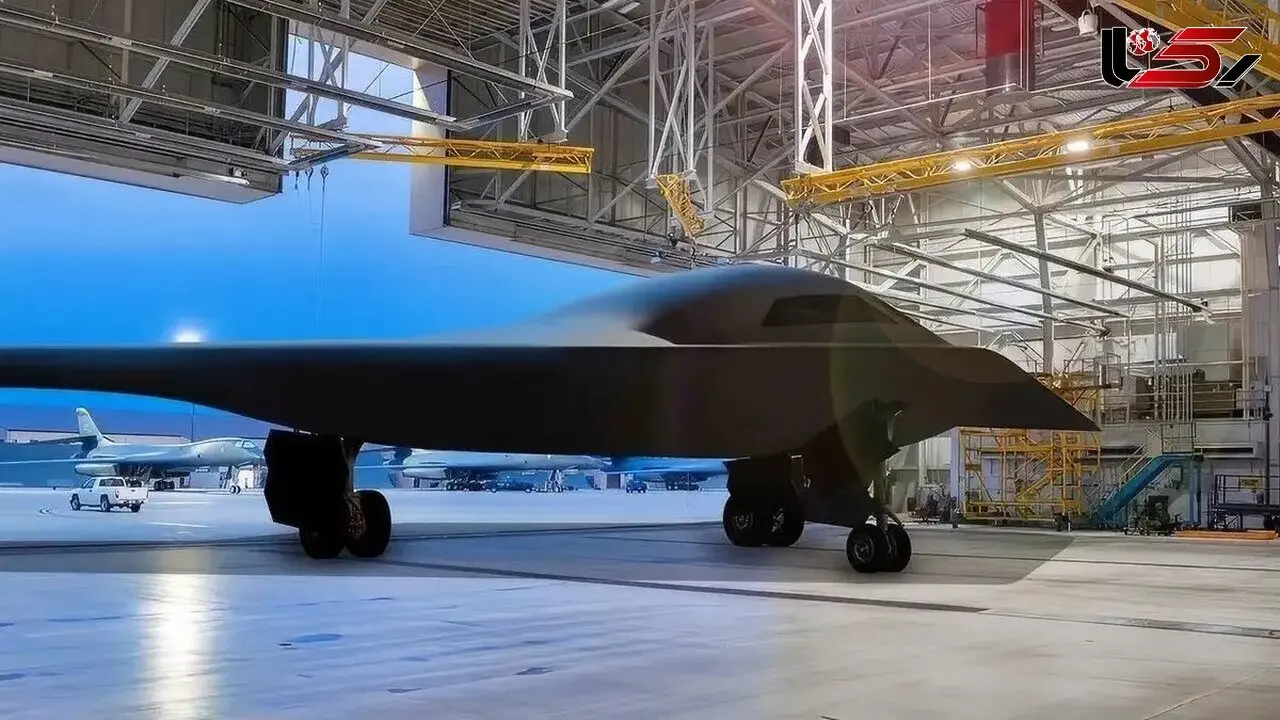
With the unveiling of the ultra-advanced S-500 Prometey surface-to-air missile system, regarded as a complement to the S-400, Russia has put forward a major claim in the arena of aerial warfare: the end of the era of absolute dominance by fifth- and sixth-generation U.S. stealth aircraft. Moscow has explicitly stated that the S-500 is capable of intercepting and destroying key U.S. aircraft, including the F-22 Raptor, the F-35 Lightning II, and even the newly introduced strategic bomber, the B-21 Raider.
Western military analysts, while approaching these claims with caution, acknowledge that the system’s advanced capabilities — including long-range, high-precision, multi-band digital radars — could potentially detect the presence of a stealth target in the sky. However, experts emphasize that “mere detection” of a faint radar signature and “missile lock-on and active engagement” against a high-speed aerial platform are two entirely different matters, and that proof of the S-500’s ultimate effectiveness in such a confrontation remains shrouded in uncertainty.
A 600-Kilometer Range: The Key to Shifting the Balance in Europe
If the technical specifications reported by Russian news agencies regarding an operational range of approximately 600 kilometers (370 miles) for the S-500 are accurate, the system wouldATO. By deploying the S-500 in border regions, Russia could gain control over a significant portion of Eastern European airspace and confront NATO’s efforts to achieve air superiority in the event of any potential conflict with unpredictable complexities.
In addition to its air-defense capabilities, the high range and speed of the S-500’s missiles — reportedly capable of simultaneously targeting 10 hypersonic ballistic missile warheads — transform the system into a strategic missile-defense tool. This would substantially compensate for Russia’s airpower shortfall in the face of hundreds of NATO F-35s. The success of this system in real combat conditions, however, depends on the speed and accuracy of digital networking among multiple radar systems to maintain continuous target tracking.
Exports to China and India: A Shock to the United States in the Indo-Pacific
From a strategic perspective, the Pentagon’s primary concern lies in Moscow’s potential decision to export the S-500 to its key allies, China and India. Experts believe that selling this system to Beijing and New Delhi would fundamentally alter the military balance of power in the Indo-Pacific region.
Such exports would not only deepen defense cooperation between Russia and China, but would also enable Chinese and Indian engineers to study the S-500’s radar concepts, sensors, and integration methods. This could allow them to upgrade their indigenous air defense systems in ways specifically designed to counter U.S. stealth platforms and electronic warfare capabilities.