

Atlantic Council: A New Agreement with Iran, a Golden Opportunity for the United States
Rokna Political Desk: The Atlantic Council has described a new agreement with Iran as an important opportunity for the United States, emphasizing that achieving such an agreement would not only reduce tensions but also contribute to U.S. national security.
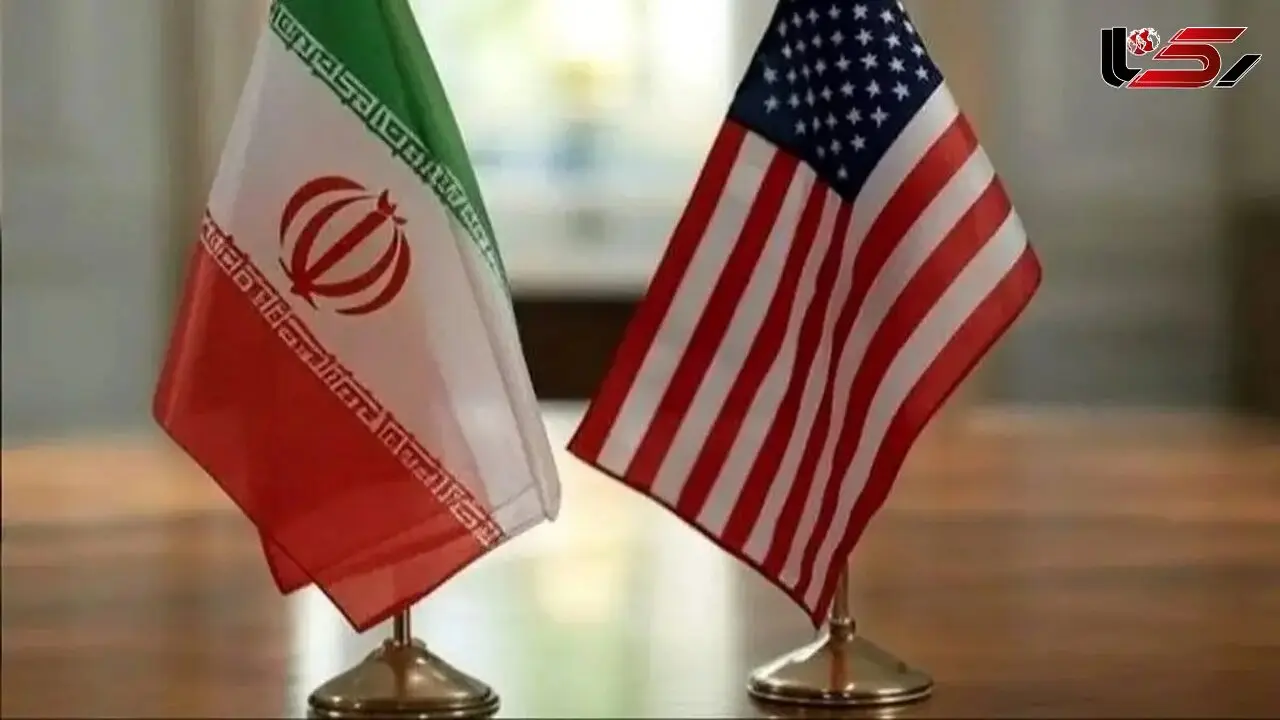
Referring to the fact that the U.S. administration sought to “declare victory after the 12-day war between Iran and Israel and then move on,” but that “it is not that simple,” the Atlantic Council, while reviewing the available options, described reaching a new agreement with Tehran as the best option on the table.
According to Rokna, Nathaniel Swanson, Senior Fellow and Director of the Iran Strategy Project at the American think tank Atlantic Council, wrote: Spending less time and energy on Iran is a worthy objective for U.S. national security. For more than 46 years, successive U.S. administrations have devoted significant time and resources to Iran, yet have achieved little. The new U.S. National Security Strategy (NSS), in a notable departure from Donald Trump’s first presidential term, reflects this shift in approach and mentions Iran only briefly on three occasions: support for reducing Tehran’s standing, the Israel–Iran ceasefire, and a general declaration of it as a “mission accomplished.”
Swanson, who served as the Iran portfolio director at the White House National Security Council during the presidency of former U.S. President Joe Biden and was also a member of the negotiating team with Iran under the Trump administration, added that the section on Iran in the new U.S. National Security Strategy likely reflects internal divisions that became apparent within the presidential base during the 12-day Israel–Iran war. Traditional hawks praised the military actions, while advocates of restraint were concerned that Trump might abandon his pledge to end the “endless wars” in the Middle East.
According to the author, a government official explained that the White House was unsure how to simultaneously satisfy figures such as Tucker Carlson and Mark Levin, who represent opposite ends of the restraint–hawk spectrum. Ending the 12-day war through an attack followed by an immediate diplomatic exit was an attempt to bridge this divide by “declaring victory” and “moving on.”
According to the Atlantic Council, unfortunately, this is likely only a temporary solution, as the core issues remain unresolved and moving on, as suggested by the new U.S. National Security Strategy, will not be easy. Although Iran’s missile program and what has been described as its support for proxy forces have diminished, Iran inflicted tangible damage on Israel during the 12-day war and, at the same time, is rebuilding other capabilities. Overall, Iran still has the capacity to become a regional hegemon, something the new U.S. National Security Strategy hopes to avoid.
The author continues: Benjamin Netanyahu, the prime minister of the Israeli regime, has reacted to this reality by citing Iran’s missile threat. Some Israeli officials and experts have privately referred to the 12-day war as the “first Iran war” and believe that in the next round Israel will strike certain specific sites with greater intensity. If these ideas prove accurate, the continuation of the ceasefire will likely depend on Trump restraining Netanyahu. In any case, if not probable, the resumption of conflict can be considered possible.
What should be done now?
Based on the new U.S. National Security Strategy, the weak implementation of Trump’s “maximum pressure 2” campaign and some of his previous remarks regarding U.S. extraterritorial military action, it can be assumed that regime change in Iran through U.S. instigation and intervention is not an option on the table. According to the Atlantic Council, this could change, but if the “America First” approach and the country’s National Security Strategy prevail, the United States will adopt and focus on a time-reduction approach toward Iran. Such a decision leaves Washington with three direct options for implementing the National Security Strategy: hoping to maintain the status quo; outsourcing the Iran problem to Israel; or seeking a new agreement with Iran.
Maintaining the status quo
Explaining this scenario, the author writes: If the status quo and the ceasefire are maintained, that would be excellent. The U.S. president would deserve considerable credit, and this is what the U.S. National Security Strategy is counting on. There is a resemblance between this outlook and the final two years of the Biden administration’s Iran policy, which some experts described as “no crisis, no deal.” However, there are three important differences.
First, from the Biden administration’s perspective, “no crisis, no deal” was always a temporary strategy, partly reflecting the U.S. political calendar. Second, for the reasons mentioned above, the resumption of conflict appears likely, thereby reducing the feasibility of implementing any version of containment. Third, even if Trump seeks to completely disengage from Iran, due to his decisions to withdraw from the nuclear agreement (JCPOA) in 2018 and to carry out unprecedented attacks on Iran’s nuclear facilities in June of this year, he largely owns the legacy of Iran’s nuclear file.
Outsourcing the problem
Outsourcing the problem to Israel is an option. Implementing it would likely involve a policy known as “mowing the grass,” in which Israel periodically carries out military strikes against Iran. This is a high-risk, high-reward strategy that requires a partner which, despite demonstrating military capability, has shown limited ability to translate battlefield success into long-term strategic gains. Moreover, with more than 40,000 U.S. troops stationed in the Middle East, this approach could expose U.S. forces and interests to danger and crossfire if the conflict escalates.
Activists of the MAGA (Make America Great Again) base and advocates of restraint—both of whom want Washington to engage far less in extraterritorial interventions—should harbor doubts based on the outcome of the 12-day war. In the early stages of the conflict, they repeatedly called for U.S. non-intervention and for leaving the matter to Israel. However, in the end, the war required significant U.S. investment. The administration has thus far avoided a prolonged war, but renewed conflict carries the risk of drawing the United States into a war that is inconsistent with its long-term strategy and at odds with a large segment of Trump’s base.
A new agreement
Finally, and perhaps most importantly, it appears that Trump prefers the third option, namely a “new agreement.” He has repeatedly claimed that negotiations could resume and has, on several occasions, adopted conspicuous postures that can be interpreted as an inclination to restart talks.
The author continues: Nevertheless, achieving a new agreement is extremely difficult. Aside from the fact that Iran is a very tough negotiating partner, Trump faces several unique challenges within his own administration that demonstrate how difficult it is to disengage from Iran. A potential agreement with Iran could reopen divisions within the Republican Party. Iranian capitulation would be welcome but appears unlikely, and as a result it is improbable that Netanyahu’s cabinet would support any potential agreement, placing pro-Trump Republicans who oppose the JCPOA in an unstable position.
According to the author, any potential new agreement “must be better than the JCPOA or at least significantly different from it. When I was in government, including as a member of the Trump administration’s negotiating team on Iran’s nuclear program, we were keenly aware that any subsequent agreement would be judged against the benefits of the JCPOA. The JCPOA, though flawed and limited in scope and duration, was working at the time Trump withdrew the United States from it. While no one is proposing a direct return to the JCPOA because too much time has passed and Iran’s nuclear advances have made it impossible, any future agreement will rightly be measured against the JCPOA’s strengths (very precise limitations on Iran’s nuclear program) and weaknesses (sunset clauses and limited scope).”
Ultimately, pivoting away from Iran will be difficult for the United States, even though the objective is fully understandable. All options carry drawbacks and challenges. Nevertheless, seeking to achieve a durable agreement with Iran is likely the best option. Negotiating with Iran is not easy, and persuading domestic audiences in the United States to accept an agreement with Tehran is also difficult. However, hoping for improved conditions or a favorable outcome despite its improbability, and outsourcing the issue to others, increases the risk of the United States becoming ever more deeply entangled in the Middle East for years to come.
Send Comments