

Venezuelan Tanker Seizure Sheds Light on Cuba’s Hidden Energy Economy
Rokna Political Desk: The seizure of a Venezuelan tanker carrying a heavy crude shipment bound for Cuba has revealed the covert cooperation between the two countries in energy supply and the exchange of security and intelligence services—a partnership that plays a crucial role in the strategic relations between Maduro and Havana.
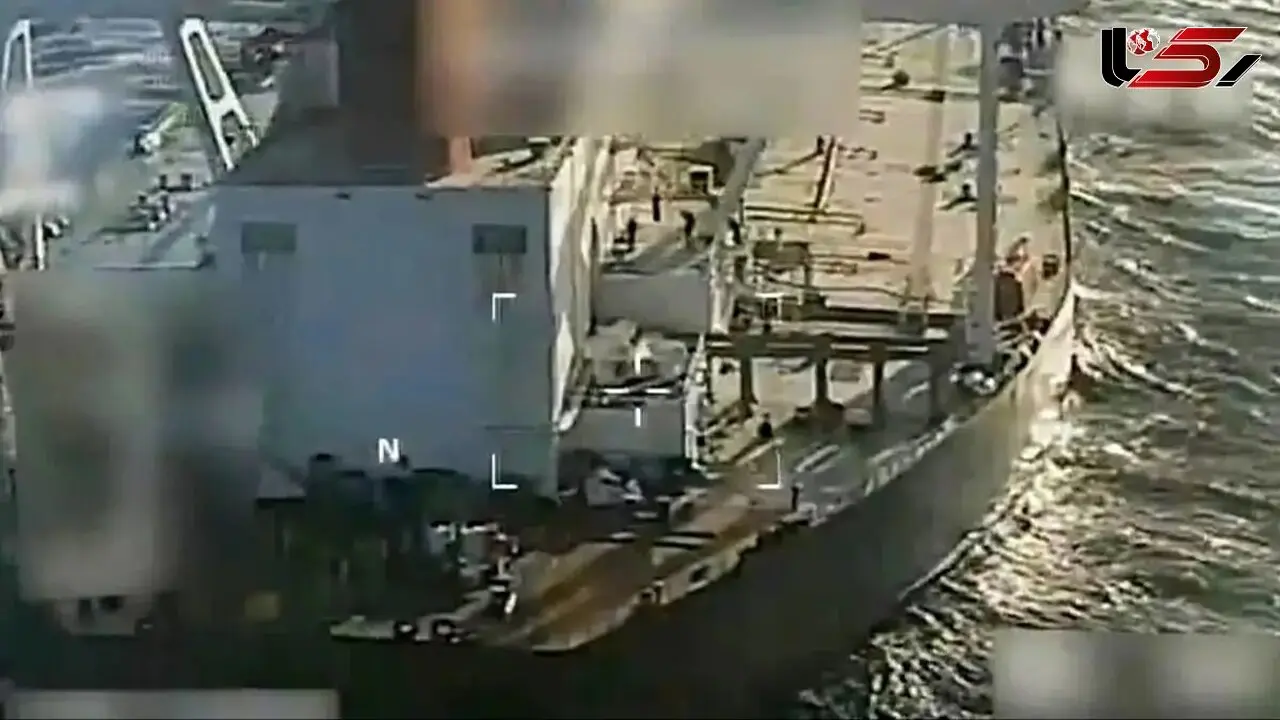
The tanker, intercepted by the United States this week near the Venezuelan coast, was part of Nicolás Maduro’s government’s clandestine mechanism to supply energy to Cuba. The ship, named Skipper, departed in early December with approximately two million barrels of Venezuelan heavy crude, with official documents listing its destination as the port of Matanzas, Cuba—an extension of Caracas’ decades-long policy of sending subsidized oil to Havana.
According to Rokna, citing The New York Times, tracking data shows that only a small portion of this cargo, about 50,000 barrels, was transferred to another tanker en route to Cuba, while the majority of the oil was ultimately redirected to Asia, particularly China. This pattern indicates that a significant share of the oil “allocated to Cuba” is effectively sold to generate foreign currency for the Cuban government—funds whose exact use remains opaque due to the lack of transparency in the island’s economy.
In exchange for this oil, Cuba has, over the years, dispatched thousands of doctors, sports coaches, and particularly security and intelligence personnel to Venezuela. This security cooperation has gained greater significance in recent years, as Maduro increasingly relies on Cuban guards and counterintelligence officers for personal protection and defense against external threats.
The primary management of this oil flow has been in the hands of Panamanian businessman Ramón Carretero, whose companies have become one of the largest intermediaries in Venezuelan oil sales. The U.S. Treasury recently sanctioned him and companies linked to Cuba, including “Cubametales.” According to Venezuelan state oil company records, Cubametales’ share of Venezuelan oil purchases has increased significantly over the past two years.
The seizure of the Skipper was carried out through a precise military-security operation; U.S. forces landed on the deck via helicopter and took control of the vessel without any confrontation. Washington announced plans to confiscate the oil cargo, valued at tens of millions of dollars, and transfer the ship under Coast Guard supervision to a port in Texas. Both Cuba and Venezuela have labeled the action “state piracy.”
This case provides a broader picture of the informal energy network among Venezuela, Cuba, Iran, and Russia—countries under U.S. sanctions that have learned to circumvent restrictions through mutual cooperation while continuing their oil trade. However, this cooperation is driven more by economic necessity and commercial interests than ideology, and even among these nations, competition—particularly in the Chinese market—remains ongoing.