

The New Middle East Order in Trump’s Style: Why the Iran Challenge Persists
Rokna Political Desk: How has the Trump-style New Middle East ensured the continuation of the challenge posed by Iran? Trump’s deal-driven approach toward Israel and the Arab Gulf states, coupled with neglect of the Palestinians, has further intensified regional tensions.
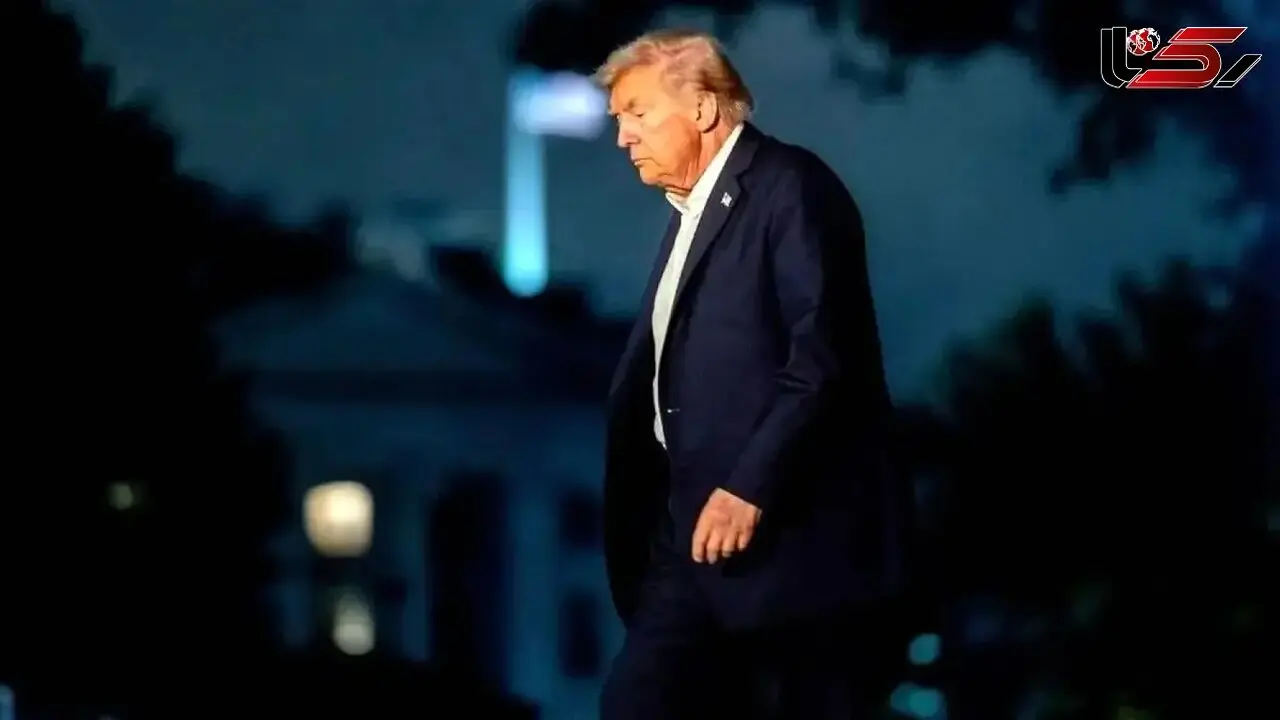
The Middle East is a region most U.S. presidents would prefer to avoid. Yet, they inevitably find themselves entangled in its conflicts. Despite periodic calls to shift focus to other geopolitical challenges, the perception that America’s vital interests are at risk has kept the United States engaged. The oil reserves of the Persian Gulf remain critical to the global economy. Iran is on the verge of becoming a nuclear power. And the political disorder of the Arab world has generated generations of militants, some of whom attacked the United States in 2001, resulting in the deadliest mass-casualty attack on U.S. soil since Pearl Harbor.
According to Rokna, citing Foreign Affairs, since the beginning of the 21st century, U.S. presidents have attempted to solve the Middle East’s puzzles through military invasions, diplomacy, or limited humanitarian interventions. All these efforts have failed. Some actions even produced more harmful outcomes. The 2003 invasion of Iraq generated a new cadre of terrorists. The 2011 limited military intervention in Libya led to widespread chaos across North Africa. Yet successive administrations remained enamored with the idea of imposing a “regional vision.”
Until Donald Trump arrived. Like his predecessors, he did not withdraw the United States from the Middle East. But unlike them, Trump views the region without an ounce of idealism. His positions are entirely pragmatic and rooted in power politics. Trump, like the strongmen of the region, divides the world into “winners” and “losers,” immediately aligning with the winners. Israel is strong, so it is free to act as it pleases. The Arab Gulf sheikhdoms have oil and engage in deals, so he interacts with them. But the Palestinians are the losers, and therefore irrelevant.
This approach is undoubtedly harsh, yet its results are clearly positive. During his five-year presidency, Trump normalized Israel’s relations with several Arab countries. In October, he halted the war between Israel and Hamas, which began with Hamas’s October 7, 2023 attack. He ensured that American companies enjoyed preferential access to Gulf oil and markets. And he targeted groups and states threatening U.S. interests, including the Islamic Republic of Iran.
Trump’s decisions have not democratized the Middle East nor reduced the region’s historical grievances. But they have kept the region relatively stable while advancing U.S. positions. In other words, he has succeeded far more than his predecessors who were complex yet idealistic.
The Boulevard of Broken Dreams
To understand why Trump has succeeded where other presidents failed, one must examine the U.S. approach toward the Arab countries, which constitute much of the Middle East. For decades, U.S. presidents attempted to resolve internal tensions in these countries through attacks or pressure. George W. Bush was both the most ambitious and the most failed president in this regard. His initial response to the September 11 attacks—invading Afghanistan to overthrow the Taliban and launch the “War on Terror”—was logical. But Bush and his experienced advisors later concluded that the best path to Middle East stability was to attack Iraq—a move intended to transform a region full of authoritarian regimes into Western-aligned democracies. Instead, it intensified sectarian divisions and strengthened Iran. By the end of Bush’s term, the region was more unstable than at its start.
His Democratic successors, Barack Obama and Joe Biden, were determined not to be ensnared in the chaotic politics of the Arab world. They understood American fatigue with endless wars and emphasized reliance on diplomats rather than soldiers. Yet each was trapped, to some extent, by idealism. During the Arab Spring, Obama sided with protesting populations, removed U.S.-allied Hosni Mubarak, and carried out a limited humanitarian military intervention in Libya that toppled Muammar Gaddafi.
None succeeded. Mubarak was replaced by Islamists who, after attempting to seize power, were themselves overthrown by another military dictator. Libya fragmented and now has two authoritarian governments. Biden never pursued regime change, but his hostility toward Saudi Arabia, the region’s key kingdom, undermined U.S. interests. The royal families largely ignored Biden’s attempts to increase oil production or pressure Hamas into a ceasefire.
Trump, however, pursues policy without moral judgment. He does not object to cooperating with Ahmad Al-Shar, a former jihadi and new Syrian president, if he allies in the fight against ISIS. Trump is entirely deal-driven. He supports Saudi Arabia and other Gulf sheikhdoms because they are sources of capital, markets for semiconductors and arms, and integral to the global energy market. These are people “he can work with.”
Arab princes and kings responded positively. At Trump’s request, Bahrain and the UAE signed the Abraham Accords in 2020, normalizing relations with Israel. Saudi Arabia remains outside the accords but maintains covert intelligence and security cooperation with Israel. Qatar plays a nuanced role with Islamist forces while hosting a major U.S. base and was instrumental in brokering the Gaza ceasefire. All three countries have financial ties with the Trump family. In this region, personal wealth intertwines with national affairs, and the lines between commerce and diplomacy are visibly blurred.
The Big Stick
Since the 1979 establishment of the Islamic Republic, successive U.S. administrations have viewed Iran not as a monolithic entity but as a collection of competing factions. The apex of these efforts occurred under Obama with the 2015 nuclear agreement (JCPOA), which allowed Iran to enrich uranium under restrictions in exchange for sanctions relief.
But this approach was based on a flawed premise. While Iranian officials hold differing views, all share anti-American sentiment—a glue binding the Islamic Republic together. Iran agreed to the deal only when the U.S. recognized its domestic enrichment rights and allowed a path toward industrial-scale enrichment post-expiration of certain clauses. Meanwhile, power players in Tehran leveraged sanctions relief to strengthen their regional proxies.
Trump pursues policy without moral judgment. The best way to engage Tehran is through force. After the 1979 U.S. embassy seizure, revolutionaries threatened to try American diplomats. Jimmy Carter privately warned that any harm to the hostages would prompt retaliation. All talk of trials was quickly dropped. Two decades later, when Bush invaded Iraq and threatened Iran, Iran paused its nuclear program—but resumed it with greater vigor once the U.S. became entangled in Iraq. Yet threats were the exception in U.S. policy toward Iran. The greatest paradox is that America failed to learn from its successful experiences.
Trump, however, dismantled the JCPOA during his first term and imposed severe sanctions on Iran. He correctly recognized that the agreement did not prevent Iran’s nuclear advancement and favored Tehran more than Washington. Trump then ordered the assassination of Qassem Soleimani, the legendary commander of the Quds Force, who had organized a transnational network of Iranian proxies. Contrary to many analysts’ concerns, this assassination did not provoke a larger war; it permanently set back Iran’s proxy network. Ultimately, when Al-Shar’s rebel forces attacked from the north, Damascus fell within two weeks.
Perhaps Trump’s greatest achievement was the June 2025 strikes on Iran’s nuclear facilities. For two decades, politicians and experts claimed any attack on Iran’s nuclear program would trigger a full-scale war. The U.S. not only carried out the attack but also prevented Israeli strikes. Israel had sought to strike under Obama, but the plan was blocked. Trump gave the green light—and intervened when progress went smoothly.
Trump later stated, “No president would have done this, but I was willing.”
The Two-State Mirage
For decades, U.S. officials have advocated for an independent Palestinian state, arguing that a two-state solution is essential for peace. Bush was the first president to formally support this plan in 2002. Obama continued the effort. Biden maintained it even after the October 7 attacks.
But these efforts failed. Bush’s attempts culminated in a limited summit. Obama achieved only temporary and partial halts in settlement construction. Biden’s actions were largely rhetorical. The cumulative record is nothing but a series of memories from officials lamenting lost peace.
The creation of an independent Palestinian state has always been unlikely. Palestinians sought to regain what they had lost in repeated wars, yet history rarely rewards such persistence. Israel sometimes considered ceding Gaza and parts of the West Bank, but these concessions were never enough for the Palestinians. Meanwhile, Israel’s position hardened over time amid continued violent attacks. Tragically, Palestinian leaders remain entrenched in narratives of suffering and loss, compromising only when their options are nearly exhausted.
The two-state solution remains popular among traditional Washington foreign policy elites—but not for Trump. He disregards subnational actors. He knows Israel will not cede land and understands that many Arab governments have accepted this reality. He successfully mediated the Abraham Accords, surprising many analysts. The Arab signatories adhered to the agreements even during Israel’s attack on Gaza.
Trump, however, is wise enough not to grant Israel a blank check. Sensitive to Arab leaders’ political concerns, he warned Israel not to annex West Bank settlements—while allowing their gradual expansion. He also pressured Israel into accepting the October ceasefire. His influence was possible because he is one of the most popular U.S. politicians among Israelis and maintains strong relations with Arab kings, enabling them to pressure Hamas. Trump also broke Washington’s unwritten rule prohibiting direct engagement with Hamas—a key factor in the ceasefire’s success.
Agents of Chaos
Trump has stabilized the Middle East, but he has not “solved” the problem. Peace in the Holy Land—contrary to his claim—remains out of reach. Iran’s nuclear program remains intact. And the Arab world continues to struggle with political dysfunction. In a region where things can always go wrong, much can collapse again.
The recent ceasefire exemplifies this. Ceasefires in the Middle East are inherently fragile, and the agreement among Ron Dermer, Steve Witkoff, and Jared Kushner is no exception. Both Hamas and Israel may exert military pressure on each other when opportune. The agreement does not address settlement expansion. The 20-point plan to disarm Hamas, rebuild Gaza, and establish a Palestinian state likely remains on paper. A multinational Arab force entering Gaza and eliminating Hamas’s remaining cores seems unlikely. Gaza will likely remain a wounded, densely populated camp reliant on food aid, with security responsibility resting on the Israeli army patrolling the civilian area and occasionally striking perceived threats.
Iran’s nuclear challenge could also resurface. Tehran may temporarily step back, awaiting a moment when U.S. attention is elsewhere and Israel is distracted. Then, it could rapidly resume its nuclear program.
The cumulative U.S. efforts at a two-state solution amount to a trove of memories of lost peace.
Washington Must Be Ready to Strike. The primary long-term takeaway from the 12-day war involving Iran, Israel, and the United States is that “military intervention” is now the main tool to counter nuclear proliferation in Iran. Relying on agreements that can be canceled or international institutions that bend to Washington’s will is unrealistic.
Israel understands this new Middle East order while recognizing that no victory in the region is permanent; hence, its doctrine regarding enemies is called “lawn mowing.” It is unclear if Trump shares this understanding. Instead of continuing pressure, he declared victory and invited Iran to negotiate. Trump may currently manage with this approach; his unpredictability, coupled with Netanyahu’s hawkishness, may partially curb Tehran’s nuclear ambitions. Yet he leaves a challenging Iran legacy for his successors, who may have no choice but to strike again.
Some analysts hoped Iran’s nuclear program would collapse on its own with regime failure. However, the war between Iran, Israel, and the United States demonstrated that the Islamic Republic is far more resilient than anticipated. Israel swiftly dismantled Iranian proxies, yet when Netanyahu called for Iranian uprisings, little occurred. The country’s elites remained united.
The Islamic Republic is a problem to be “managed,” not hoped to disappear.
The Middle East as It Is
This does not mean the Middle East cannot improve. Poor governance, institutional decay, and environmental degradation are longstanding regional issues. Arab ruling elites know they govern a region rife with corruption and disorder. Their lust for power blinds them to public discontent. The United States cannot force these leaders to govern wisely, but it can encourage greater political participation and economic reform.
However, such dialogues and efforts must be cautious and limited. The Middle East is no place for idealism or ambitious aspirations. It is a realm of power and realism—entirely compatible with this U.S. president. For now, oil flows, the Iranian threat is reduced, the Gaza war has subsided, and no major unrest prevails. In a region notorious for chaos, these are remarkable achievements.
Send Comments