

Jomhouri Eslami Newspaper:
File a Complaint Against Grossi and Pursue His Removal from IAEA Leadership
Rokna Political Desk: Jomhouri Eslami Newspaper, referring to documents related to Rafael Grossi’s alleged espionage for the Israeli regime, has called on Iranian diplomatic authorities to file a complaint and pursue his removal.
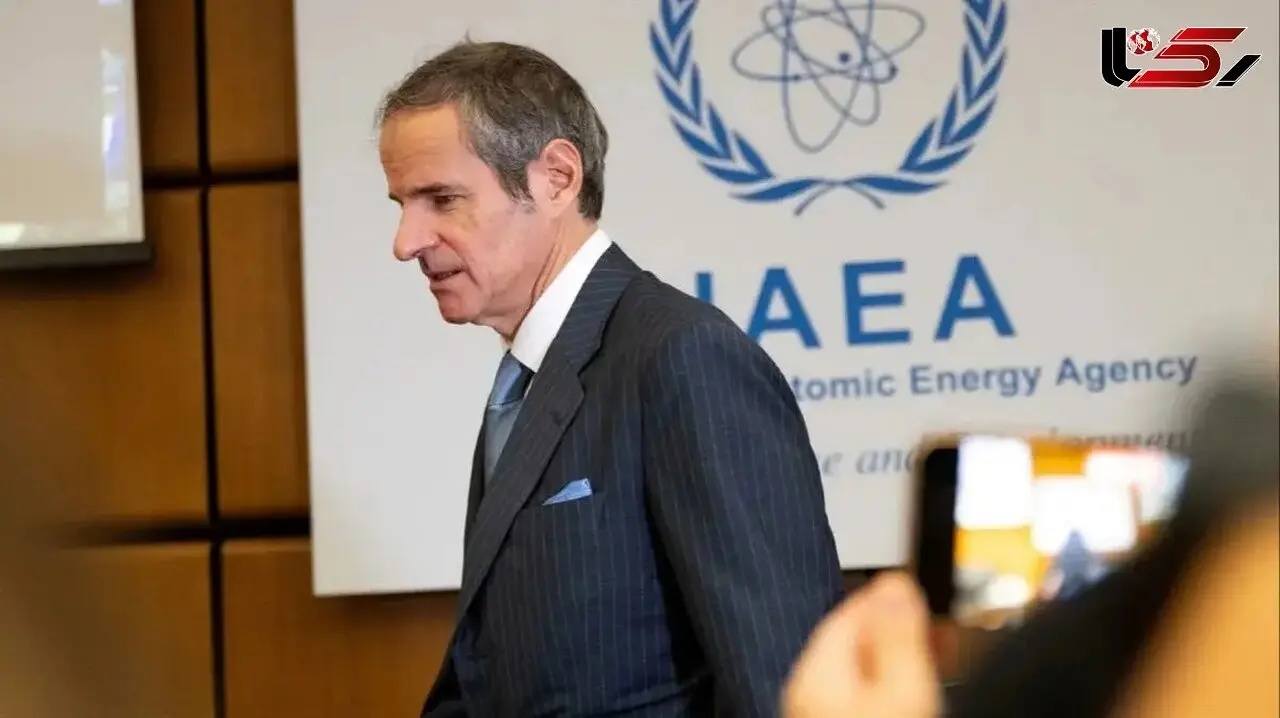
In its editorial, Jomhouri Eslami stated: Multiple foreign sources have referred to documents indicating that Rafael Grossi, Director General of the International Atomic Energy Agency (IAEA), is a spy for the Israeli regime. This had already been inferred from Grossi’s behavior and statements regarding Iran’s nuclear activities, which led to the issuance of an anti-Iran resolution by the IAEA Board of Governors in June of this year, followed by a military attack by the Israeli regime on Iran, resulting in the imposed 12-day war. Now, the documents reportedly confirming his espionage for Israel have reinforced this assessment.
Following the Israeli and U.S. attacks on Iran’s nuclear facilities, Grossi did not condemn the attacks or the attackers, and in pursuit of a reward for his betrayal of the Iranian nation, he traveled to the United States to request support from the U.S. Secretary of State for his bid to secure the UN Secretary-General position. Israeli officials, in return for Grossi’s services, advised the U.S. Secretary of State to assist him in achieving his objective.
Beyond his previous betrayals, Grossi has now insisted on sending his inspectors to the bombed Iranian nuclear sites to report on the extent of the damage. It is clear that Grossi’s purpose is to prepare a report on the destruction caused by the attacks and deliver it to his American and Israeli patrons, enabling them to assess the damage to Iran’s nuclear facilities and decide whether further destruction is necessary.
The United States and Israel are unable to measure the extent of the damage inflicted on Iran’s nuclear facilities themselves. Therefore, they have tasked Grossi with using his position at the IAEA to act on their behalf. Grossi’s contradictory statements on Iran’s nuclear activities, which appear to oscillate between positions, are designed to facilitate the mission assigned to him by the U.S. and Israel.
Grossi’s insistence on signing the Cairo Agreement with Iran’s Foreign Minister can be analyzed within this framework. Unfortunately, despite clear evidence of Grossi’s duplicity, the agreement was signed. The Iranian side only realized its mistake after the subsequent Board of Governors resolution and the treacherous positions taken by Germany, the United Kingdom, and France, by which time it was too late.
Iranian diplomacy now suffers from a missing element called “resoluteness against deception.” While the Iranian authorities’ decision to bar Grossi from traveling to Iran due to his betrayal is entirely correct, this response alone is insufficient. Iran must pursue a complaint against Grossi until his removal from the IAEA leadership, fully preventing him from using the position, with the help of the U.S. and Israel, to secure the UN Secretary-General post.
Signing an agreement with someone whose espionage is clearly documented facilitated the imposition of war on Iran, gave the U.S. and Israel a green light to attack Iran’s nuclear facilities, and Grossi’s subsequent refusal to condemn this crime stems from the same missing element in Iranian diplomacy.
This diplomatic weakness is what tempts Grossi to send his inspectors to Iran and prepare reports for the United States and Israel.
Iranian diplomatic authorities must take three measures to uphold the rights of the Iranian nation: first, pursue a formal complaint against Grossi until his removal; second, assess and recover damages caused to Iran’s nuclear facilities; and third, refrain from any engagement with Grossi while he remains head of the IAEA and deny his inspectors permission to enter Iran or inspect the bombed nuclear sites.