

Trump Says Zelenskyy ‘Not Ready’ to Accept US Peace Proposal Ahead of UK-EU Leaders Meeting
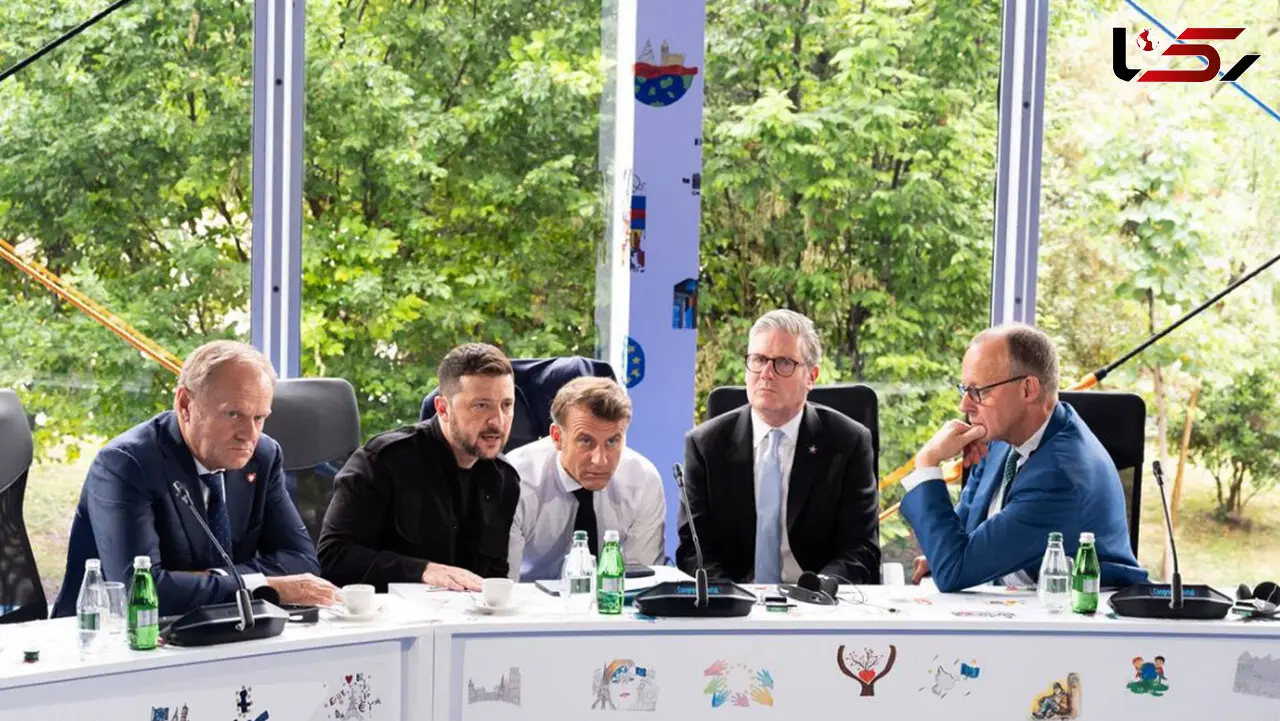
Rokna Political Desk: Ukraine’s President Volodymyr Zelenskyy is scheduled to meet the leaders of the UK, France, and Germany in London on Monday.
According to Rokna, citing the Guardian, US President Donald Trump claimed that Zelenskyy “isn’t ready” to endorse a US-drafted peace plan aimed at ending the war with Russia, following three days of discussions between Washington and Kyiv in Florida.
“I’m somewhat disappointed that President Zelenskyy hasn’t read the proposal yet, as of a few hours ago. His team likes it, but he hasn’t,” Trump said on Sunday evening while speaking with reporters.
Negotiations between US and Ukrainian officials concluded on Saturday without a visible breakthrough, with Zelenskyy describing the talks as “constructive, though not easy.”
Zelenskyy’s upcoming meeting in London with UK Prime Minister Keir Starmer, and French and German leaders Emmanuel Macron and Friedrich Merz, is expected to focus on the ongoing US-Ukraine discussions. Starmer has consistently emphasized that Ukraine must chart its own future and highlighted that a European peacekeeping force would play a “vital role” in ensuring the country’s security.
Following the Trump-endorsed Gaza ceasefire, the US has been attempting to advance a peace agreement between Ukraine and Russia. While US officials assert that the deal is in its final stages, there is little indication that either Kyiv or Moscow is ready to formally sign the framework proposed by Trump’s team.
Trump added on Sunday, “I believe Russia is fine with the deal, but I’m not certain Zelenskyy is. His team loves it, but he isn’t prepared yet.”
Russian President Vladimir Putin has not publicly endorsed the White House plan, and last week described certain elements of Trump’s proposal as unworkable. US envoys Steve Witkoff and Jared Kushner met with Putin at the Kremlin last week but failed to secure a clear breakthrough.
The US plan has undergone multiple revisions since its introduction in November, with critics arguing that it is too lenient on Russia. Despite ongoing efforts from Trump and his team, progress in the peace talks has been slow, with unresolved issues surrounding Kyiv’s security guarantees and the status of Russian-occupied territories.
“The American representatives understand Ukraine’s basic positions,” Zelenskyy stated in his nightly video address on Sunday.
Trump has maintained a fluctuating relationship with Zelenskyy since reentering the White House, repeatedly urging Ukraine to cede territory to Russia to end a conflict he argues has claimed too many lives.
On Saturday, Zelenskyy said he had a “substantive phone call” with US officials involved in the Florida talks alongside the Ukrainian delegation, receiving updates on the negotiations. “Ukraine remains determined to work in good faith with the US side to genuinely achieve peace,” Zelenskyy wrote on social media.
Trump’s criticism came as Russia welcomed the Trump administration’s new national security strategy on Sunday. Kremlin spokesperson Dmitry Peskov stated that the updated document, outlining core US foreign policy objectives, largely aligns with Moscow’s perspective.
The White House released the strategy on Friday, indicating the US aims to improve its relationship with Russia after years of treating Moscow as a global pariah. The document also criticized European nations, warning that the continent faces the risk of “civilizational erasure.”
Trump’s outgoing Ukraine envoy, Keith Kellogg, said on Saturday at a defense forum that the administration’s efforts to end the war were in “the last 10 meters,” noting two unresolved issues: territorial disputes and the status of the Zaporizhzhia nuclear power plant. Kellogg, considered sympathetic to Kyiv, is set to leave his post in January but participated in the Florida talks.
Others in Trump’s circle, including Witkoff, have been more open to Russian positions. Trump’s son, Donald Jr., stated on Sunday in Doha that Zelenskyy is deliberately prolonging the conflict to avoid losing power if the war ends, adding that the US would no longer act as “the idiot with the chequebook.”